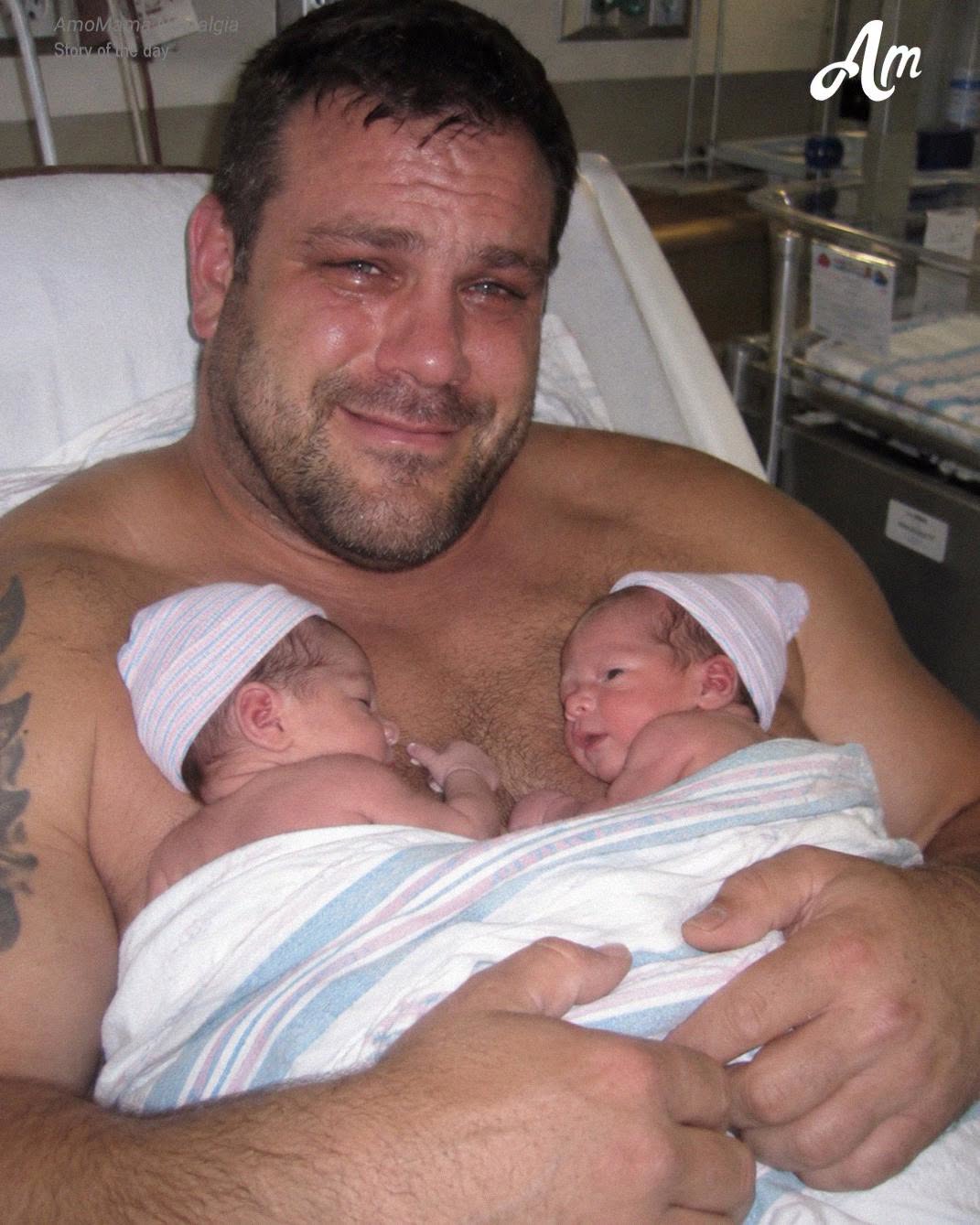
I spent 18 years convincing myself that not telling my daughter about her twin sister was an act of protection. Then my husband gave her something on her birthday that made me realize he had never believed that the way I did.
My daughter had a twin sister who died nine days after we brought them home.
But for 18 years we let her believe she had been born alone.
Rosie was 11 minutes younger.
She weighed six pounds, one ounce, and had dark hair.
There was a little crease beside her left eye that only showed when she cried.
Hannah was louder from the beginning. Rosie was quieter.
I used to joke that Hannah had done enough crying for both of them.
Then Rosie died.
The coroner wrote SIDS. Sudden Infant Death Syndrome.
It has no warning. No explanation that made sense.
No mistake to point at. No person to blame.
People think “nobody did anything wrong” is comforting.
Sometimes it isn’t.
Sometimes you want someone to have done something wrong because anger is easier to carry than helplessness.
I took Rosie’s crib apart myself.
My husband, David, had gone to the funeral home.
By the time he came back, the mattress was leaning against the garage wall and the crib was in pieces.
He stood in the doorway and stared.
“You did this?”
“I couldn’t look at it.”
He nodded.
That was all.
We were both 27 and had no idea how to grieve together.
We barely knew how to continue caring for ourselves.
Hannah was still waking every few hours.
I would hold her in the dark and feel grateful she was breathing.
Then I’d hate myself for feeling grateful.
Then I’d feel guilty because I had a living baby in my arms and was thinking about the dead one.
We told ourselves Hannah didn’t need to know.
At first, that made sense.
She was an infant.
Then she was three.
Then she was five.
You don’t sit a kindergartner down and say, “You had a twin sister, but she died before you could remember her.”
At least that’s what I told myself.
David wasn’t as convinced.
When Hannah was seven, we were driving home from a birthday party when he said, “Maybe we should tell her soon.”
I stared through the windshield. “Tell her what?”
“The truth about her twin sister.”
“Why?”
“Because she deserves to know.”
“She’s only seven.”
“I didn’t say we have to do it tonight.”
“Then when?”
He didn’t answer.
That was how most of our conversations about Rosie went.
He would bring her up.
I would shut it down.
He would let me.
Every September 9, Hannah had a birthday.
Cake, balloons, and presents.
Sleepovers when she got older.
Every September 9, I also woke up thinking about Rosie.
Of when she would have turned 10.
Of when she would have turned 14.
I never said it out loud.
Not around Hannah.
My mother removed the framed hospital picture from her hallway before Hannah was old enough to ask why there were two babies.
My sister learned not to say Rosie’s name at Thanksgiving.
My father accidentally said, “the girls” once when Hannah was eight.
I gave him an angry look.
He covered the slip-up by pretending he meant Hannah and her cousin.
Everybody knew.
Everybody participated.
That part sounds horrible when I say it now.
At the time, it felt like protection.
Then Hannah was 12 and struggling socially.
She had a terrible year at school.
She came home crying almost every week.
I thought, “We cannot tell her now.”
Then she was 15 and anxious about grades.
At 16, she was dealing with her first breakup.
At 17, she began applying to colleges.
There was always something.
There was always a reason not to tell her.
David kept asking.
Usually in the car.
Maybe because I couldn’t walk away while he was driving.
“She has a right to know.”
“And then what?” I’d say. “She spends the rest of her life wondering why she’s here, and Rosie isn’t?”
“Maybe she won’t do that.”
“You don’t know that.”
“Neither do you.”
That usually ended the conversation.
He never forced it.
Sometimes I resented him for bringing it up.
Sometimes I resented him for dropping it.
I held two babies for nine days and was left with a lifetime of trauma.
I had both joy and grief in my hands.
I felt like I was the only person in the house who acted as if one of them had never existed.
At least David spoke about her to me. I never brought her up unless David did.
Every year on Hannah’s birthday, after dinner, David went into the garage.
Usually for an hour. Sometimes more.
I never asked why. I assumed he needed quiet.
I had my own rituals.
I did laundry on birthdays even when there wasn’t enough for a full load.
Something about folding towels calmed me down.
We became experts at grieving separately.
Then Hannah turned 18.
We had about 30 people at the house.
Family, a few neighbors, and her friends.
My brother was at the grill.
My sister brought enough potato salad to feed a football team.
There was a sheet cake from the grocery store with “Happy 18th, Hannah!” written in blue icing.
Hannah was thrilled because we’d bought her a used car.
It was not fancy, but it was hers.
When David handed her the keys, she screamed.
“Oh, my God!”
She threw both arms around his neck.
“You actually bought it?”
He laughed. “No, that’s just some random car I came by.”
She hit his shoulder.
I remember watching them and thinking how happy she looked.
That should have stopped him.
For years, happiness had always stopped us.
Apparently, David had decided that wasn’t going to happen today.
After the presents, he stood up.
“Can everyone give us a minute?”
I looked at him, but didn’t look at me.
People hesitated.
My sister’s face changed immediately.
She suspected something was about to happen.
So did I.
I couldn’t stop David as I usually did in front of everyone.
“No,” I said quietly.
David finally looked at me.
His expression wasn’t angry.
It was settled. “Today’s the day,” he said.
My heart started pounding.
I wanted to say something, but I had no strength to.
I also knew that this time, he wasn’t going to back down.
Hannah looked between us. “What is happening?”
My mother stood up first.
“Come on, everyone. Let’s give them some privacy.”
People gathered plates and moved toward the house.
Hannah’s friends looked confused.
My family looked terrified.
I wanted to stop all of it.
But I couldn’t think of anything to say that wouldn’t make everything worse.
David disappeared into the garage.
He came back carrying a wooden chest.
I had never seen it before. Not once.
For nearly 18 years in that house, through birthday after birthday, I had never seen it.
I had never seen it.
The chest wasn’t huge.
Maybe two feet wide.
It was handmade with dark wood.
The corners weren’t perfect.
Neither were the hinges.
David set it on the patio table in front of Hannah.
She ran her fingers over the lid.
“Dad, what is this?”
He sat across from her.
Then he said, “There’s something we should have told you a long time ago.”
I felt sick.
Hannah looked at me.
I couldn’t hold her eyes.
David continued. “You weren’t born alone.”
Hannah blinked. “What?”
“You had a twin sister.”
She looked shocked.
David’s voice broke. “Her name was Rosie.”
Hannah didn’t move.
“She was born 11 minutes after you.”
Her hands stayed flat on top of the chest.
“She died nine days after we brought you both home.”
I waited for Hannah to cry.
She didn’t.
I waited for her to shout.
She said nothing.
She looked down at the box.
Then back at him. “Everyone knows?”
I flinched.
David said, “Yes.”
“Grandma, Uncle Matt, and Aunt Lisa — everyone knew?
“They all know,” I said.
She looked so hurt that I wanted to take away her pain.
“You all kept this from me?”
Her face changed.
She looked betrayed.
She looked down again.
“What is this?”
David swallowed. “I started it the night she died.”
He opened the chest.
Inside the lid, carved into the wood, were two names.
HANNAH & ROSIE.
Inside were two hospital bracelets.
Two newborn hats and a tiny pink blanket.
Photographs. So many photographs.
I recognized some immediately.
Pictures I hadn’t seen in nearly 18 years.
Me holding both girls.
David asleep on the couch with one baby on his chest and one in the crook of his arm.
Hannah and Rosie side by side in matching sleepers.
There were sympathy cards.
Rosie’s birth certificate.
A copy of her death certificate and envelopes.
Documents we had always kept locked away with the rest of the records from that year.
A stack of them tied together with blue ribbon.
Hannah touched the top one.
It said: “Hannah: Age 1.”
“What are these?”
“Letters.”
“From who?”
“Me.”
“To me?”
He nodded. “One for every birthday. They are about your sister.”
Hannah stared at the stack.
“You wrote to me every birthday about the sister you weren’t telling me I had?”
David’s face crumpled. “Yes.”
That was when she stood up.
“This is insane.”
“Hannah.”
“No.”
She backed away from the table.
“You all kept this from me.”
I said, “We thought we were protecting you.”
Her eyes snapped toward me.
“From what?”
I opened my mouth.
Nothing came out.
“From knowing I had a sister?”
“From feeling guilty.”
“For being alive?”
“Yes.”
“So you decided I would feel guilty before I even knew?”
“I was scared.”
“You were scared?”
Her voice rose. “What about me?”
“Hannah, please.”
“It’s been 18 years, Mom.”
“I know.”
“No, you don’t.”
She pointed at the chest.
“Dad knew enough to save all of this, but you all let me grow up thinking I was an only child.”
David said, “I should’ve told you sooner.”
She turned on him. “Then why didn’t you?”
He went quiet.
“Because she said no?”
He looked at me. “That’s not it. We were both hesitant about telling you.”
Hannah laughed once, bitterly.
“Great.”
She walked inside.
I followed her.
She grabbed her purse.
“Where are you going?”
“I can’t be here right now. I need some space.”
“Please don’t leave like this.”
She looked at me.
“How exactly am I supposed to leave?”
I didn’t have an answer.
She spent that night at my sister’s house.
The next morning, David put the chest on the dining room table.
I couldn’t stop staring at it.
“Why didn’t you tell me about this?”
He looked exhausted.
“You would have gotten rid of it.”
“I would not.”
He gave me a look.
“You took apart Rosie’s crib before I got home from the funeral home.”
“That was different.”
“You made your mother take down the hospital photo.”
“I couldn’t look at it.”
“Exactly.”
I sat down. He ran a hand over the lid.
“I wasn’t trying to hide it from you forever.”
“Eighteen years isn’t forever?”
“I thought you’d eventually be ready.”
I almost laughed. “Apparently nobody in this family was ever ready.”
He opened the chest. I touched one of the hats.
It was so small.
My hands started shaking.
“I thought if I saw this stuff, I would fall apart.”
“I know.”
“So you kept it in the garage?”
“In a cabinet behind my tools.”
“That’s what you were up to each year?”
“I’d write her a letter.”
“What did you say?”
“Whatever I wished we’d told her.”
I looked at him. “You should have made me tell her.”
His expression hardened slightly. “I tried.”
“No. You simply asked.”
“Helen, you know I tried.”
“You asked and then let me say no.”
He leaned back.
“What did you want me to do? Tell our daughter behind your back?”
“Maybe.”
The word surprised both of us.
I started crying.
“Maybe someone should have.”
Hannah came home two days later.
She barely spoke to us.
She took the chest to her room.
For the next three days, she read the letters.
Not all at once.
A few at a time.
Sometimes she’d come downstairs with swollen eyes.
Sometimes angry.
Sometimes silent.
On the fourth evening, she walked into the kitchen holding one envelope.
“Hannah: Age 12.”
David looked up.
She said, “You wrote that you wanted to tell me that year.”
He nodded. “You said Mom thought I was already having a hard enough time.”
I looked down.
Hannah continued.
“You wrote, ‘I hope someday you’ll understand that we were simply afraid of what telling you would do to you.’”
David’s eyes filled. “I don’t remember writing that.”
“Well, you did.”
She sat across from us.
Then she said, “I don’t feel guilty that I lived.”
I looked at her.
She was crying now. “I feel sad she died.”
“I know. We all do.”
“I feel weird that I had a twin and I didn’t know.”
“I’m sorry.”
“I feel like I’m supposed to miss somebody I never knew.”
I reached for her hand.
She let me take it.
Then she said, “But I don’t feel guilty.”
My throat closed.
“I feel angry that you thought I would.”
“We made assumptions.”
She shook her head.
“You don’t get to decide what I can handle just because you’re afraid of how I’ll react.”
“You’re right.”
“I should have known her name.”
That broke me.
“You’re right.”
“I should have had pictures.”
“Yes.”
“I should have known why Grandma used to cry on my birthday.”
I covered my mouth.
Hannah looked at both of us.
“I’m not saying you wanted to hurt me.”
David said, “We didn’t.”
“I know.”
“But we did.”
“Yes.”
That was the first honest conversation we’d had about Rosie as a family.
Not the last.
A week later, Hannah asked where Rosie was buried.
She had never been to the cemetery where Rosie was buried.
Of course she hadn’t.
We had managed to hide an entire grave from our daughter.
That sentence still makes me ashamed.
We went on a Saturday morning.
Just the three of us.
David brought flowers.
I carried nothing.
Hannah carried one of his letters.
The one from her first birthday.
At the grave, she stood very still.
The headstone was small.
ROSIE W.
BELOVED DAUGHTER.
Nine days between the dates.
Hannah touched the stone.
“Hi,” she said quietly.
David started crying.
I did too.
Hannah unfolded the letter.
She read a few lines silently.
Then she placed a copy of the letter beneath the flowers.
She had written something of her own on the back.
I didn’t read it.
I didn’t ask.
Some things belonged to her now.
On the drive home, Hannah sat in the back seat with the wooden chest beside her.
She had decided to keep it in her room.
Not hidden or displayed like a shrine.
Just there.
Before we left the cemetery, she had said something I don’t think I’ll ever forget.
“I don’t want Rosie to be forgotten.”
I nodded. “She won’t.”
“I don’t want anyone to pretend she wasn’t here anymore.”
“It won’t be the same as usual.”
This time, I meant it.
For 18 years, I thought silence protected Hannah from grief.
All it really did was postpone the grief and add betrayal to it.
She should have known.
Maybe not at three.
Maybe not at five.
But long before she turned 18.
David was right about that.
Hannah still gets angry sometimes.
So do I.
Mostly at myself.
But Rosie is no longer someone we leave in the past.
The hospital picture is back on my mother’s wall.
There are two babies in it.
There always were.
And for the first time in 18 years, everyone is allowed to see the picture, say her name, and acknowledge that she existed.
Grief can explain why someone avoids painful memories, but does it excuse making major decisions for someone else about their own history?
Here’s another story you might enjoy if you liked this one: My husband told me I wasn’t fun anymore while I was exhausted, making breakfast for six kids, and asking for 20 minutes to shower. I didn’t argue. I just smiled and let him leave.