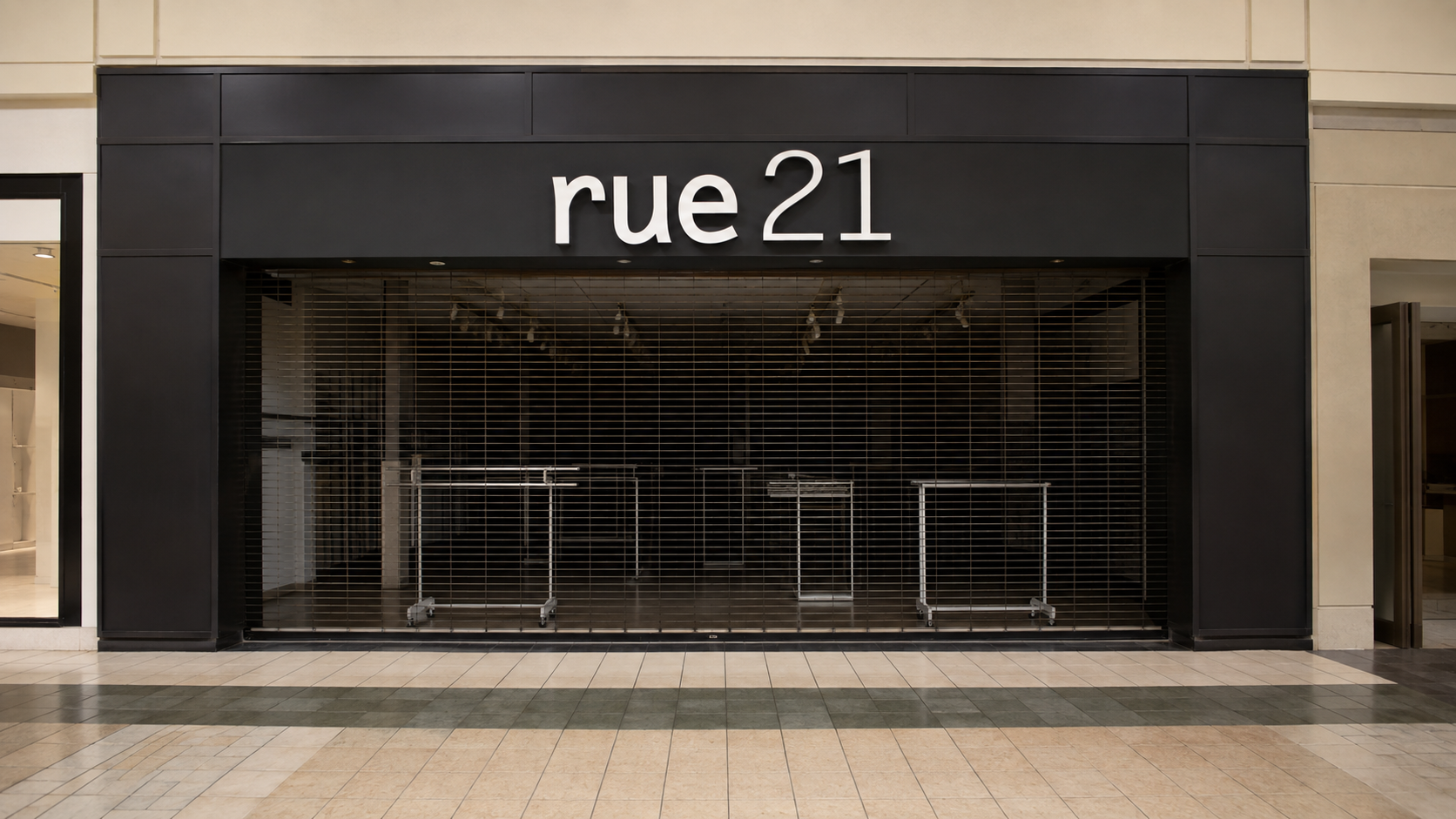
Rue21 closed all of its remaining stores after filing for Chapter 11 bankruptcy in 2024, bringing another major change to shopping malls and retail centers across the United States. The teen fashion chain entered its final bankruptcy with roughly 540 locations, and liquidation sales rapidly turned stores that had served generations of young shoppers into empty spaces.
For many customers, Rue21 was a familiar first stop for affordable jeans, graphic shirts, fragrances and accessories. Its stores were designed around quickly changing youth trends, often reaching shoppers in smaller cities and suburban markets where fewer fashion chains operated. The brand’s bright signs and low prices made it a common presence in malls, outlet centers and strip shopping developments.
The company’s 2024 collapse was not its first encounter with bankruptcy. Rue21 had previously filed in 2002 and again in 2017. During the 2017 restructuring, it closed hundreds of stores and reduced debt in an effort to create a more stable business. The chain continued operating afterward, but the pressures facing clothing retailers did not disappear.
In its final Chapter 11 case, Rue21 said all stores were scheduled to close within approximately four to six weeks. Merchandise, store fixtures and equipment were included in the liquidation process. Instead of reorganizing around a smaller group of locations, the company moved toward shutting down the entire remaining physical network.
The closure affected nearly 5,000 employees. For workers, the announcement meant far more than a final sale. It meant reduced hours, uncertain final schedules and the loss of jobs once each location completed liquidation. Store teams had to continue assisting customers and clearing inventory while knowing that their own workplace would soon be gone.
Rue21’s difficulties reflected a difficult retail environment. Competition from online sellers and fast-fashion companies made it harder to hold the attention of young shoppers. Mall traffic had changed, operating expenses remained substantial and consumers had an enormous number of alternatives. A brand built around speed and affordability was forced to compete with companies that could introduce new styles even faster and sell them without maintaining hundreds of storefronts.
The disappearance was especially noticeable because Rue21 had once operated more than 1,000 stores. Its expansion made the chain seem like a permanent part of American youth retail. Yet the final shutdown happened in a matter of weeks, demonstrating how quickly a nationwide physical presence can be dismantled when a retailer no longer has a workable path forward.
Customers visited the closing sales looking for discounts, but many also came to say goodbye to a store connected to their teenage years. Clothing retailers often become part of personal memories through school shopping, first jobs and afternoons spent with friends. That emotional connection can remain even when the business behind it is no longer sustainable.
Once the last racks were cleared and the doors locked, Rue21’s long run as a mall retailer came to an end. Its closure left landlords searching for new tenants, employees searching for new work and shoppers watching another once-familiar name disappear from the places where they grew up.