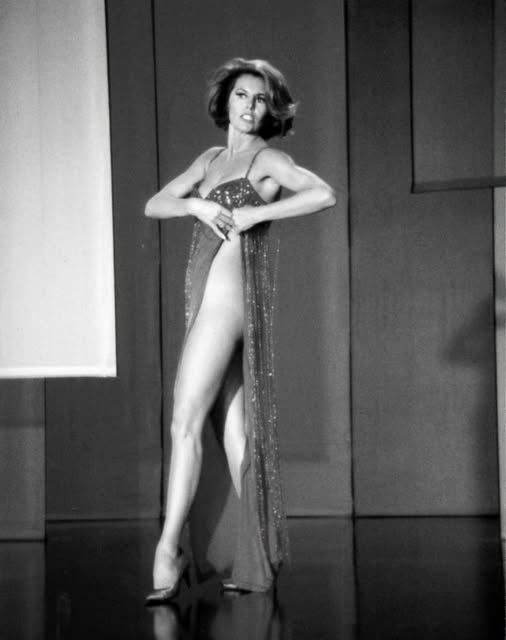
Cyd Charisse became one of the defining dancers of Hollywood’s golden age, known for long sculpted lines, expressive movement, and a screen presence that could dominate a scene without dialogue. Her elegance appeared effortless, but the strength behind it began with a difficult childhood illness.
She was born Tula Ellice Finklea in Amarillo, Texas, on March 8, 1922. Her early nickname Sid came from an older brother who struggled to pronounce Sis, and producer Arthur Freed later adapted it into Cyd. As a child, she was thin and frequently ill. After polio left her frail, her parents enrolled her in ballet to rebuild strength.
What began as therapy became a vocation. Dance gave Charisse physical confidence and a language she would eventually use more powerfully than speech on film. Her first screen work consisted of uncredited ballet appearances and background roles, including a part in the 1943 production Something to Shout About.
MGM recognized her potential and began developing her as a dance performer. A brief appearance beside Gene Kelly in Ziegfeld Follies in 1945 demonstrated the poise and chemistry that would later define her career. She could combine classical control with the dramatic immediacy required by a camera.
Her performance in the Broadway Melody sequence of Singin’ in the Rain became iconic. Wearing a green dress and moving opposite Kelly, Charisse created a character through posture, gaze, and dance alone. She spoke no lines, yet the sequence became one of the most remembered passages in musical cinema.
In The Band Wagon, she danced with Fred Astaire in the romantic Dancing in the Dark sequence. Astaire praised her as beautiful dynamite. Charisse declined to rank Astaire against Kelly, explaining that both possessed unique styles and were equally wonderful partners. Her own versatility allowed her to answer each man’s movement differently.
As the era of major movie musicals faded, Charisse continued working in television, stage productions, and a nightclub act with her husband Tony Martin. She appeared on Broadway in Grand Hotel during the 1990s and kept performing well beyond the years when studios had first presented her as a glamorous young star.
Charisse married Martin in 1948 after their shared agent introduced them. Their marriage lasted more than six decades. They had one child together, and Charisse also had a son from her earlier marriage. The family’s private stability contrasted with the scandals often associated with Hollywood life.
They also endured tragedy. In 1979, Sheila Charisse, the 36-year-old wife of Charisse’s son Nico, died when American Airlines Flight 191 crashed near Chicago. The disaster killed 273 people and left a permanent wound within a family usually seen through the distance of glamour.
Charisse received the National Medal of Arts in 2006. She died on June 17, 2008, at 86 after a heart attack. Her legacy survives in performances that combine ballet discipline, modern sensuality, dramatic intelligence, and remarkable physical control. Polio once made dance a means of rebuilding her body. She ultimately used that same art to become one of the most enduring figures in Hollywood musical history.
Her movement remains striking because it was never merely athletic. A turn of the head, a pause, or a measured step could establish mood before a larger combination began. She understood that film magnified detail and adjusted classical technique for the camera without losing its precision.
Later dancers inherited a screen vocabulary she helped shape. Her work demonstrated that a female performer could be elegant without passivity and sensual without surrendering control of the scene. Even when paired with the era’s most celebrated male dancers, Charisse appeared as an equal dramatic force rather than decorative support.