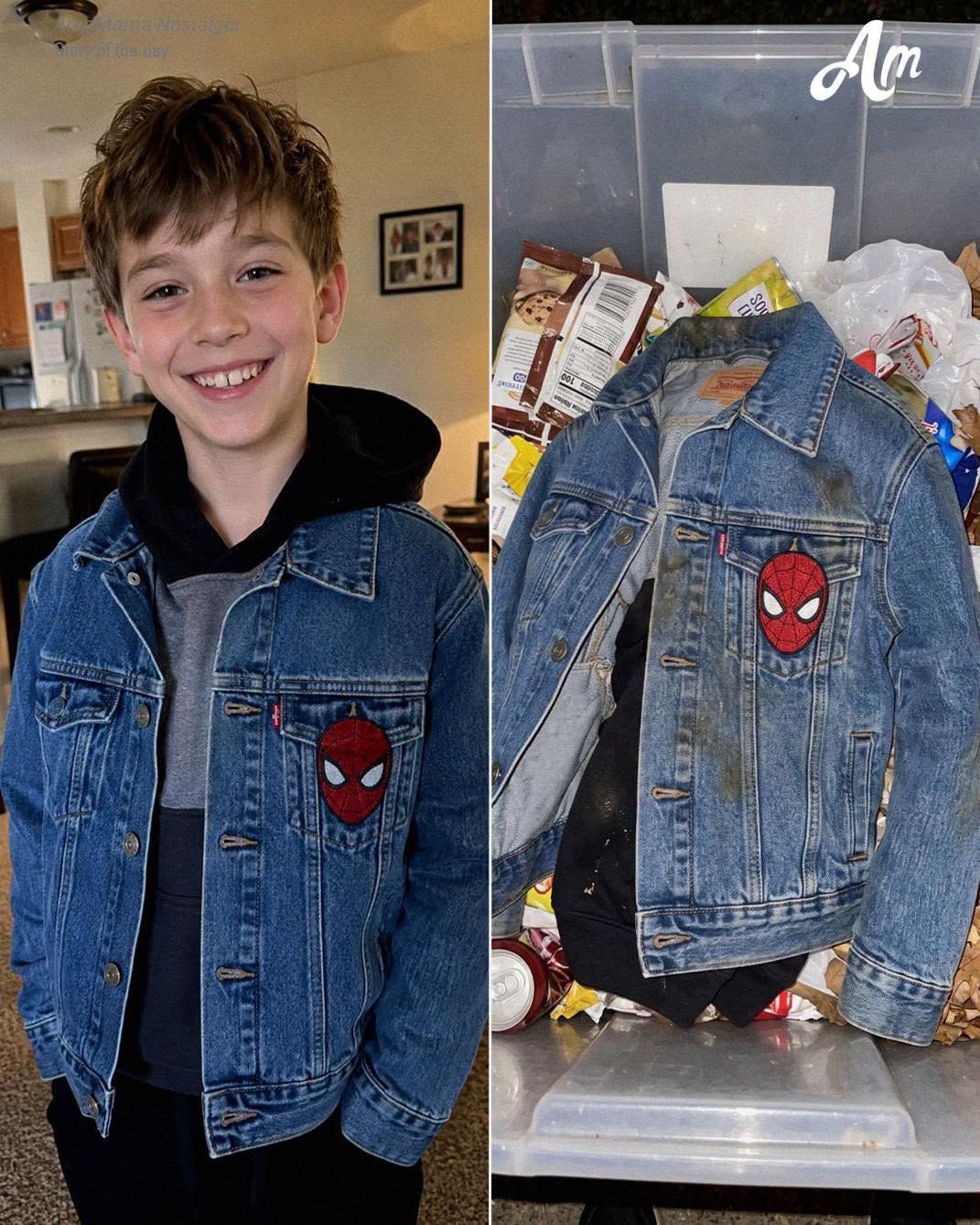
My ten year old son Noah disappeared while walking six blocks to dinner at his grandmother Diane’s house. He left wearing a blue jacket with a crooked Spider Man patch I had sewn over a tear. Diane called at seven and said he had never arrived.
Neighbors, officers, and volunteers searched the route. Cameras, parks, alleys, friends’ homes, and nearby businesses produced nothing. For weeks I repeated the walk until every doorway and fence became familiar.
Half a block from Diane’s house, I noticed blue fabric hanging from her dumpster. It was Noah’s jacket. Beneath it were his hoodie, one sneaker, and the shirt he wore the day he vanished.
I pounded on Diane’s door. She turned white when she saw the clothes and admitted she had hoped I would never find them. Then she told me Noah had reached her house that Friday.
My estranged husband, Mark, was waiting inside. He had contacted Diane secretly and claimed he wanted one conversation with his son before leaving the country. Diane agreed because she believed reconciliation would help Noah.
When Noah saw his father, he became angry and tried to leave. Mark followed him into the garage. Minutes later Diane heard a crash and found Noah unconscious after falling against a storage shelf.
Mark convinced her that police would blame them for arranging the meeting in secret. Instead of calling an ambulance, he drove Noah to a private clinic run by a former colleague. The boy survived but had a head injury that affected memory and speech.
Mark then moved him between rentals, telling Noah that I had agreed to the treatment and would visit when doctors permitted it. Diane discarded the clothes after Mark returned them, believing that hiding evidence protected her from prosecution.
I called police while she spoke. Investigators traced payments from Diane’s account and located the clinic. Mark had removed Noah days earlier, but surveillance and vehicle records led to a house outside the city.
Noah was alive. He recognized me slowly and asked why I had not come. The question was more painful than the weeks of uncertainty because someone had used his injury to rewrite my love as abandonment.
Diane and Mark were arrested, and the clinic’s conduct was investigated. Their motives differed—control, fear, shame—but every decision after the accident placed self protection above a child’s safety.
Recovery required neurological care, therapy, and patience. Noah remembered pieces out of order, while I learned not to force clarity. The jacket was preserved as evidence, its crooked patch identifying what a frightened grandmother tried to throw away.
I once trusted Diane because she had remained kind after her son left. Finding the clothes proved that affection without courage can become dangerous. She loved Noah, but when love required telling the truth and accepting consequences, she chose silence.
Diane admitted that she had driven Noah to a private clinic after he disclosed threats from an adult he met online. She believed hiding him would protect him while she gathered evidence, but secrecy multiplied the danger and terrorized everyone searching. Police arranged a safe interview, and specialists reviewed the messages without forcing Noah to repeat every detail before relatives.
Noah came home after professionals created a safety plan. We changed accounts, notified the school and began counseling. Diane faced the legal consequences of taking him without consent. Her intentions did not erase the harm, and placing the jacket in the dumpster had been an especially cruel attempt to make us think the worst.
Healing began only after every adult stopped deciding what Noah should be ready to say. He chose the pace, the counselor and which trusted relatives could know the details. Returning control was part of returning safety.