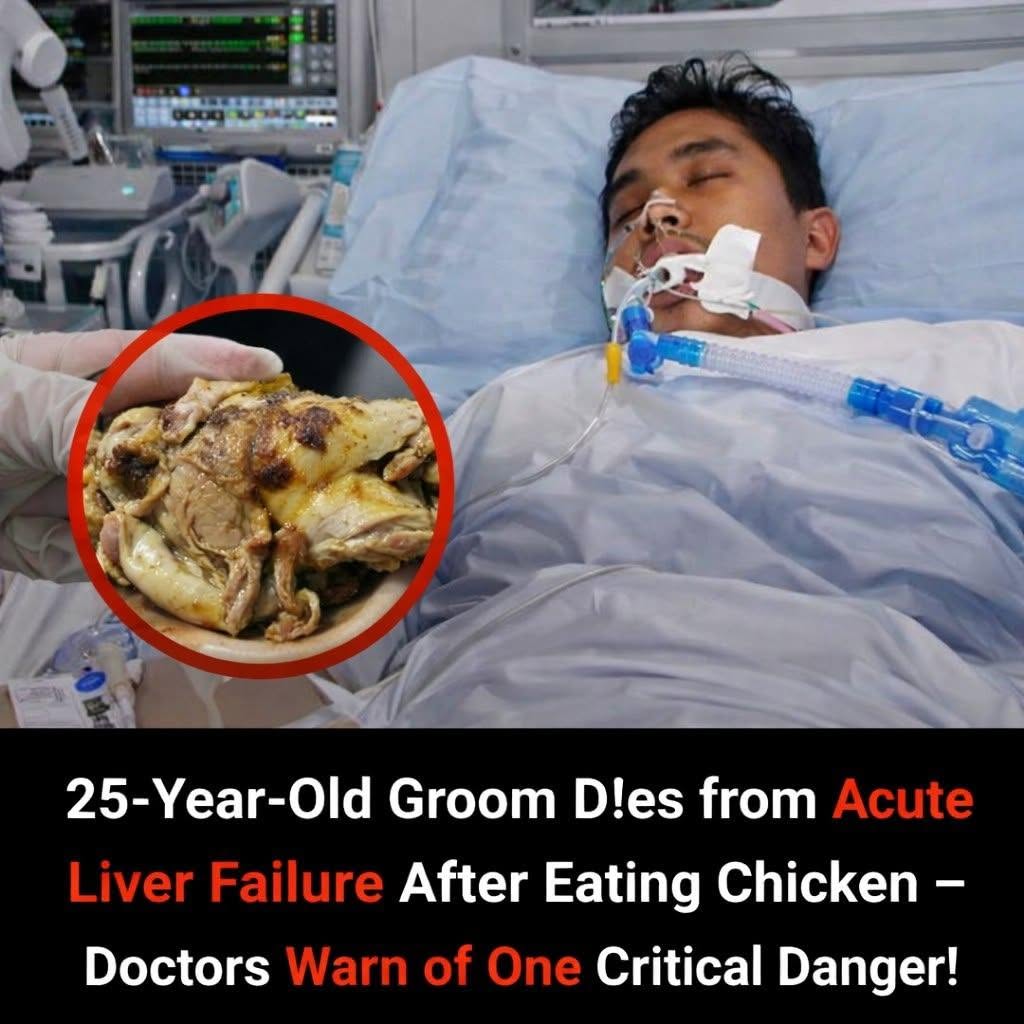
A circulating health story describes a 25-year-old groom who became critically ill shortly before his wedding after eating a meal containing chicken. According to the account, mild stomach discomfort quickly progressed to vomiting, exhaustion, yellowing of the skin, and confusion. He was taken to a hospital and diagnosed with acute liver failure, a rare emergency in which liver function deteriorates over days or even hours.
The article links the illness to a possible foodborne infection involving bacteria such as Salmonella or Campylobacter, both of which can contaminate raw poultry. It presents the death as a warning about chicken that looks cooked on the outside while remaining undercooked internally. The case is alarming, but a single online report cannot establish a medical cause. Acute liver failure has several possible triggers, and confirming one requires laboratory results, a complete history, and expert evaluation.
Foodborne illness from poultry is nevertheless a well-established risk. Raw chicken juices can spread germs to hands, knives, cutting boards, sinks, and nearby food. Washing chicken under a faucet may increase that risk by splashing contaminated droplets around the kitchen. Safer preparation begins with keeping raw poultry separate, washing hands with soap after handling it, cleaning utensils and surfaces, and cooking the meat thoroughly.
Appearance is not a dependable test of safety. Browning on the outside does not guarantee that the thickest part has reached a safe internal temperature. A food thermometer should be inserted into the center without touching bone. Leftovers should be refrigerated promptly rather than remaining at room temperature, and raw poultry should be stored where leaking liquid cannot drip onto produce or food that will be eaten without further cooking.
Most food poisoning causes digestive symptoms rather than liver failure. Diarrhea, cramps, fever, nausea, and vomiting may begin within hours or days, depending on the organism. Many healthy adults recover with rest and fluids, but infants, older adults, pregnant people, and anyone with a weakened immune system can face greater danger. Severe dehydration or an infection spreading beyond the intestines requires medical attention.
Acute liver failure is different from the gradual damage associated with many chronic liver diseases. Warning signs can include jaundice, pain or swelling in the upper abdomen, profound weakness, unusual sleepiness, personality changes, confusion, easy bleeding, or persistent vomiting. Because deterioration can be rapid, suspected liver failure is an emergency. A person with yellow skin or eyes together with confusion or rapidly worsening illness should not wait for an online explanation.
Doctors investigating acute liver failure may consider medication toxicity, viral hepatitis, autoimmune disease, impaired blood flow, toxins, metabolic disorders, and other causes. In some regions, excessive acetaminophen use is a leading factor. That is why attributing the condition to one recent meal without test results can be misleading. The timing may raise a question, but timing alone does not prove causation.
The most responsible lesson from the groom’s reported death is prevention rather than panic. Chicken is eaten safely by millions of people, but safe storage, separation, and cooking matter. Consumers should follow local food-safety guidance, avoid cross-contamination, and seek professional help when symptoms are severe or unusual. People should also tell clinicians about recent foods, medicines, supplements, travel, and existing conditions so the medical team has the fullest possible picture.
It is equally important not to use a viral article for self-diagnosis. Someone with ordinary stomach upset should monitor hydration and follow appropriate medical advice, while red-flag symptoms require urgent care. The distinction cannot always be made from a caption. A qualified clinician can examine the patient, order blood tests, and determine whether the liver or another organ is involved.
The tragedy described in the post is a reminder that basic kitchen habits protect more than the person cooking. They protect children, relatives, guests, and anyone more vulnerable to infection. Thorough cooking and careful handling cannot prevent every medical emergency, but they are simple, evidence-based steps that significantly reduce the risk of foodborne disease.