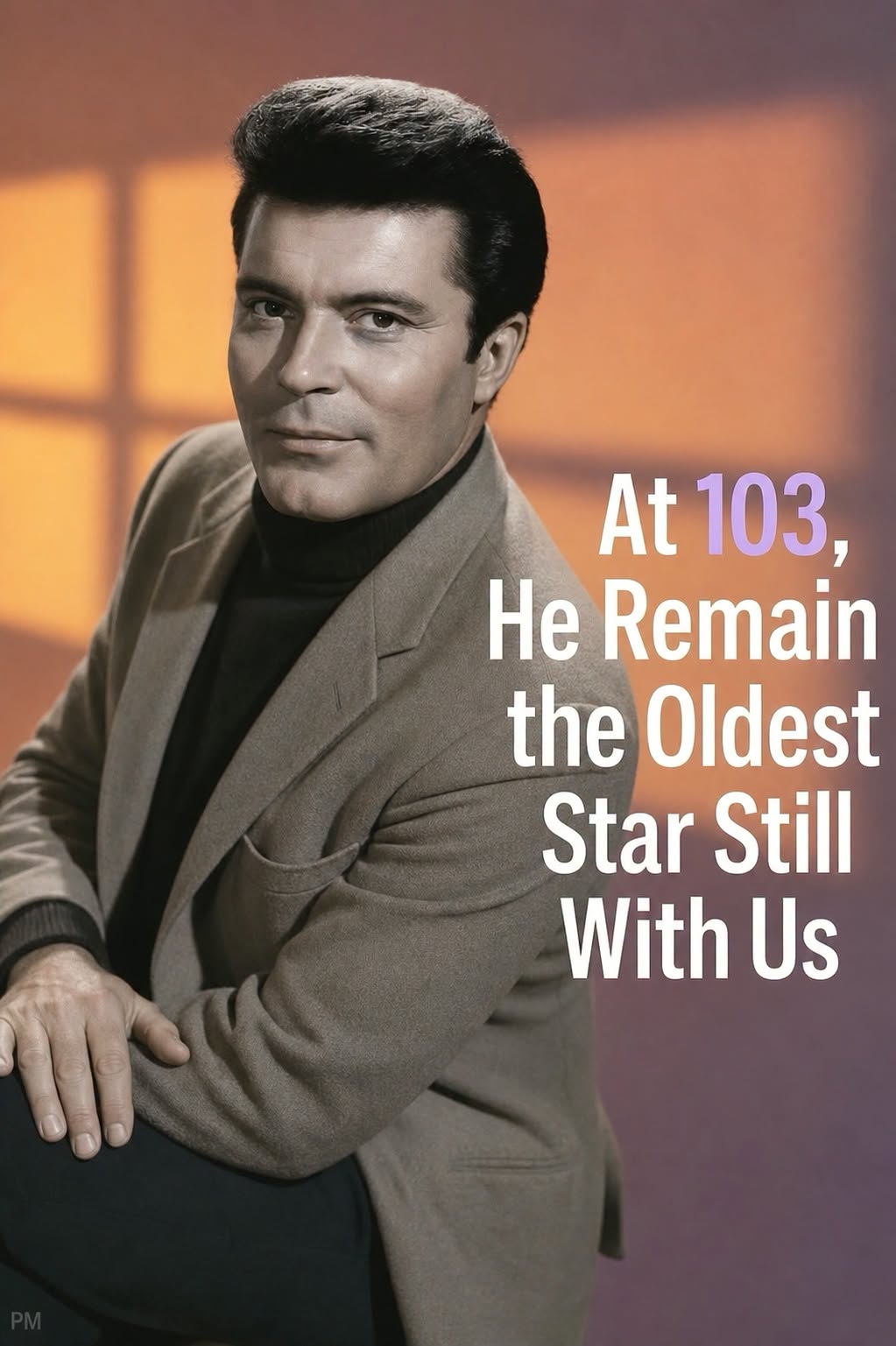
Ray Anthony’s life connects modern audiences to an era of American entertainment that otherwise survives mainly through recordings and old film. Born Raymond Antonini on January 20, 1922, he became a trumpeter, bandleader, songwriter, and actor whose career crossed big-band music, radio, television, and Hollywood. His longevity has made him one of the oldest surviving figures associated with that world.
Anthony grew up in a musical family and began playing the trumpet as a child. His talent eventually brought him into the Glenn Miller Orchestra in 1940. He was still a young man, but he was performing inside one of the defining popular-music institutions of the period. Military service in the United States Navy interrupted that path during World War II.
After returning to civilian life, Anthony formed his own orchestra and built an identity beyond his connection to Miller. His band became known for polished arrangements, dance music, and recordings that carried the big-band sound into a changing postwar market. His version of At Last became a major hit, and compositions such as The Bunny Hop helped attach his name to the popular culture of the 1950s.
His appearance and ease before an audience also opened doors in film and television. Anthony and his orchestra appeared in musical productions, and he hosted The Ray Anthony Show during the 1950s. He was part of a period when bandleaders could move between nightclubs, recording studios, cinema, and television variety programs without treating those worlds as separate careers.
Calling him a Hollywood star captures only one part of his significance. Anthony is a living link to the machinery that once placed dance orchestras at the center of mass entertainment. When he lifts a trumpet or recalls those years, the value is not limited to nostalgia. His memory connects names, sounds, working practices, and social spaces that cannot be reconstructed from a list of credits alone.
Other centenarians preserve different corners of the same past. Caren Marsh Doll, born in 1919, worked as a stand-in for Judy Garland on The Wizard of Oz and also appeared in the era of Gone with the Wind. Her memories offer firsthand knowledge of studio production and dance at a time when Hollywood’s most familiar images were still being created.
Musician and composer Elizabeth Waldo devoted much of her long life to collecting, performing, and preserving Indigenous music from the Americas. Her work protected traditions that commercial entertainment might otherwise have flattened or ignored. Longevity made her more than a surviving celebrity. It made her a guardian of cultural knowledge carried through sound.
A broader group of veteran performers continues to challenge the idea that visibility must vanish with age. June Lockhart, Dick Van Dyke, Mel Brooks, William Shatner, Barbara Eden, Clint Eastwood, Sophia Loren, Michael Caine, Julie Andrews, Shirley MacLaine, Al Pacino, and Jane Fonda represent different decades and disciplines. Some continue performing, directing, writing, appearing publicly, or speaking about the industries they helped shape.
Their importance is not that they defeated time or remained frozen at the height of fame. Aging changed their voices, bodies, opportunities, and relationship with audiences. What endures is the record of adaptation. They survived studio systems, changing technology, shifting tastes, and cultural moments that made earlier forms of celebrity seem temporary.
Ray Anthony’s more than century-long life gives those changes a human scale. He was born before synchronized sound transformed movies and began his career when live bands carried popular music from ballroom to ballroom. By the digital era, the same performances could be streamed instantly around the world. His presence reminds listeners that entertainment history was lived by people who worked night after night, adjusted to each new medium, and kept their craft alive even after the audience changed.