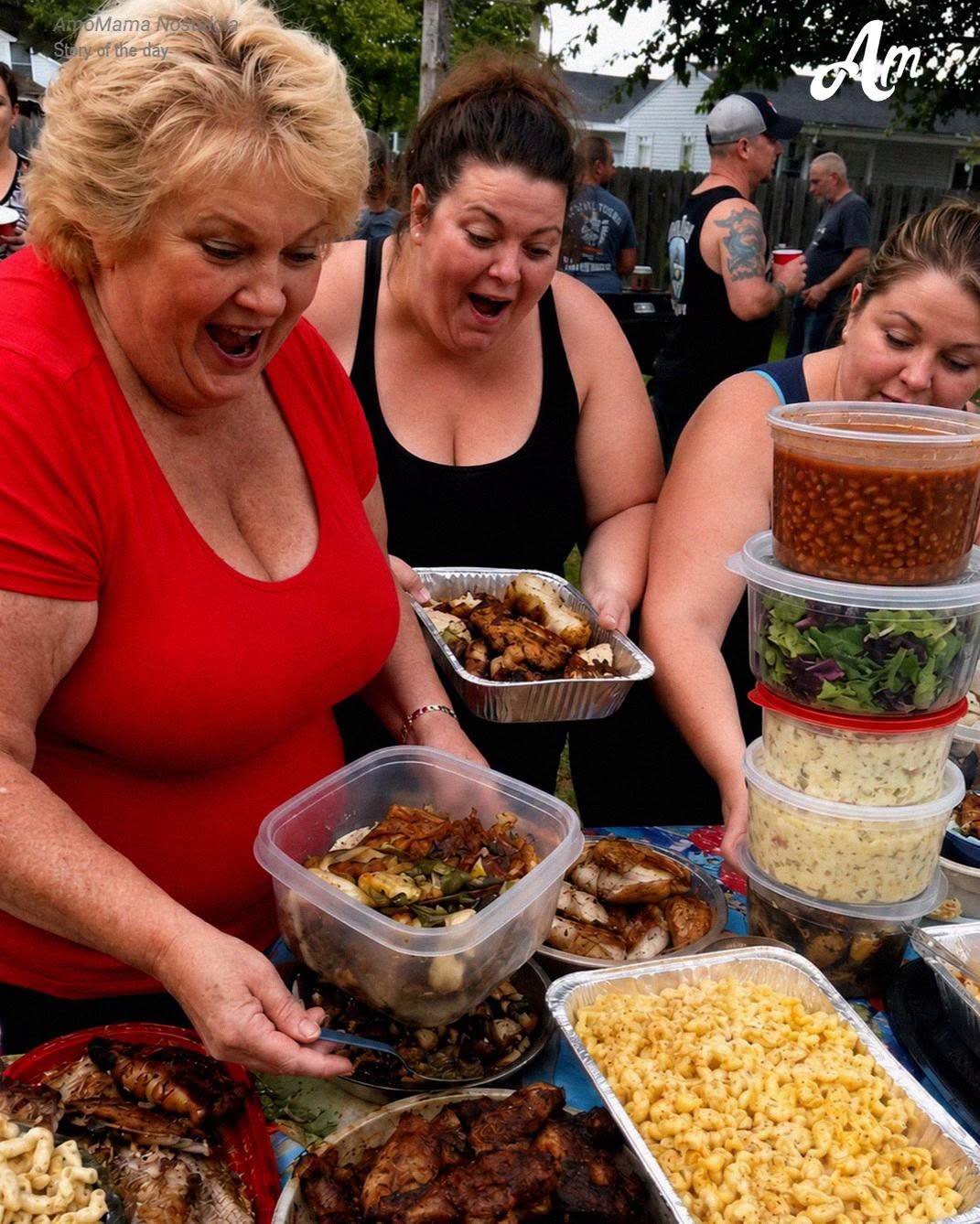
I began preparing my husband Leo’s forty-second birthday barbecue at five in the morning. Hosting was something I loved, so I made ten dishes, four desserts, and enough drinks for the entire family. Most guests also brought something. My mother-in-law Linda never did. For fifteen years, she arrived with her daughters, Jessica and Nicole, ate generously, and contributed nothing.
This year, Linda entered the backyard carrying two enormous tote bags. I heard plastic containers clattering inside, but she refused my offer to take the bags. After everyone ate a little, the party spread across the yard. Some guests played ball while others returned to the grill. I stepped inside for napkins and came back two minutes later to find Linda and her daughters packing every dish from the table.
The containers matched and some were already labeled. Linda was not taking one small plate after the celebration. She had created an assembly line while guests were still eating. When I told her to stop, she asked what she and her daughters were supposed to eat the next day. She said I no longer needed the food and called me stingy for objecting.
I reminded her that the party had barely begun and several dishes belonged to guests who brought them. Linda ignored me and continued filling containers, saying I could simply make more food if anyone remained hungry. Leo saw the confrontation but gave me the familiar look asking me not to create a scene in front of everyone.
Aunt Denise quietly pointed out that Linda had done the same thing at every holiday for two years because nobody challenged her. I thought about my own mother, who smiled through disrespect and cried alone afterward. I did not want to become that person, but I also did not want to scream across a family barbecue. I needed a clear boundary.
I smiled and told Linda she was right. I asked her to wait while I brought another special dessert in a container. Inside the kitchen, I collected grocery receipts from two years of hosting. I wrote an itemized bill estimating what Linda’s family had eaten and carried away, placed it in a clean container, and added a grocery-store gift card, a sticky note, and one homemade cookie.
Linda eagerly opened the container in front of everyone. The note wished her well with tomorrow’s lunch and was signed by her stingy daughter-in-law. I calmly announced the new rule: every guest would contribute a dish, or Linda could host the next gathering, and leftovers would remain at the house where they were cooked.
Then Jessica finally spoke. She apologized and revealed that Linda had not been feeding the leftovers to her daughters. She resold the food to members of her book club for ten or fifteen dollars per container while claiming she had made it. Nicole confirmed the story and explained why all the containers matched.
Leo walked over and told his mother to apologize to me. Linda offered a reluctant apology, left without the food, and abandoned the containers she had planned to fill. Jessica and Nicole stayed to help clean up, and we shared the real cheesecake I had kept inside.
Leo admitted he should have addressed the behavior years earlier. I told him that what mattered was that he handled it now. The confrontation was not about refusing generosity. I had gladly spent the morning feeding our family. It was about one guest deciding that my labor and other people’s contributions belonged to her, then insulting me when I objected.
I did not ban Linda from future celebrations or demand repayment for every past meal. I established rules that should have existed all along. Kindness did not require me to surrender the entire table, and keeping peace did not mean remaining silent while someone exploited everyone else’s work. The birthday ended with less food than planned but a healthier understanding: generosity can include a backbone.