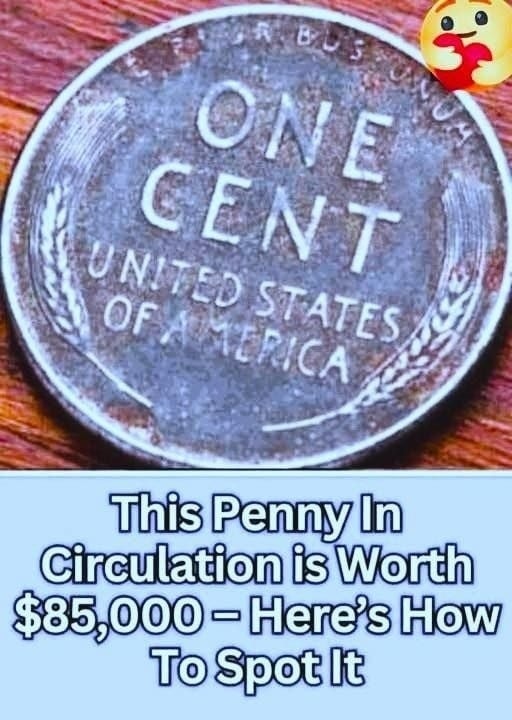
In the world of numismatics, there is no greater white whale than the 1943 copper wheat penny. To the untrained eye, it is merely a dull, weathered bit of copper tucked away in the dusty corner of a forgotten Mason jar or buried beneath a layer of lint in a kitchen junk drawer. But to those who know the history of the United States Mint, this humble coin represents one of the most significant metallurgical accidents in American history—a wartime error that can turn a handful of pocket change into a windfall worth upwards of $85,000 or more at auction.
To understand why this specific coin is so valuable, one must look back to the height of World War II. In 1943, the United States was deeply embroiled in the global conflict, and every resource was being diverted toward the war effort. Copper, the primary material for the Lincoln cent, was desperately needed for the manufacturing of shell casings and telephone wires. In a move of patriotic necessity, the U.S. Mint transitioned from copper to zinc-coated steel for the production of pennies that year. These “steelies” are easily identifiable by their silver, magnetic appearance, and while they are historical curiosities, they were minted by the billions and generally hold little value today.
However, the legend of the 1943 copper penny was born from human error and mechanical residue. It is believed that a small number of copper planchets—the blank metal discs used to strike coins—were left over in the large hopper bins from the 1942 production run. When the presses began striking the new 1943 steel design, these stray copper blanks were caught in the machinery. They were struck with the 1943 date and quietly dropped into the bins along with millions of steel cents. Undetected by quality control, these few dozen accidents slipped out into the hands of an unsuspecting public, hidden in plain sight for decades.
The scarcity of the genuine 1943 copper cent is staggering. Numismatic experts estimate that fewer than 40 of these coins were ever produced, and only a fraction of those have been authenticated. Because of this extreme rarity, the coin has taken on a mythical status among collectors. Finding one is not merely a matter of luck; it is a brush with a historical anomaly. When one of these coins goes up for auction, the bidding is fierce, often exceeding the price of a luxury car or even a modest home. In recent years, high-grade examples have fetched prices north of $200,000, though even a heavily circulated, “well-loved” specimen can easily secure a life-changing $85,000.
However, the high value of the 1943 copper penny has also made it a prime target for deception. The market is flooded with fakes, ranging from crude school projects to sophisticated forgeries. The most common “fake” is simply a 1943 steel penny that has been plated in copper to fool an amateur eye. Other forgers take a 1948 copper penny and meticulously shave down the “8” until it resembles a “3.” Because of this, the first and most important tool for any aspiring treasure hunter is a simple magnet. If a 1943 penny sticks to a magnet, it is a steel coin (even if it looks copper-colored). If it does not stick, the heart begins to race, as it may truly be composed of a solid copper alloy.
The search for these coins is a patient man’s game. Many families possess “penny jars”—vessels of copper and zinc that have accumulated over generations. Often, these jars are passed down from grandparents who lived through the war, people who may have unwittingly pocketed a wartime error while buying a newspaper or a loaf of bread in the 1940s. To look through these jars is to engage in a form of archaeological dig into family history. Each coin represents a transaction, a moment in time, and potentially, a hidden fortune.
Beyond the financial allure, the 1943 copper penny is a tangible connection to the American home front during World War II. It serves as a reminder of the sacrifices made during the era of rationing and the immense industrial pressure placed on the U.S. Mint. Every scratch on the surface of a genuine 1943 copper cent tells a story of survival. It survived the war, it survived the transition to the 1959 Lincoln Memorial design, and it survived the many times it was nearly spent at a candy store or a vending machine. It is a tiny, circular survivor of a century that changed the world.
For the average person, the decision to finally sit down and sort through a collection of loose change can be daunting. It is a task often relegated to “someday.” But as the 2020s progress and the world moves closer to a cashless society, these physical tokens of history are becoming even more precious. The window of opportunity to find one in circulation is closing, but the possibility that one is sitting in your house right now is statistically real. All it takes is a sharp eye to spot that specific date—1943—and a steady hand to tilt it toward the light.
When a potential discovery is made, the process of authentication is rigorous. Reputable organizations like the Professional Coin Grading Service (PCGS) or the Numismatic Guaranty Company (NGC) are the final arbiters of a coin’s legitimacy. They analyze the weight, the strike characteristics, and the metal composition using specialized equipment. For the lucky few who receive a positive certification, the world changes instantly. Debt can be erased, retirement plans can be moved forward, and a forgotten family keepsake becomes a legendary headline.
The 1943 copper wheat penny remains the ultimate symbol of the “hidden treasure” narrative. It proves that wealth is not always found in gold mines or stock portfolios; sometimes, it is literally in the palm of your hand. It encourages us to look closer at the world around us, to question the value of the mundane, and to remember that history is often made of mistakes. So, the next time you see a copper coin on the sidewalk or hear the jingle of change in a coat pocket, don’t dismiss it. Take a moment to check the date. You might just be holding the accidental masterpiece of the U.S. Mint, a wartime relic that has been waiting eighty years for you to notice it.