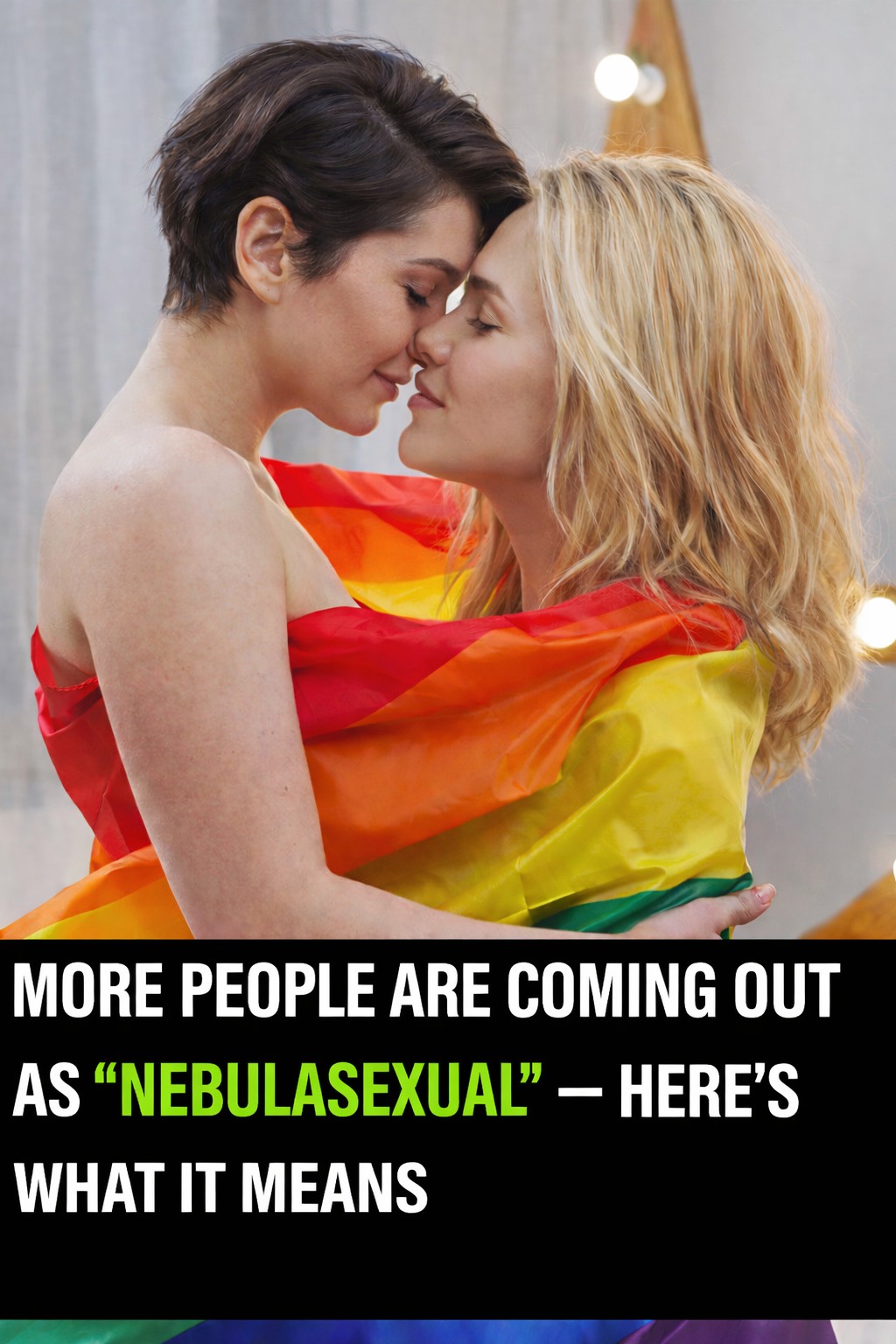
The framework of human identity is transforming as society adopts a more detailed perspective on how we understand ourselves and our inclinations. While established labels have traditionally provided a foundation for orientation, a fresh wave of terminology is surfacing to connect neurological patterns with romantic or physical interest. One of the most talked-about terms is nebulasexual, an identity that has ignited a national dialogue regarding how neurodiversity and sexuality overlap. For individuals living with ADHD, autism, or OCD, the way they interpret the world is fundamentally distinct, and many now assert that their experience of attraction follows that same unique pattern. This change isn’t just about adding a new word to a list; it’s about validating a specific, “clouded” reality that millions deal with every day.
To comprehend the growth of nebulasexuality, one must examine its origins and the specific gap it addresses. Taken from the Latin word “nebulosus,” which translates to foggy or unclear, the term describes a situation where a person’s neurodivergence directly impacts their capacity to identify or group their sexual attraction. It sits under the quoisexual umbrella—a group for those who find the concept of sexual attraction irrelevant, confusing, or impossible to tell apart from other emotions. For a nebulasexual person, determining if they are attracted to someone isn’t a simple “yes” or “no,” but a “system error” caused by how their brain manages input. This differs from being “unsure” in a traditional way; it is a permanent neurological filter that makes standard experiences of attraction feel foreign.
The neurodivergent community has been the main force behind this movement. On sites like Reddit and Facebook, people on the autism spectrum have shared accounts of feeling “flawed” because they don’t experience the sudden, clear spark of desire that society portrays as a universal truth. For an autistic individual, sensory processing difficulties can make the physical signs of attraction hard to distinguish from sensory overload. Someone might feel drawn to another person but be unable to tell if that pull is sexual, an aesthetic liking of their looks, or a simple emotional need for company. By using the nebulasexual label, these people are changing the narrative. They aren’t failing to hit a mark; they are just vibrating on a different frequency. As one digital user pointed out, it offers a space for a complex reality that the typical norm ignores.
ADHD and OCD also contribute heavily to this blurred landscape. Those with ADHD often explain that their brains hyper-fixate on specific traits or people. When an ADHD brain locks onto someone, the power of that focus can easily be mistaken for sexual attraction, causing confusion when that fixation eventually wanes. For these people, the “haze” of nebulasexuality is a helpful term that explains their brain’s habit of processing social ties as a series of intense, shifting signals. Similarly, those with OCD may deal with intrusive thoughts that make it hard to separate real desires from the internal noise of their condition. In these instances, nebulasexuality serves as a relief, letting them acknowledge that while they may want a partner, they truly don’t know if the biological “attraction” exists in the way others describe it.
However, as with any major change in social categories, this identity has faced pushback. Skeptics often point to the “alphabet soup” of modern terms as a sign of making life too complicated. Many argue these labels are unnecessary, claiming that feeling confused about sexuality is a universal human trait that doesn’t need a medical-sounding name. Social media has become a digital battlefield for this topic, with some users venting frustration over what they see as an endless list of extra terms. This friction often comes from a basic disagreement on what sexuality is: is it a set biological fact, or a social idea built by our personal views?
The link between gender, sexuality, and biological sex is at the center of this clash. Supporters of these new labels argue that while biological sex is a physical fact, gender and sexuality are the ways we perceive and act upon that fact. In this view, everyone’s experience of attraction is as unique as a fingerprint. Since neurodivergent people literally see and feel the world differently due to their brain makeup, it makes sense that their internal view of intimacy would be just as distinct. This outlook sees nebulasexuality not as a passing fad, but as a necessary growth of our language. As our knowledge of the human brain gets more advanced, our words must grow to keep up.
the wider effects of this movement are already showing up in modern dating. For typical partners, knowing that a loved one identifies as nebulasexual can change the relationship’s tone. It shifts the question from “Why don’t you feel what I feel?” to “How does your brain interpret our bond?” This change in focus can lower the shame and stress that often break apart relationships involving neurodivergent people. Instead of forcing themselves into a standard box, people are finding peace in the fog. They are embracing the uncertainty and connecting with others who see things through the same clouded lens.
In the end, the rise of nebulasexuality points to a growing hunger for being genuine in a complicated world. Whether the term stays a small label within specific circles or becomes widely accepted remains to be seen. What is certain is that the discussion isn’t ending. By questioning the idea that attraction must be clear and immediate, nebulasexual people are forcing a rethink of what it means to be human in the 21st century. They are declaring that even if their feelings are fuzzy, their identity is real. In a world that wants black-and-white answers, they are choosing the grey, proving that sometimes the most honest description is to admit that things are a bit blurry. As more people speak up, the “nebula” expands, turning a hidden experience into a visible community.
NEBULA SEXUALITY EXPLAINED Why Neurodivergent People Are Adopting This Rare New Identity
Previous Article Next Article
The Brutal Reality Facing Artemis II Astronauts After Splashdown That NASA Does Not Want You To See
Former NFL Player Chris Payton-Jones Dies at 30 After Car Accident