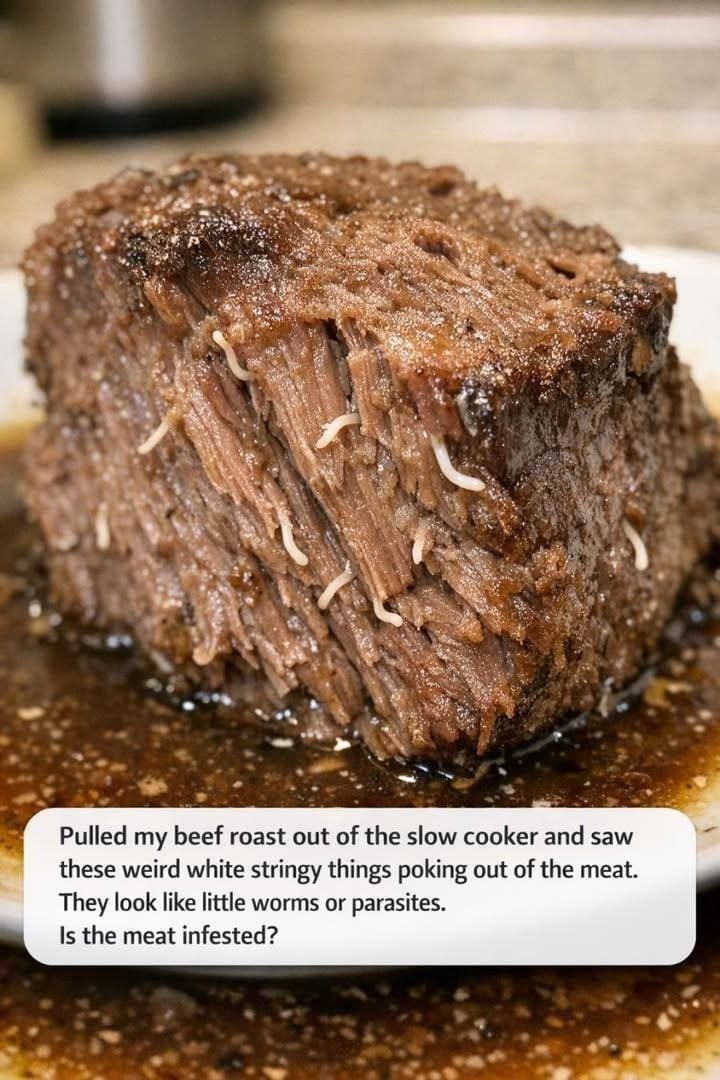
The fragrance of a slow-cooked beef roast is typically one of the most inviting scents you can bring into your home. After hours of anticipation, the moment finally arrives to lift the heavy lid. Steam rises, carrying the rich aroma of herbs and savory meat. But imagine that culinary joy turning into instant dread when you pull the roast out and see a strange network of pale, white, thread-like things poking through the muscle fibers. Your stomach turns, and you immediately worry that the meat is full of worms or parasites.
Finding what looks like parasites in your dinner is a terrifying experience that can ruin an evening. It’s natural to question the meat’s quality or the safety of the store where you bought it. However, before you throw the entire meal in the trash, it’s important to understand the harmless science behind what is actually happening inside your pot.
The Anatomy of the Roast
To solve this mystery, we have to look at the anatomy of the meat. Popular slow-cooking cuts like chuck, brisket, or rump aren’t just solid muscle; they are held together by a dense network of connective tissue. This tissue is primarily made of a protein called collagen. Collagen is the structural “glue” that provides strength to an animal’s muscles and tendons. In its raw form, it is incredibly tough and rubbery, which is why these cuts need hours of heat to become edible.
The Science of the Transformation
When you subject a tough cut of beef to hours of low, moist heat, a molecular transformation occurs:
- The Breakdown: The rigid collagen begins to denature and melt.
- The Result: It turns into a soft, gelatinous substance. This is the secret to “melt-in-your-mouth” beef.
- The Visual: As the tissue softens and unravels, it can contract and poke out between the muscle fibers. This creates the appearance of pale, stringy strands or white bits.
Collagen vs. Parasites
To someone who isn’t expecting it, these strands look almost exactly like small worms. However, there is a massive difference in how they feel and behave:
- Texture: If you touch the stringy material with a fork, you’ll notice melted collagen is incredibly soft, slick, and easy to pull apart. It often dissolves or melts further when touched.
- Structure: Real parasites would be firm, uniform structures that do not melt or yield to gentle pressure.
Furthermore, the chances of finding live parasites in commercially sold beef in countries with modern inspection systems are extremely low. Strict regulations ensure that contaminated meat almost never reaches supermarket shelves.
Safety and Temperature
The temperature of a slow cooker is more than enough to kill any potential pathogens. Slow cookers usually operate between 170°F and 200°F. For a roast to become tender, its internal temperature typically reaches 190°F to 205°F. These temperatures are far higher than the thermal death point for common bacteria or parasites. If anything had been present, it would have been completely neutralized long before you opened the lid.
How to Reassure Yourself
Before letting fear win, check these two things:
- The Smell: Did the meat smell fresh and normal before and after cooking? A savory, pleasant aroma is a great sign of safety.
- The Feel: Are the white strings soft and surrounded by tender, shreddable meat? If so, it’s just natural collagen.
Understanding the chemistry of slow cooking can turn a moment of panic into a lesson in cooking. Those white strings are actually proof that the process worked perfectly—the collagen did its job of tenderizing the meat, turning a tough cut into a luxury feast. The next time you see them, you can ignore the worry and enjoy the meal, knowing it’s just science on your plate.