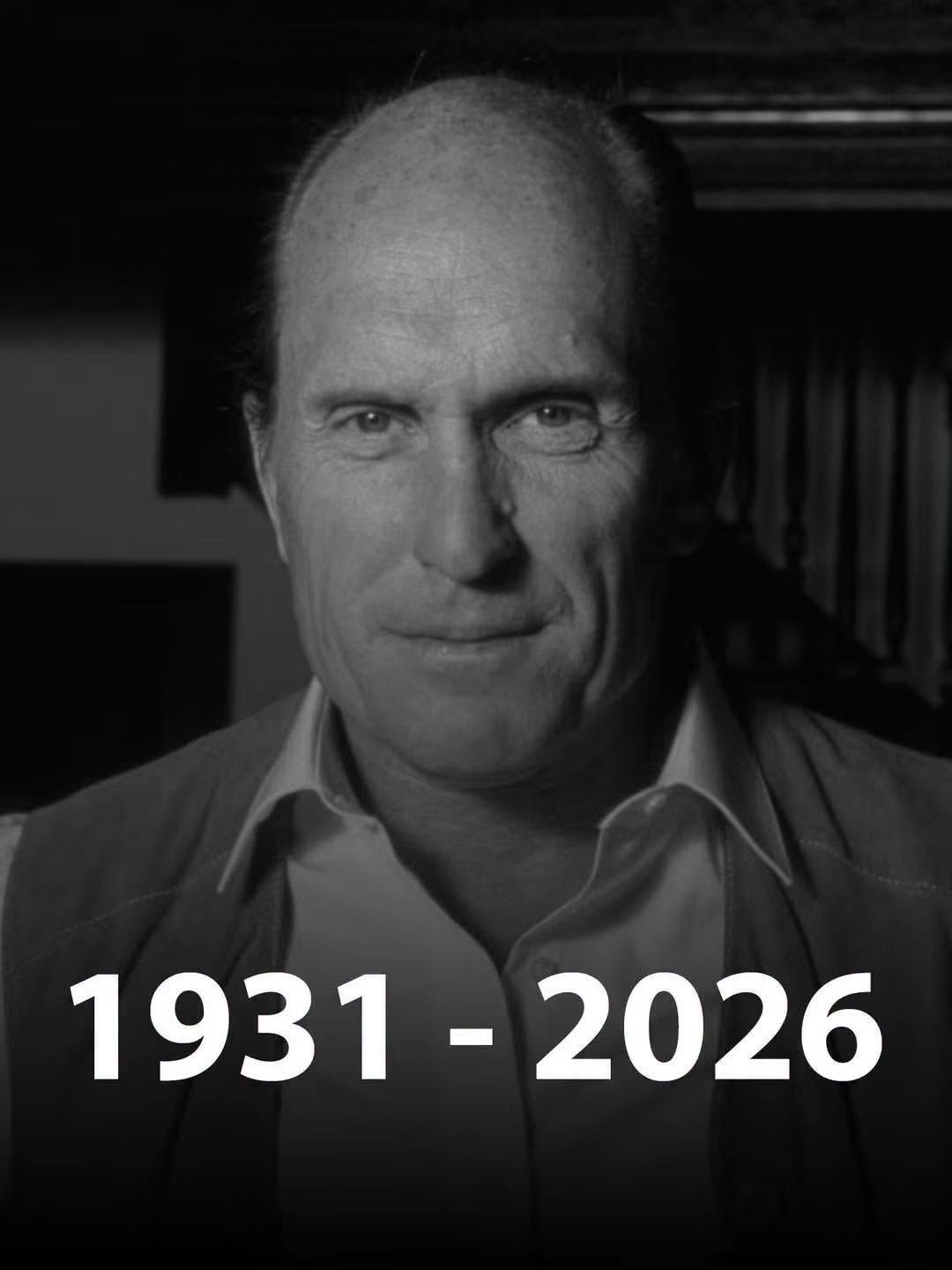
The entertainment world is remembering acclaimed American actor Robert Duvall, whose remarkable career left a lasting impact on generations of filmmakers and movie audiences. According to a statement released by his family, Duvall passed away peacefully at his home in Middleburg, Virginia, at the age of 95, surrounded by his wife and loved ones. His passing marks the end of a career that helped define some of the most memorable moments in modern cinema.
Born on January 5, 1931, in San Diego, California, Duvall developed a passion for acting at an early age. After serving in the United States Army, he studied acting alongside several future Hollywood stars and gradually established himself as a talented performer. His dedication to the craft, combined with his ability to portray a wide range of characters, earned him respect throughout the entertainment industry.
Duvall rose to international recognition through a series of unforgettable film performances. His portrayal of Tom Hagen in The Godfather and The Godfather Part II introduced audiences to his calm yet commanding style, while his unforgettable role as Lieutenant Colonel Bill Kilgore in Apocalypse Now became one of the most recognizable performances in film history. Throughout his career, he consistently delivered thoughtful and authentic performances that resonated with viewers.
In 1984, Duvall received the Academy Award for Best Actor for his leading role in Tender Mercies. The performance showcased his ability to bring emotional depth and realism to complex characters. Over the years, he earned seven Academy Award nominations, reflecting the consistent quality of his work across multiple decades. His achievements also included Golden Globe Awards, Emmy recognition, and numerous honors from film organizations around the world.
Beyond the awards, Duvall was respected for his professionalism, humility, and commitment to storytelling. Whether appearing in major Hollywood productions or smaller independent films, he approached every role with the same level of care and dedication. Colleagues frequently spoke about his strong work ethic and willingness to support fellow actors on set. His performances often demonstrated that subtlety and authenticity could be just as powerful as dramatic spectacle.
Duvall’s influence extended beyond individual performances. He helped establish a style of screen acting built on careful observation, restraint, and precise character detail. Younger performers often studied the way he could communicate an entire history through a pause, a look, or a small change in posture.
His filmography crossed genres and generations, from crime dramas and war films to westerns, family stories, and quiet character studies. That range allowed audiences to encounter him in many different settings while still recognizing the honesty he brought to every role. Directors valued his preparation, and fellow actors frequently described scenes with him as focused and unpredictable in the best possible way.
As tributes continue, fans are returning to the films that made him a defining presence in American cinema. His work remains available to new audiences, preserving the performances that earned him lasting admiration. For many viewers, remembering Robert Duvall means remembering characters who felt fully lived in, even when they appeared on screen for only a short time.