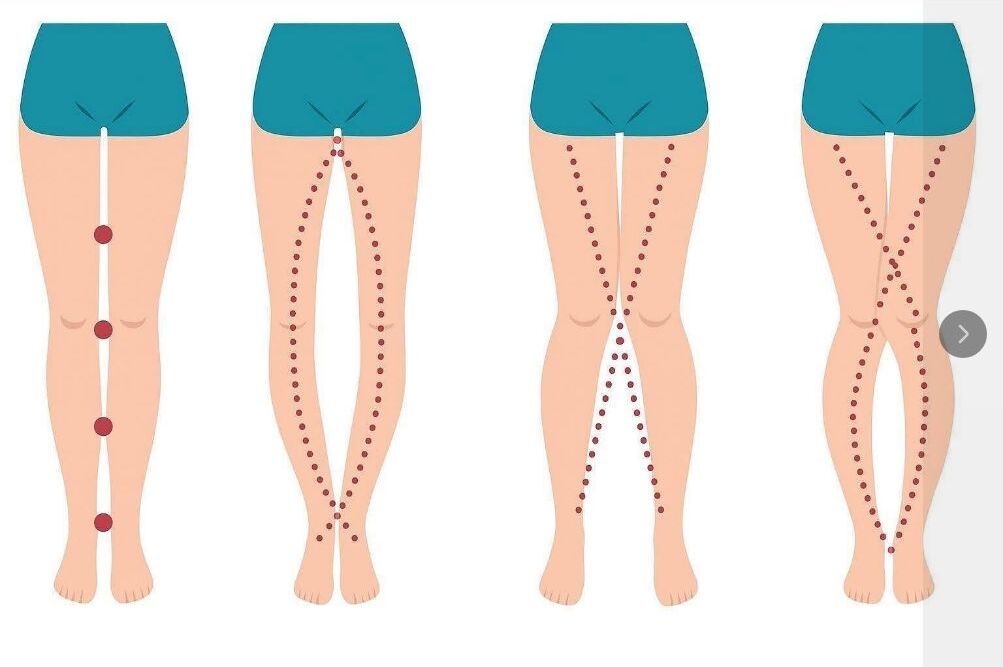
Online diagrams often claim that the shape of a woman’s legs reveals intimate details about her reproductive anatomy, sexual history, or vaginal health. Those claims are not medically reliable. Leg alignment is mainly influenced by bone structure, pelvic width, joints, genetics, muscle development, and posture. It cannot accurately reveal the size, shape, “tightness,” health, or sexual experience of the vagina.
Bodies naturally vary. Some people’s knees touch while their ankles remain apart, others have space between the thighs, and some legs appear straighter or more curved. These patterns may be described as knock-knees, bowlegs, or ordinary alignment differences. Mild variation is common and often causes no problem.
The vagina is an internal muscular canal designed to stretch and contract. Its condition cannot be diagnosed by looking at a woman’s legs, hips, walk, clothing, or outward appearance. Sexual activity also does not permanently create a visible leg shape.
Pelvic width can influence the space between the thighs, but the pelvis is not a direct measure of vaginal anatomy. Weight distribution, femur angle, connective tissue, and muscle tone all affect how the lower body appears. Two women with similar legs may have completely different medical histories, and two with different leg shapes may be equally healthy.
Gait can occasionally provide clues about pain, weakness, injury, or neurological and joint conditions. A persistent limp, sudden change in walking, severe knee pain, swelling, or difficulty bearing weight may deserve medical evaluation. That is very different from claiming that gait exposes someone’s intimate life.
Vaginal health is better assessed through actual symptoms. Unusual discharge, strong odor, itching, burning, sores, bleeding outside the expected menstrual cycle, pelvic pain, pain during sex, or urinary symptoms should be discussed with a qualified healthcare professional. These signs can have many causes, including irritation, infection, hormonal changes, or other conditions.
People should also avoid using appearance-based myths to shame women. Claims that body shape reveals morality, sexual behavior, fertility, or worth are stereotypes presented as biology. They can delay appropriate care and reinforce embarrassment around ordinary anatomy.
Fitness may strengthen the legs and pelvic-floor muscles, but exercise does not rewrite basic bone structure. Pelvic-floor exercises may help some people with urinary leakage or recovery after childbirth, but incorrect technique can worsen certain symptoms. A clinician or pelvic-health physiotherapist can provide individualized guidance.
The useful truth is simple: legs communicate movement and may reflect posture or musculoskeletal health. They do not reveal private gynecological facts. When someone has concerns about reproductive or vaginal health, symptoms and medical assessment matter—not diagrams, thigh gaps, or internet guesses.