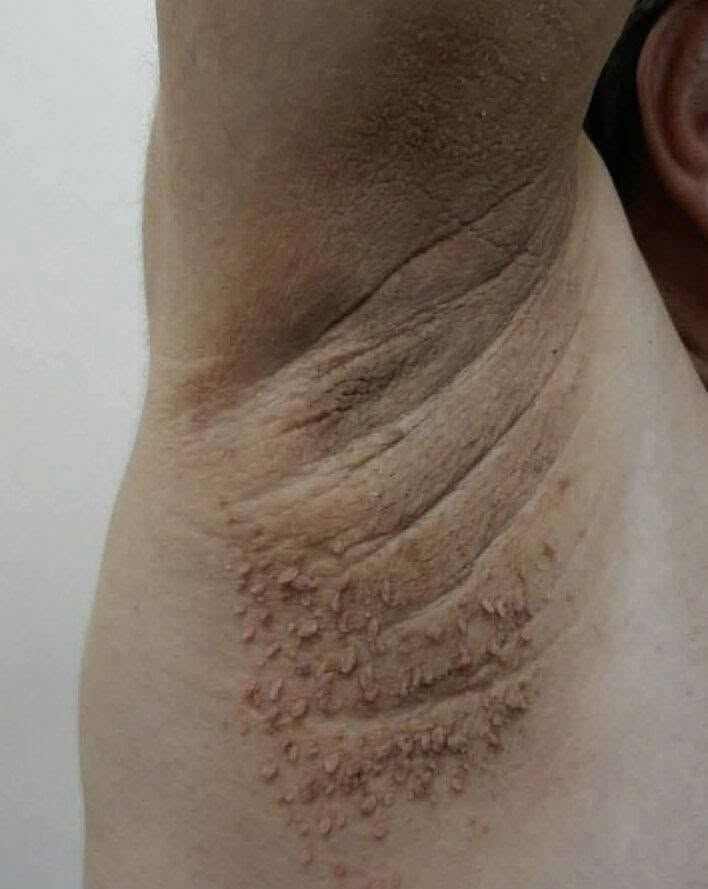
Dark, velvety patches of skin can be confusing, especially when they appear gradually around the neck, underarms, groin, or other skin folds. Because these areas may look simply discolored, some people assume the change is caused by dirt or inadequate washing. The source article explains why that assumption can be misleading. One possible explanation is acanthosis nigricans, a condition that changes the color and texture of the skin but is not contagious and is not a sign of poor hygiene.
The affected skin may become brown, gray, or darker than the surrounding area, depending on a person’s natural tone. It can also feel thicker, softer, or slightly raised. Although the skin change itself is often not painful, it can be a visible clue worth discussing with a clinician. Acanthosis nigricans is not usually a diagnosis on its own; instead, it may be associated with an underlying health factor.
Insulin resistance is one of the most common connections. In this situation, the body’s cells do not respond effectively to insulin, so the body may produce more of it. Higher insulin levels can influence skin-cell growth and contribute to darker, thicker patches. Insulin resistance is often seen alongside changes in blood sugar, weight, or metabolic health, although not every person with one condition develops the other.
Hormonal conditions and some medications can also play a role. A family tendency is possible in rarer cases. Because there are several potential explanations, it is important not to self-diagnose from a photograph or a social-media post. A healthcare professional can look at the skin, review symptoms and medications, and decide whether tests such as blood-glucose or hormone checks would be useful.
Sudden, rapidly spreading, or unusual changes deserve prompt medical attention. The article notes that an uncommon form of acanthosis nigricans can be associated with more serious internal illness, but that most cases are not caused by cancer. The point is not to panic; it is to take a new change seriously enough to get a proper evaluation, particularly if it appears quickly or affects unusual places such as the mouth or palms.
Care generally focuses on the cause rather than on trying to scrub the discoloration away. Harsh rubbing can irritate the skin and will not remove a patch that is linked to an internal factor. If insulin resistance, a hormone issue, or a medication is involved, treatment of that issue may improve the skin gradually. Changes can take time, and results differ from person to person.
Comfortable skincare still matters. Gentle cleansing, avoiding irritation, and asking a clinician before using strong cosmetic products can help protect the area. A person should never stop a prescribed medication solely because of a skin change; that decision belongs with the prescriber, who can assess benefits, risks, and alternatives.
Children can develop these patches too, particularly when metabolic factors are present, so pediatric evaluation is sensible rather than dismissing the change. Adults who notice new dark areas should also make an appointment instead of relying on guesses. A short clinical conversation may provide reassurance or reveal a manageable health issue early.
The practical message is straightforward: dark, velvety skin patches are not a cleanliness problem and cannot be passed from one person to another. They are often harmless in themselves, but they can be the body’s way of signaling that a closer look at overall health may be helpful. Professional assessment offers the safest route to clarity and appropriate care.
It is also useful to note what has changed over time. Recording when the patches first appeared, whether they are growing, and whether other symptoms are present can make a medical visit more informative. Clear observation, rather than fear or self-blame, helps a clinician decide what should be checked and what care makes sense next.