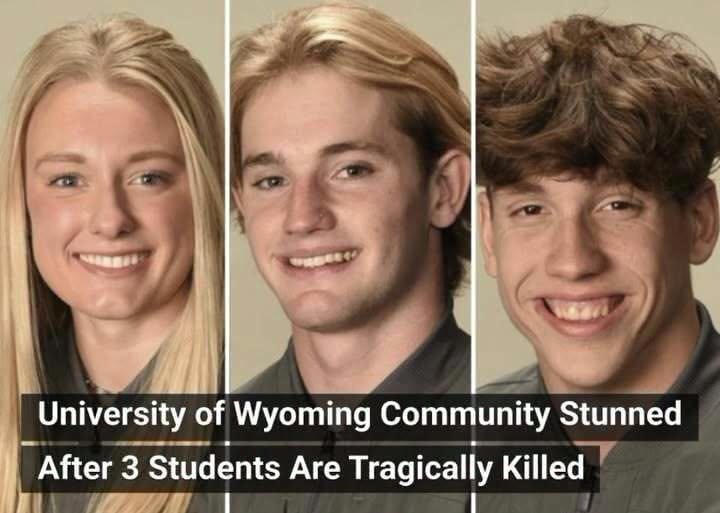
In a devastating incident near the Wyoming-Colorado border, three young lives from the University of Wyoming’s swimming and diving team were tragically cut short in a car crash. The victims, identified as sophomore Charlie Clark, 19, from Las Vegas; junior Luke Slabber, 21, from Cape Town, South Africa; and freshman Carson Muir, 18, from Birmingham, Alabama, lost their lives at the intersection of U.S. Highway 287 and Red Mountain Road in between Livermore and Virginia Dale, Colorado.
The early findings indicate that the driver swerved, leading the vehicle to veer off the road and roll multiple times. The university stated that the accident is currently under investigation, and the Colorado State Patrol, on Friday, mentioned that no potential factors have been ruled out, including speed, impairment, or other distractions that might have contributed to the tragic crash.
Amidst this heartbreaking incident, two other members of the men’s swimming and diving team sustained non-life-threatening injuries and have been discharged from the hospital. Notably, one of the survivors was behind the wheel when the crash occurred shortly before 2:45 p.m.
The vehicle, a Toyota RAV4 carrying five occupants, left the southbound lane and rolled multiple times, resulting in the ejection of two individuals, as reported by the Colorado State Patrol, which is actively investigating the details surrounding the accident.
The loss described in the report reaches beyond the swimming pool. A university team is also a community of classmates, training partners, coaches, and friends who share ordinary days as well as competition. The deaths of three young members leave an absence in each of those settings, even for people whose connection to the team was informal.
The report identifies Charlie Clark, Luke Slabber, and Carson Muir by name and describes the crash that took their lives. Those details matter because they keep attention on the people involved. A road incident can quickly become a discussion of a vehicle, a location, or an investigation, while the families and friends are confronting the loss of someone they knew closely.
It is also important to keep the reported facts separate from explanations that have not been established. The account describes the vehicle leaving the road and rolling, and says that two other occupants survived with injuries. It does not provide a final finding about why the crash occurred. The investigation remains the place where that question must be addressed.
For the university community, the immediate story is one of grief and support. Teammates who had expected to see these students again must now absorb news that changes their daily lives. Coaches and classmates face the same challenge in different ways. The article does not suggest that there is one simple response that can meet every person's needs.
The names, ages, and shared connection to the university swimming and diving program give the report its human weight. These were young people with lives extending well beyond a single journey. Remembering that wider context allows the account to acknowledge the scale of the loss without speculating about their private lives or about circumstances that investigators have not confirmed.
As further information becomes available, the established details can be updated. Until then, the story remains grounded in the reported deaths, the surviving occupants, and the university community mourning three of its members.