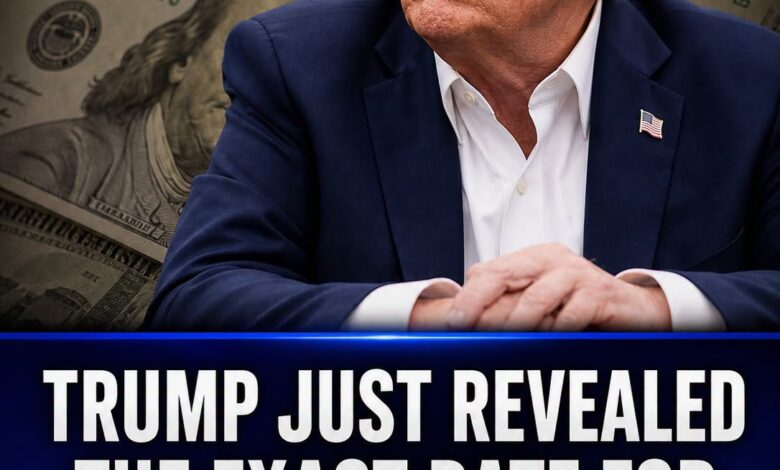
Donald Trump’s proposal to distribute $2,000 tariff-funded rebate checks has attracted intense attention from Americans hoping for direct financial relief. The idea is often described as a tariff dividend: revenue collected from import duties would be returned to qualifying households. The promise is easy to understand, but the path from a political proposal to money in a bank account remains uncertain. No payment date is guaranteed simply because the plan has been discussed publicly.
Tariffs are taxes collected by the United States government on imported goods. Although political speeches sometimes describe foreign countries as paying them, the legal payment is generally made by the U.S. importer. That business may absorb some of the cost, negotiate with suppliers, or pass part of it to customers through higher prices. Tariff revenue does enter the federal treasury, but the wider economic effects are more complicated than a free source of money from abroad.
Supporters of the rebate proposal argue that households should share directly in the revenue generated by a tougher trade policy. They present a $2,000 payment as relief for working families facing high prices. Some versions of the idea include income limits so the money would go mainly to lower- and middle-income households rather than the wealthiest taxpayers. Details such as eligibility, household size, and tax treatment would have to be defined in legislation.
The central obstacle is Congress. A president can advocate for payments, but a broad national rebate program normally requires lawmakers to authorize the spending and establish the rules. A bill would have to move through the House and Senate and then be signed. Until that happens, there is no final application process, official delivery schedule, or approved list of recipients. Social-media posts that announce a precise check date are getting ahead of the law.
Cost is another unresolved issue. A $2,000 payment to tens of millions of people would require a very large amount of money. Tariff collections may cover part of the total, but policymakers disagree over whether the available revenue would be sufficient and whether it should be used for rebates. Some Republicans have argued that tariff money should instead reduce the federal debt, while others see direct payments as a way to make trade policy more tangible to voters.
The debate also includes inflation. A one-time payment can help a family manage rent, groceries, utilities, or debt. At the same time, injecting a large amount of money into the economy can increase demand, while tariffs can raise costs for some imported products. Economists therefore look at both sides of the proposal: the immediate benefit of the check and the possibility that higher prices could offset part of that benefit.
Income caps and funding alternatives have been discussed, but discussion is not the same as approval. Treasury officials could be responsible for sending payments if Congress creates the program, as happened with earlier federal stimulus checks. The Internal Revenue Service might use tax-return information to determine eligibility. Those operational details remain hypothetical until enacted legislation gives agencies a clear mandate.
People should be cautious about scams. A genuine federal payment would be announced through official government channels. No legitimate agency will require a fee, gift card, cryptocurrency transfer, or private social-media message to release a rebate. Anyone asking for a Social Security number or bank password through an unsolicited link should be treated with suspicion.
For now, the most accurate update is that the $2,000 tariff rebate remains a proposal rather than a guaranteed check. It has political support in some quarters and opposition in others, and Congress must resolve major questions about cost, eligibility, and the use of tariff revenue. Americans can follow the debate, but they should not build a household budget around a payment that has not yet been authorized. A campaign promise becomes real only when the law, funding, and distribution process are in place.