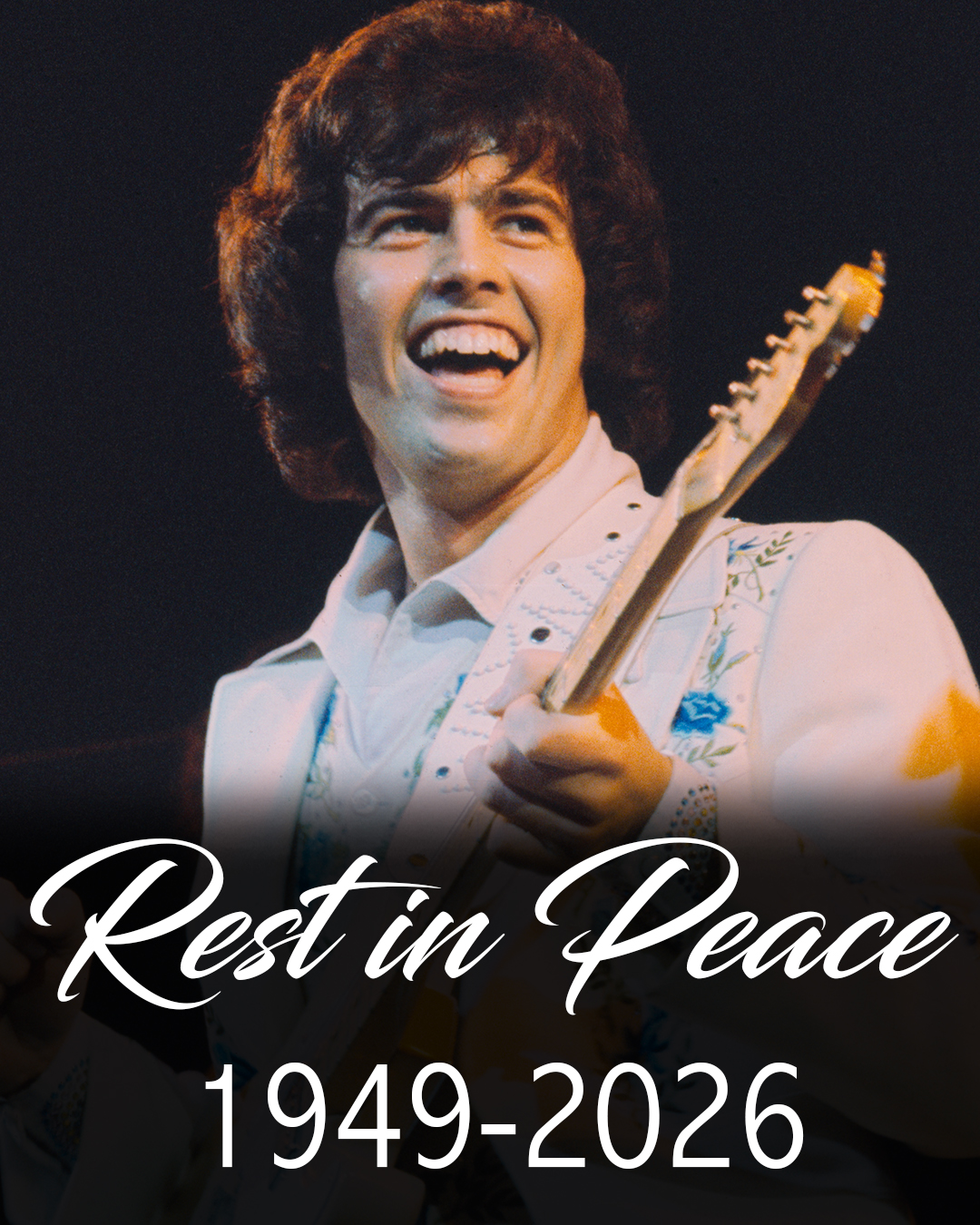
The sun set on a defining era of American music this week as the world received the somber news that Alan Osmond, the steadfast patriarch and creative engine behind the legendary Osmond family, has passed away at the age of 76. While the news emerged with a quiet dignity that matched the man himself, the impact of his departure has sent shockwaves through generations of fans who viewed the Osmonds not just as a band, but as a cultural institution. Surrounded by the unwavering love of his wife, Suzanne, and their eight devoted sons, Alan took his final breath, marking the conclusion of a life that was as disciplined as it was harmonious. Though the family has chosen to keep the specific cause of death private, the story he leaves behind is one of unparalleled resilience, faith, and a relentless pursuit of perfection.
Born in 1949, Alan was the eldest of the performing siblings, a position that naturally cast him into the role of protector, leader, and visionary. While his eldest brothers, Virl and Tom, faced the challenges of hearing impairment and did not join the musical act, Alan took the mantle of responsibility early. At the tender age of 12, he was already harmonizing in barbershop quartets, laying the foundation for what would become a global phenomenon. He wasn’t just a singer; he was the architect of a sound that would dominate airwaves for decades. Alongside brothers Wayne, Merrill, and Jay, Alan transformed a local family hobby into a professional powerhouse that eventually welcomed the megawatt stardom of Donny, Marie, and Jimmy.
The Osmonds were famous for many things—their dazzling smiles, their synchronized choreography, and their wholesome image—but within the industry, they were known for something far more rigorous: they were the “One Take Osmonds.” This title was born out of necessity rather than ego. Because of strict child labor laws in California, the brothers were only permitted a few hours of studio time each day. To maximize their efficiency, Alan steered the group through grueling rehearsal sessions at home. They would practice until every note was flawless and every movement was second nature so that when the red recording light finally flickered on, they could deliver perfection instantly. Alan often recalled this period with a sense of practical pride, noting that the pressure of the clock only served to sharpen their skills and solidify their bond as a unit.
While many saw Alan as the steady hand on the guitar or the voice in the harmony, his true genius often lived behind the scenes. He was a prolific songwriter and a musical experimentalist who refused to let the group be pigeonholed into a single genre. While they mastered the bubblegum pop that made them teen idols, Alan was the driving force behind their pivot into harder, more complex sounds. He was instrumental in the creation of “Crazy Horses,” a track that shocked critics and fans alike with its heavy riffs and socially conscious lyrics regarding environmental pollution. It was a bold departure from their clean-cut image, proving that Alan had his finger on the pulse of a changing world and the courage to lead his family into new artistic territories.
Their meteoric rise was fueled by their regular appearances on The Andy Williams Show, a platform that introduced their polished brand of entertainment to millions of households. Alan navigated this sudden global stardom with a groundedness that was rare for the industry. Even as they performed for royalty and packed stadiums across the British Isles and beyond, he remained anchored by his personal convictions. As a devout member of The Church of Jesus Christ of Latter-day Saints, Alan viewed his career not as an end in itself, but as a means to share light and positivity. This spiritual foundation was complemented by his sense of civic duty; he served with distinction in the California Army National Guard, where his disciplined nature earned him the nickname “The Mormon Dream” among his fellow soldiers in the 144th artillery unit.
However, the greatest test of Alan’s character came not from the pressures of the stage, but from the trials of the body. In 1987, at the height of his adulthood, he was diagnosed with multiple sclerosis. For a man whose life was defined by precision, movement, and performance, the diagnosis was a devastating blow. Yet, true to his nature, Alan chose to face the chronic illness with the same grit he applied to his music. He became a beacon of hope for others living with the condition, refusing to let physical limitations dampen his spirit. Though he eventually had to step back from the physical demands of touring and performing by 2007, his influence never waned. He transitioned into the role of a mentor and a keeper of the family’s vast legacy, ensuring that the values they started with remained intact for the next generation.
In his private life, Alan found his greatest joy in the family he built with Suzanne Pinegar, whom he married in 1974. Their marriage was a testament to an enduring partnership, lasting over half a century and producing eight sons. Alan took immense pride in seeing his children carry on the family’s tradition of service and talent, and he lived to see his legacy bloom into 30 grandchildren and five great-grandchildren. For Alan, the platinum records and the stars on the Walk of Fame were secondary to the quiet moments spent at home, surrounded by the laughter of his sprawling family.
As the news of his passing continues to spread, tributes are pouring in from across the globe. Fellow musicians, former collaborators, and fans who spent their youth pinning Osmond posters to their walls are all united in their grief. They remember a man who was more than just a pop star; he was a pioneer who showed that it was possible to achieve worldwide fame without losing one’s soul. He taught a generation about the power of hard work and the importance of keeping one’s family close through the highs and lows of life.
Alan Osmond’s story is a quintessential American epic. It is the story of a boy from Utah who used his voice to reach the world, a leader who held his family together through the whirlwind of celebrity, and a fighter who stared down a debilitating disease with a smile on his face. He leaves behind a catalog of music that will be played as long as people value harmony and heart, but more importantly, he leaves behind a blueprint for a life well-lived. As the curtain falls on his final performance, the echoes of his music remain—a permanent reminder of a legend who truly “nailed it” on the first take. The world is a little quieter today, but the heavens are undoubtedly a lot more harmonious. Rest in peace, Alan; your song will never truly end.
THE WORLD MOURNS A MUSICAL ICON AS THE HEART OF THE OSMOND DYNASTY BEATS ITS FINAL NOTE
Previous Article Next Article
The World Stops As Unconfirmed Reports About Oprah Winfrey Send Shockwaves Through California And Beyond
THE CRUEL ULTIMATUM THAT COST ME MY WIFE AND NEARLY DESTROYED OUR TWIN BABIES

Related Posts

Republicans Mulling DC Grand Jury Outcomes For Clinton Prosecutio ...
August 25, 2026
Liver Cancer Early Warning Signs You Should Never Ignore
August 25, 2026