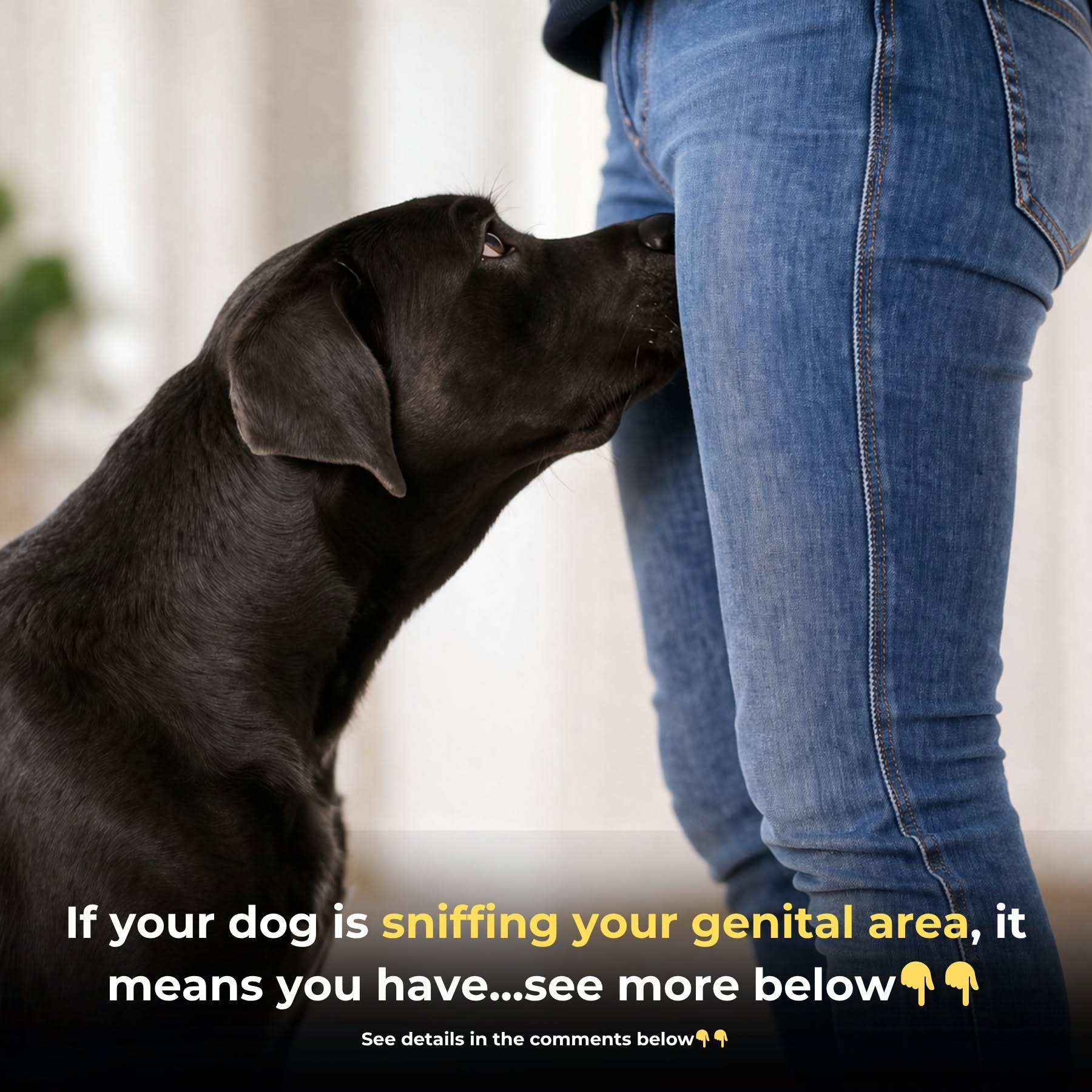
It’s the moment every dog owner dreads—the dinner party is in full swing, your boss is leaning in to say hello, and your beloved canine companion decides to make a beeline for their most private area. You freeze, your face turning a shade of crimson as the room falls into a suffocating, awkward silence. Why does your dog insist on this humiliating, invasive behavior at the worst possible time? Is it a sign of disrespect, or is there a darker, more unsettling reason behind this canine obsession? Prepare to uncover the shocking, scientific reality of why your dog really sniffs you there.
While this behavior is frequently the source of deep embarrassment for pet owners, it is vital to understand that from a dog’s perspective, this is not an act of rudeness or social rebellion. It is, in fact, a sophisticated and entirely functional mode of communication. Humans navigate the world primarily through their sense of sight, interpreting body language, facial expressions, and clothing. Dogs, however, operate in a three-dimensional world of scent. Their olfactory system is thousands of times more sensitive than our own, acting as a high-definition sensory device that tells them everything they need to know about the environment and the individuals within it.
The primary reason for this fixated behavior lies in human biology. The genital and underarm areas are rich in apocrine sweat glands. These glands secrete unique chemical compounds, including pheromones, which serve as a biological blueprint for the individual. To a dog, these scents are not “dirty” or “impolite”; they are a dense packet of information. By sniffing these areas, a dog is essentially reading a biography of the person standing before them. They are detecting hormones, identifying the person’s current emotional state—such as anxiety, excitement, or contentment—and even gathering data on the individual’s overall health or biological status.
Another practical factor is the matter of physics. For the average medium-to-large breed dog, the human groin area is perfectly positioned at nose level. When a dog approaches a person to offer a greeting, they are looking for the strongest, most authentic source of scent. While we might find the location problematic, for the dog, it is simply the most efficient place to perform their “investigative work.” They are not trying to cause a scene; they are simply following the path of least resistance to gather the most reliable information about the person who has entered their social circle.
Beyond basic identification, there are deeper, more sensitive triggers for this behavior. Dogs are remarkably astute at detecting subtle chemical changes within the human body. Variations in hormones, which occur during ovulation, pregnancy, or even the onset of certain illnesses, alter the scent profile of an individual. A dog that suddenly develops an intense, localized interest in a person may actually be reacting to an underlying health condition or a metabolic shift that the human is not yet even aware of. This heightened sensitivity is the same trait that makes dogs invaluable in medical detection fields, where they are trained to sniff out everything from changes in blood glucose to the presence of malignant cells.
When a dog sniffs a guest, they are engaging in a process of social bonding and familiarity. In the canine world, sniffing the rear is the standard way of saying “hello” and establishing a baseline for a relationship. When they apply this to humans, they are attempting to fold us into their social pack, assessing our intent, and verifying our identity to ensure the “group” is secure. It is a gesture of curiosity, not dominance. Misinterpreting this instinct as a behavioral flaw often leads to unnecessary stress for the owner and confusion for the animal.
However, recognizing that the behavior is natural does not mean it must be tolerated in every social setting. If your dog has a habit of making guests uncomfortable, it is essential to manage the situation through proactive training rather than punishment. Punishment is highly counterproductive; because the behavior is hardwired into the dog’s instinctual brain, scolding them for it only creates anxiety and degrades the trust in your relationship. Instead, utilize positive reinforcement. Redirect your dog’s attention with high-value treats or a command that occupies their focus, such as “sit” or “go to your spot,” before they have the chance to engage in the unwanted sniffing.
It is also important to recognize that individual differences in personality and breed play a significant role. A high-energy, scent-driven breed—such as a hound or a terrier—will naturally be more inclined to investigate the environment through their nose compared to more reserved breeds. Furthermore, environmental factors can exacerbate the behavior. In a new or high-stress environment, such as a crowded party or a house full of strangers, a dog’s reliance on their sense of smell increases significantly as they work to map out the “safe” versus “unsafe” individuals in the room.
If you are concerned about your dog’s behavior, focus on the context. Is it happening constantly, or only with specific people? Does it occur during periods of high anxiety? By managing introductions—perhaps by keeping your dog on a leash during the first few minutes of a guest’s arrival or by ensuring guests understand how to ignore the dog until they have calmed down—you can prevent the awkwardness that often follows.
Ultimately, we must adjust our own perspective to match the reality of our pets. We live in a world of visual signals and spoken language; they live in a world of invisible, molecular stories. That brief, awkward moment of investigation is simply their way of trying to understand the human beings they love. By viewing this behavior as a sensory exploration rather than a social transgression, you can better manage your dog’s actions while maintaining a calm, positive, and bonded home environment. Your dog isn’t trying to embarrass you—they are simply trying to read you like a book, one scent at a time.
The Unspoken Truth: Why Your Dog Is Obsessed With Your Most Private Areas
Previous Article Next Article
The Ultimate Betrayal: My Daughter’s Daycare Teacher Sent Me Footage That Shattered My Entire Life
The Slithering Omen: Is a Snake in Your House a Warning of Approaching Doom?

Related Posts

Camilla Parker Bowles Journey From Royal Scandal to Queen
September 4, 2026
At 607 Lily’s Real Dad Knocked on Our Door
September 4, 2026