You glance at your hands a dozen times a day, but have you ever really observed them? Most of us treat our fingernails as nothing more than a canvas for polish or a minor grooming nuisance, completely oblivious to the fact that they are actually a high-definition dashboard for your body’s internal health. That tiny ridge or slight discoloration you’ve been ignoring isn’t just a cosmetic quirk—it could be the only warning sign of a hidden, life-threatening condition. Your body is screaming for your attention, and you are literally holding the evidence in the palm of your hand. Stop scrolling and check your nails immediately.
We often think of our nails as static, dead pieces of keratin, but they are actually dynamic biological markers. They require a steady stream of nutrients, oxygen, and healthy blood flow to thrive. When the internal machinery of your body falters—whether due to a severe nutrient deficiency, a systemic infection, or a failing organ—your nails are often the very first place that trouble manifests. Think of them as the “check engine light” for your physical well-being. By learning to decode these signals, you gain the power to catch potential crises before they spiral into full-blown medical emergencies.
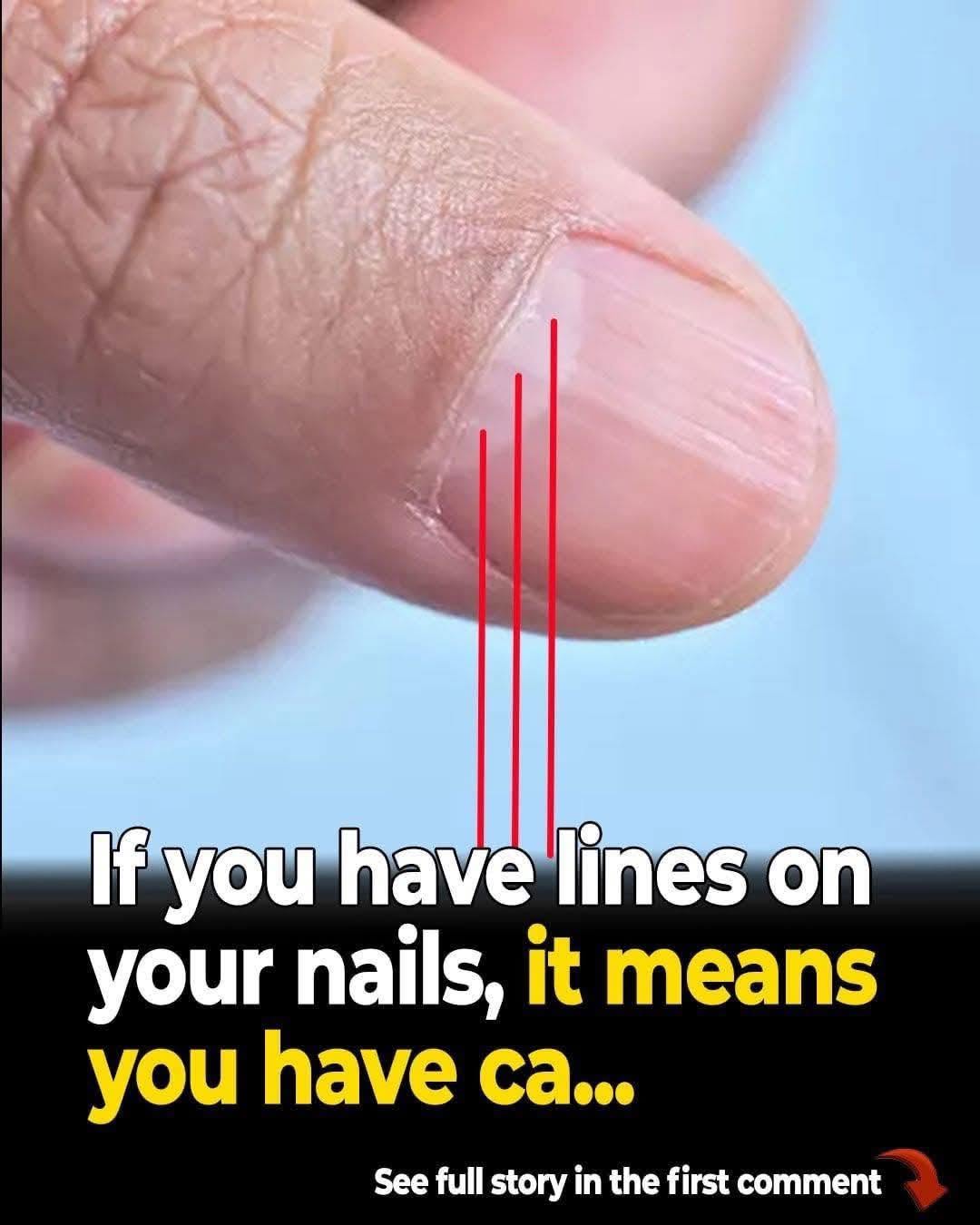
Consider “Beau’s Lines,” those unnerving deep grooves or horizontal ridges that seem to appear out of nowhere. These aren’t just signs of aging; they are physical records of a trauma your body has endured. They often emerge following a severe illness—such as an intense bout of COVID-19, a crushing fever, or a high-stress medical event like chemotherapy. Essentially, your body decided that nail growth was a luxury it could no longer afford while fighting for survival, causing a temporary, visible pause in production. While not every ridge is a death sentence, persistent or recurring patterns of these lines are your body’s way of saying it is struggling to recover.
Then there is the phenomenon known as “clubbing,” where your fingertips swell and the nail begins to curve downward, eventually draping over the end of the finger like a bird’s talon. This is a classic, albeit subtle, diagnostic indicator that your heart or lungs may be failing. Because it happens so gradually, most people never notice it until it is quite advanced. If you see this transformation accompanied by unexplained fatigue, swollen ankles, or persistent chest tightness, do not wait for your next physical. This is not a “wait and see” situation; it is a critical sign that your oxygen saturation levels are insufficient and your cardiovascular system needs immediate intervention.
Perhaps the most common, yet easily dismissed, warning is the “spoon-shaped” nail. When your nail beds begin to curve inward, creating a depression that could literally hold a drop of water, you are likely looking at the hallmark sign of iron-deficiency anemia. While this is common after pregnancy, it is also a red flag for deeper digestive issues, such as celiac disease or chronic nutrient malabsorption. Along with this, you might feel the classic symptoms of anemia—persistent exhaustion, breathlessness, and constant, throbbing headaches. A simple blood test is all it takes to confirm, yet many people suffer for years simply because they never bothered to look at their hands.
Your nails can even be the first to sound the alarm on skin disorders. If you notice tiny, pinpoint dents or pits on the surface of your nails, you aren’t just dealing with a rough manicure. These imperfections are deeply linked to autoimmune conditions like psoriasis, eczema, or even alopecia. Your body is experiencing systemic inflammation, and that struggle is being etched into your keratin. While a dermatologist can help you treat the underlying skin issue with vitamin D3 therapy or corticosteroids, the nail pitting is your earliest alert that your skin is under attack.
We must also talk about the dark, terrifying danger known as subungual melanoma. If you notice a dark, vertical streak running along the length of your nail, your brain might try to excuse it as a bruise from a minor bump. But if that streak doesn’t grow out with the nail or if it widens, changes color, or develops blurred borders, you must treat it as a medical emergency. Melanoma under the nail is one of the most aggressive and silent killers, often spreading before it is ever properly diagnosed. Your vigilance in this one instance could literally be the difference between life and death.
The signs continue: Terry’s nails, where the nail bed turns stark white, leaving only a thin sliver of pink at the tip, often point toward liver disease, diabetes, or even congestive heart failure. Yellowing nails, which most people dismiss as a harmless fungal infection, can actually be a persistent cry for help from your lungs or thyroid. These internal organs do not have their own “voice,” so they speak through the only medium available to them—the biological tissue at the ends of your fingers.
Developing a five-minute habit of inspecting your nails is the simplest, most effective health screening you can perform. It costs nothing, requires no technology, and can be done in the comfort of your own home. Do not be the person who ignores the warning signs until the symptoms become impossible to manage. If you notice changes that are unexplained, persistent, or changing over time, trust your intuition. Visit a doctor, demand the blood work, and get the professional evaluation you deserve. Your body is constantly communicating with you through these subtle shifts; it is time you started paying attention. By turning nail-checking into a regular, non-negotiable ritual, you move from being a passive observer of your health to an active guardian of your future. When you look at your hands tonight, look closely. The answers your doctor needs might be waiting there for you to find.
The Silent Killer Hiding at Your Fingertips: 7 Terrifying Health Warnings Your Nails Are Desperately Trying to Send You
Previous Article Next Article
I Ignored My Sister’s Cryptic Airport Note and Boarded the Plane—Ten Minutes Later, I Saw the Black Square and Realized My Life Was Over
The Last Digit of Your Birth Year Reveals a Secret About Your Soul That You Never Saw Coming