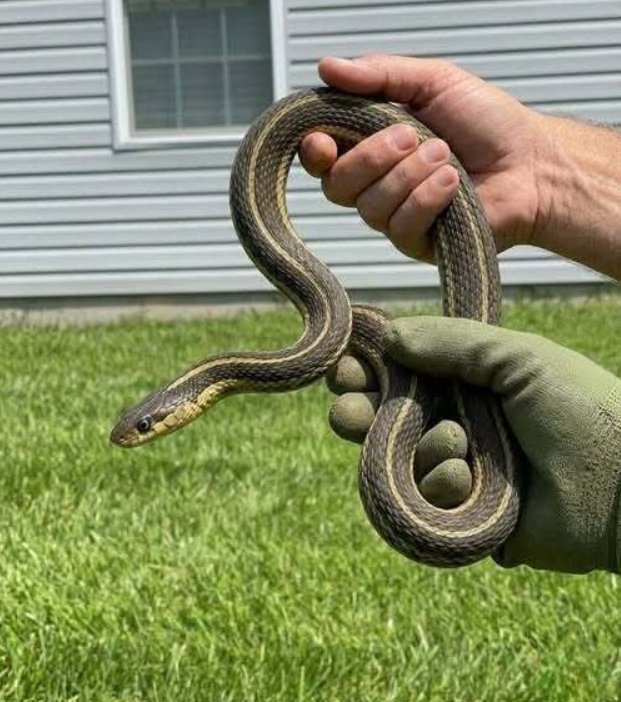
You walk into your basement to grab a box, and in the dim light, you see it—a long, scaly shape sliding across the concrete floor. Panic hits you, your heart beating hard against your ribs as your mind fills with scary pictures of fangs and venom. You are not alone; homeowners across the country are finding that their private spaces have been entered by uninvited, cold-blooded guests. But why are they here, and what are they really looking for in your living room? The answer is much more surprising and closer to home than you ever imagined.
Finding a snake inside your house is a scary experience that triggers a deep, natural fear. However, the first rule of survival in this situation is to stop the urge to scream or strike out. Experts who study snakes constantly emphasize that the best response is to stay completely still and calm. Snakes, by their very nature, do not hunt humans; they do not view us as food, and they certainly do not actively look for human contact. In most cases, these creatures have entered your home purely by accident, led by a strong natural need to find food, shelter, or safety from the weather.
When you understand the reason behind their visit, the fear often begins to go away, replaced by a smart plan to manage your home. A house is a safe place with perfect temperature control, and to a snake, it is an inviting maze of quiet, undisturbed spots. Basements, garages, laundry rooms, and storage areas filled with forgotten boxes act as the perfect hiding places. If you have been seeing snakes, it is highly likely that your home is accidentally hosting a buffet of smaller creatures—like mice, crickets, or other insects—that are much more interested in your pantry than you are. By getting rid of the food source, you effectively cancel the invitation.
Also, think about the environment outside your walls. Snakes are very sensitive to weather changes. During times of heavy rain, the ground gets soaked, forcing burrowing animals to look for higher, drier ground. Similarly, when outdoor temperatures reach freezing lows or baking highs, the steady, warm environment of a basement or crawlspace becomes a literal life-saver for a cold-blooded animal. They are not planning an invasion; they are just trying to stay alive and keep their bodies at the right temperature. A home often provides that needed warmth, even if the snake has absolutely no plan to stay forever.
It is also important to understand the actual danger. While the fear of snakes runs deep, many species that find their way indoors are completely harmless. In fact, many of these “intruders” are actually helpful neighbors, because they give you free, efficient pest control by keeping mice and insect numbers down. However, the average homeowner is rarely an expert at recognizing the specific markings or behaviors that separate a safe garden snake from a dangerous threat. Because it is easy to make a mistake, every encounter should be handled with careful, distant caution. Never assume you can correctly identify a species while your heart is racing and your adrenaline is pumping.
If you happen to find yourself looking at a snake in your hallway, the most important rule is to keep your distance. Do not try to catch it, hit it, or trap it in a corner. Most defensive bites happen when an animal feels that its only path to safety is blocked. By giving the snake plenty of room, you allow it the space it needs to move away on its own. Keep children and pets in a completely separate room, and keep an eye on the snake from a safe spot so you can tell a professional exactly where the creature was last seen.
The best removal process is always to call in an expert. Local animal control offices or private wildlife removal professionals have the tools, training, and calm attitude needed to remove the animal without putting themselves or the homeowner in danger. These experts do not just move the snake; they often look over your house to see how it got inside. This is the most valuable part of the service, as it helps you find the specific holes or cracks that allowed the animal to get past your home’s defenses in the first place.
This brings us to the important idea of long-term prevention. If a snake can get in, other, more destructive pests can get in too. Take the time to do a thorough check around the outside of your house. Use high-quality sealant, steel wool, or fine wire mesh to fill gaps around window frames, doors, pipes, and vents. Snakes do not need a large hole to get inside; they can flatten their bodies to squeeze through cracks that seem impossibly small. Also, make sure the outside of your home is clear of overgrown bushes, piles of wood, or high grass, as these things provide a perfect hidden path leading straight to your foundation.
Cleanliness is your best weapon in this fight. A home that is kept clean and free of clutter is much less likely to hold the insects and rodents that snakes are hunting. Store firewood at least twenty feet away from your house and lift it off the ground. If you have bird feeders or leave pet food outside, be aware that these are main attractions for mice, which will eventually bring predators behind them. By managing the outside environment, you shrink the living space of the creatures the snakes are looking for.
In the end, an indoor snake encounter is a manageable situation that requires calmness rather than panic. Most snakes are simply trying to travel through a world that is becoming harder for them to survive in. They are not mean, they are not out to get you, and they are not waiting in your walls to hurt your family. They are animals responding to basic natural needs. By sealing your home against entry, getting rid of the food sources that attract them, and treating these animals with the respect that any wild creature deserves, you can live alongside local wildlife without ever having to share your living room with an uninvited guest. Stay calm, stay alert, and remember that you hold the keys to your home—and the power to keep it safe.