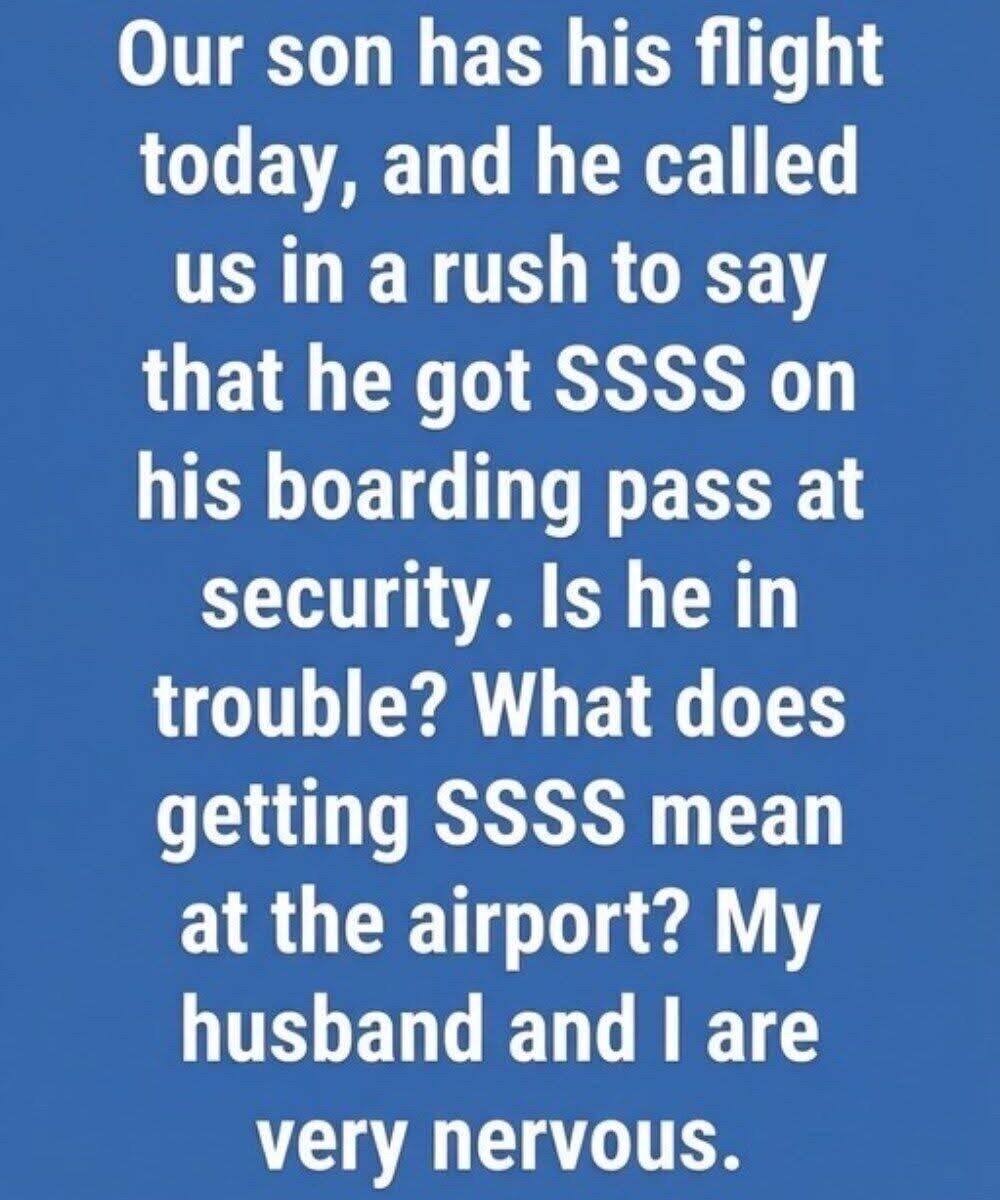
Air travel is a complex ballet of logistics, anticipation, and regulatory adherence. For most, the trip from the check-in counter to the departure gate is a routine of scanning digital codes and walking through metal detectors. However, for a specific group of passengers, a quick look at their boarding pass reveals four letters that turn a standard airport visit into an intensive security marathon: SSSS. This label, which stands for Secondary Security Screening Selection, is one of the most misunderstood components of modern flying. While it often triggers anxiety and confusion, understanding the mechanics of the Secure Flight program and the logic behind these additional checks can transform a potential travel crisis into a manageable—though slightly longer—part of the trip.
The SSSS code is the visible result of the Transportation Security Administration’s (TSA) intricate risk-assessment protocols. When these four letters appear, it indicates that the federal government requires a more detailed look at the traveler before they are permitted to enter the secure area of the terminal. It is not merely a suggestion for a quick luggage check; it is a mandatory order that bypasses standard screening rules, even for passengers enrolled in expedited programs like TSA PreCheck or Global Entry. If you see this code, you will typically find that you cannot print your boarding pass at home or check in via a smartphone app. The system intentionally requires a face-to-face interaction at the airport kiosk or counter, where an agent must manually verify your travel documents before the physical screening even starts.
The selection process for SSSS is managed by the Secure Flight program, a background data-matching initiative that launched in the late 2000s. Under this initiative, airlines gather basic passenger details—full name as it appears on official ID, date of birth, and gender—and send it to the TSA. This information is then cross-referenced against various government watchlists and intelligence databases. While many travelers worry that SSSS implies they have been placed on a “No Fly List,” this is rarely true. In reality, the selection is frequently the result of complex algorithms designed to spot high-risk travel patterns rather than high-risk individuals.
Certain actions are known to increase the chances of receiving the SSSS mark. Last-minute ticket purchases are a major trigger, as are one-way international bookings or travel starting from or passing through regions deemed high-risk by intelligence agencies. Furthermore, if a passenger pays for their flight in cash or lacks a steady travel history, the algorithm may flag the trip for a second look. However, there is also a significant element of randomness integrated into the system. This “unpredictable” factor ensures that security measures are not easily bypassed by those who might try to identify and exploit patterns in the screening process. Sometimes, you are simply the person the computer picked to fill a daily quota for random high-intensity checks.
Knowing what to expect during the secondary screening can reduce the stress of the event. Once you reach the security area, you will be guided to a dedicated lane or a private room. The process is meticulous and multi-layered. First, TSA officers will perform an enhanced inspection of your carry-on bags. This involves removing every item, swiping surfaces for explosive trace detection, and carefully checking electronics. Unlike standard screening, where a laptop might stay in its bin, secondary screening may require turning on devices to prove they work and haven’t been modified.
Following the bag check, the traveler usually undergoes a full-body scan and a detailed pat-down. This pat-down is performed by an officer of the same gender and follows strict rules to ensure thoroughness while maintaining professional standards. Finally, your identity papers are subjected to a second round of verification. It is a process designed to be redundant; the aim is to ensure that even if a threat were to slip through the first layer of security, the secondary layer would intercept it. While this can take anywhere from 10 to 30 minutes longer than a standard check, officers are generally trained to work as efficiently as possible once the process has started.
The psychological toll of being singled out can be significant. Many travelers feel embarrassed or frustrated, seeing the extra attention as an accusation. However, it is crucial to remember that SSSS is a preventive safety measure, not a criminal investigation. The TSA’s goal is to prevent threats to the aviation system as a whole, and secondary screening is a tool used to provide an extra level of certainty in an era where security risks are constantly shifting. Approaching the situation with a calm and helpful attitude is the best way to handle the delay. Aggression or visible anger can accidentally escalate the situation, leading to more questions or even longer delays.
For those who find themselves frequently “selected” for SSSS, there is a solution. If the code appears on almost every flight you take, it is likely that your name is a “near-match” for someone on a government watchlist. In these cases, the Department of Homeland Security offers the Traveler Redress Inquiry Program, or DHS TRIP. By submitting a redress request, you can provide extra documentation to prove your identity. If the request is approved, you are given a Redress Number. When you include this number in future flight bookings, the Secure Flight system can distinguish you from the person on the watchlist, greatly reducing the frequency of SSSS labels.
Preparation is the best defense against the disruption caused by secondary screening. Smart travelers should adopt a few habits to ensure SSSS doesn’t lead to a missed flight:
- Attempt online check-in early: Try to check in 24 hours before your flight. If the system blocks you from getting a boarding pass, it is a strong sign you have been picked for SSSS. This warning allows you to get to the airport at least an hour earlier than planned.
- Charge your electronics: If an officer asks you to power on your phone or laptop and the battery is dead, the device may be held or you may be denied boarding.
- Organize your carry-on: A messy bag takes longer to search and increases the chance of an officer needing to fully unpack your things.
Ultimately, the SSSS code represents the delicate balance between personal convenience and public safety. While it is certainly an inconvenience, it is proof of the layers of protection that make modern air travel one of the safest ways to travel in history. By understanding that the selection is largely mathematical and focused on safety rather than suspicion, travelers can navigate the extra checks with patience. The next time you see those four infamous letters on your boarding pass, take a deep breath, head to the airport early, and recognize that you are playing a small, vital role in the collective security of the skies.