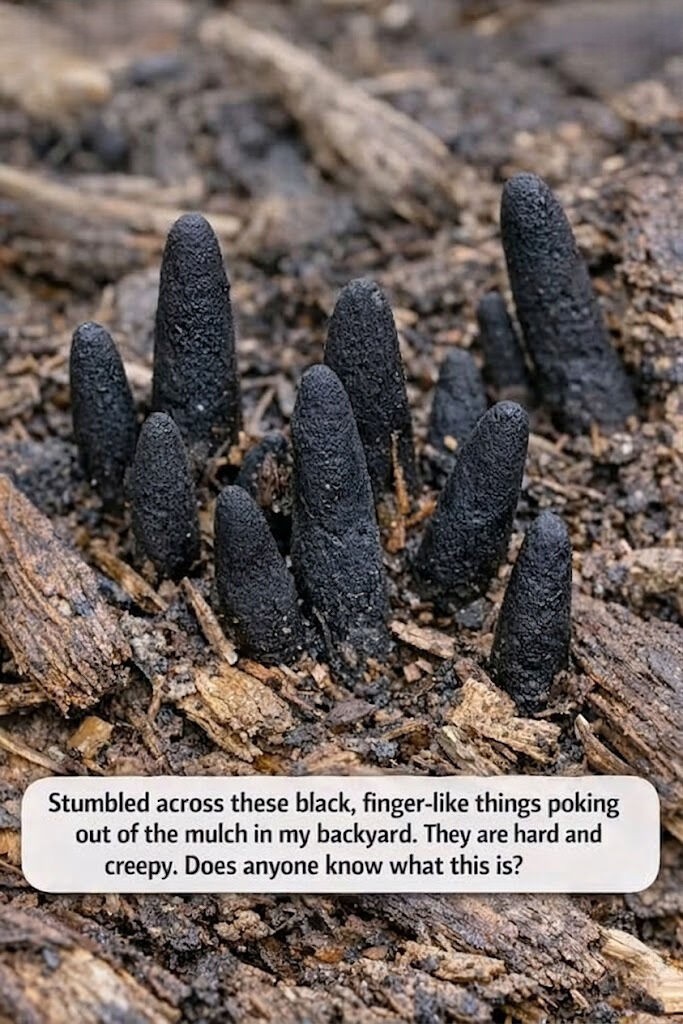
Finding a group of dark, skeletal growths poking out of the fresh mulch in your yard is enough to send a cold chill down any homeowner’s spine. Looking exactly like the rotted, stony fingers of a buried body stretching upward from the grave, these spooky structures instantly turn a peaceful garden bed into a scene from a horror film. The first shock of spotting these stiff, coal-colored shapes naturally sparks an immediate wave of fear, leaving people wondering if their dirt is tainted, if a dark secret is hidden in their yard, or if the strange guests pose a threat to kids, pets, and plants.
The grim botanical ghost haunting your garden path is actually a very distinct and interesting organism known by its scary common name, Dead Man’s Fingers. Scientifically labeled as Xylaria polymorpha, this odd lifeform isn’t a plant at all, but rather a fungus that specializes in eating dead and rotting organic matter. While the mere sight of these growths can be very upsetting, they are a totally natural and surprisingly frequent part of healthy forest floors and suburban garden systems alike.
The reason these growths trigger such a prompt sense of dread is due to their disturbing physical look. When the fruiting parts of Dead Man’s Fingers first pop out of the ground in the spring, they look quite harmless, often appearing as soft, pale blue or chalky white nubs that resemble standard mushrooms. However, as the fungus grows during the summer and moves into autumn, it goes through a dramatic and ugly change. The outer layer slowly darkens into a deep, velvet-black or charcoal shade, drying out to form a hard, wrinkled, and wood-like feel. They usually grow in tight bunches of three to five stalks, reaching heights of up to four inches. The resulting shape is a strange, lifelike copy of a decaying, weathered human hand digging its way out of the mud.
Grasping why this specific fungus picked your yard as its home comes down to the materials used in your landscaping. Because Dead Man’s Fingers live on decaying wood, their survival depends on the presence of rotting timber, which offers the nutrients they need to feed. Flower beds packed with hardwood mulch, old wood chips, buried roots, or rotting stumps provide a perfect spot for the fungus. When you mix this big food source with high ground moisture, constant shade, and low airflow, you get the perfect setup for these zombie-like shapes to break through the surface.
Luckily, despite their scary look and grim name, the truth of Dead Man’s Fingers is totally harmless. This fungus is no danger to people or pets through touch, as it doesn’t leak toxic air or cause skin rashes. It is globally labeled as non-edible because of its very tough, woody core and totally gross, bitter flavor, meaning even nosy dogs or cats will usually sniff it and walk away without trying to eat it.
From a gardening view, finding Dead Man’s Fingers on your land is actually a sign that your soil is working just as nature planned. Unlike predator fungi that attack living plants, this kind only eats dead material. By breaking down the tough fibers of old mulch and dead tree roots, the fungus plays a vital role in recycling nutrients. It turns useless wood waste into rich, fertile dirt that feeds nearby flowers and trees, helping them grow.
If the look of rotting zombie limbs on your lawn is just too much for your peace of mind, getting rid of them is a fast and easy task. Homeowners can just put on thick garden gloves, grab the base of the fungal fingers, and gently pull them out of the dirt. To make sure they don’t grow back in the same spot, it’s important to dig a bit under the surface to find and remove the specific piece of rotting wood the fungus was eating. The pulled samples can then be safely tossed into a yard waste bin or a compost pile to finish rotting out of sight.
For owners who want to keep these creepy hands from ever returning, the long-term fix involves managing the environment to make it less inviting for fungi. Regularly stirring and freshening your mulch stops moisture from getting trapped. Changing your lawn watering times to let the soil dry out, and trimming low branches to let sunlight hit the garden floor, will cut down the humidity that fungi need. You can also swap out wood mulch for materials that don’t rot easily, like stones, gravel, or pine needles.
In the end, finding something as weird as Dead Man’s Fingers in your yard doesn’t need to cause panic. Instead, it’s a front-row seat to the complex world of fungi. These organisms have been cleaning up the earth’s waste long before humans had lawns. By trading fear for curiosity, you can appreciate the hidden biology under your feet, realizing that the scariest finds in our yards are often just nature’s way of keeping the world healthy.