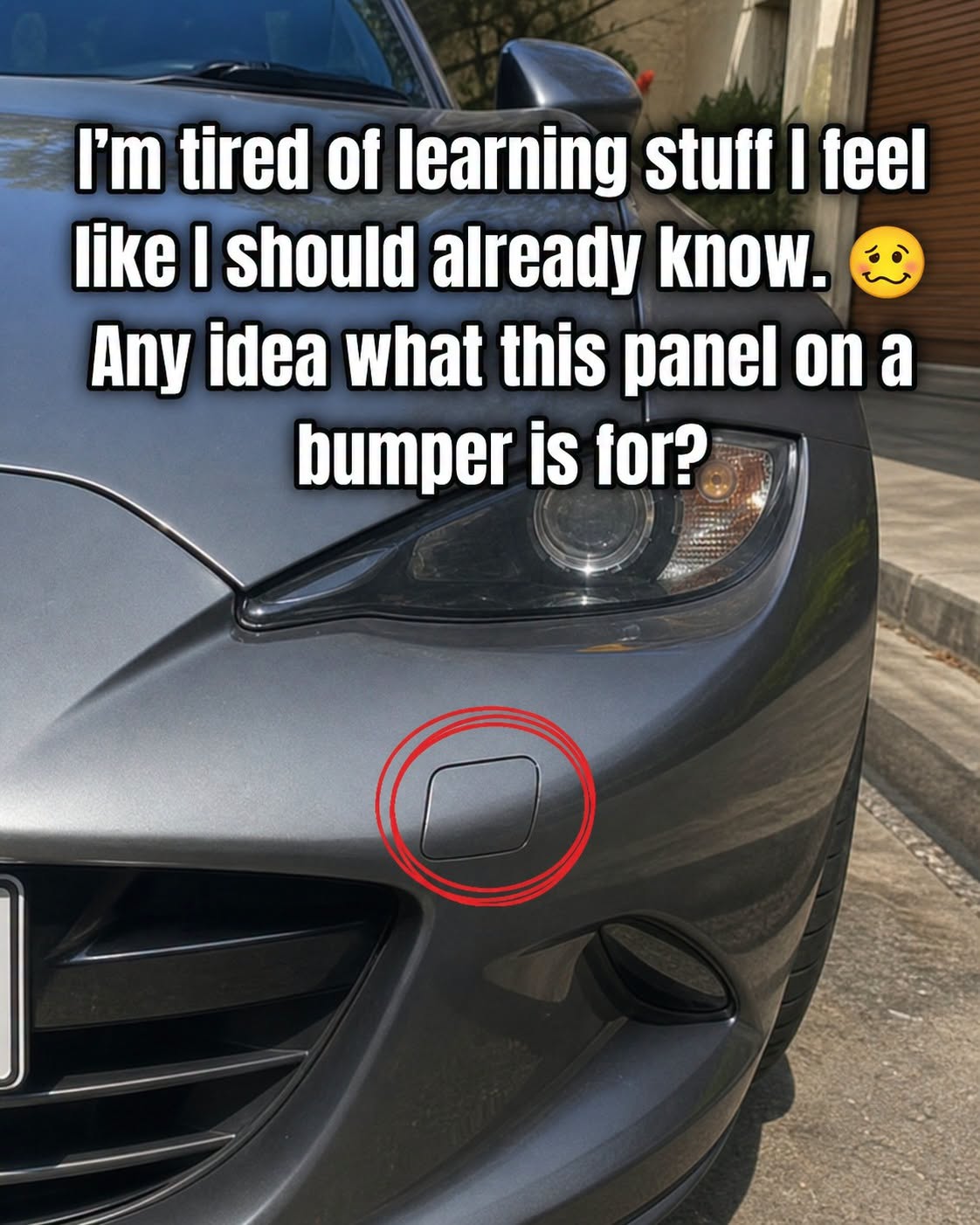
That “mystery square” on your bumper is actually a tow hook cover, hiding a threaded socket designed to rescue your car without tearing it apart. Behind that clean, painted panel is the official recovery point engineers built so a tow truck can pull your vehicle without wrecking the bumper, suspension, or frame. The hook itself usually lives in your spare tire well or tool kit, waiting for the day things go sideways: a dead battery blocking traffic, a spin into a snowbank, wheels buried in mud, or a breakdown on a blind curve where every passing headlight feels like a threat.
Pop off the panel, screw in the hook, and suddenly your car has a safe, solid handhold. Track cars use the same socket at high-speed events, where quick, damage-free recoveries are mandatory. Lose the cover? You can buy a replacement and snap it back on. Once you know what that flap is for, parking lots look different; every bumper is quietly whispering where its hidden escape hatch lives.
There is an important limit to that general explanation: a towing eye is not automatically a recovery point for pulling a deeply stuck vehicle out of mud, and not every small bumper panel covers one. The exact purpose and permitted use depend on the vehicle. Before removing a panel or attaching anything, check the owner’s manual for the model and year rather than relying on a similar-looking car.
Manufacturer instructions can differ in details that matter. Ford documentation, for example, describes a left-hand thread on a particular towing eye and requires it to be fully tightened. That is a useful illustration of why a universal instruction such as “screw it in” is incomplete. The direction, fitting, and towing limitations must come from the instructions for the actual vehicle.
A roadside breakdown is also not the best moment to experiment with unfamiliar hardware. If you are uncertain which point is approved, contact roadside assistance and explain the situation. A trained operator can determine how to move the vehicle without relying on the appearance of a cover. Do not attach a rope to a convenient opening, suspension component, or decorative part simply because it seems strong.
It helps to distinguish moving a disabled vehicle in a controlled manner from recovering one that is trapped or badly positioned. The forces and risks are not necessarily the same. An accessory supplied with the car may have limits that are not obvious from its size. The presence of a threaded socket does not override those limits or make every pulling direction acceptable.
You can make future problems easier by locating the manual and tool kit while the car is safely parked. Check whether the supplied towing eye is present and learn how the cover is released without forcing it. If a part is missing, identify the correct replacement for the vehicle rather than assuming that all eyes or caps are interchangeable.
The small panel is therefore a useful prompt to learn about your own car, not a promise that recovery is simple. Knowing where the approved equipment is stored is helpful; knowing when to leave its use to roadside professionals is just as important.