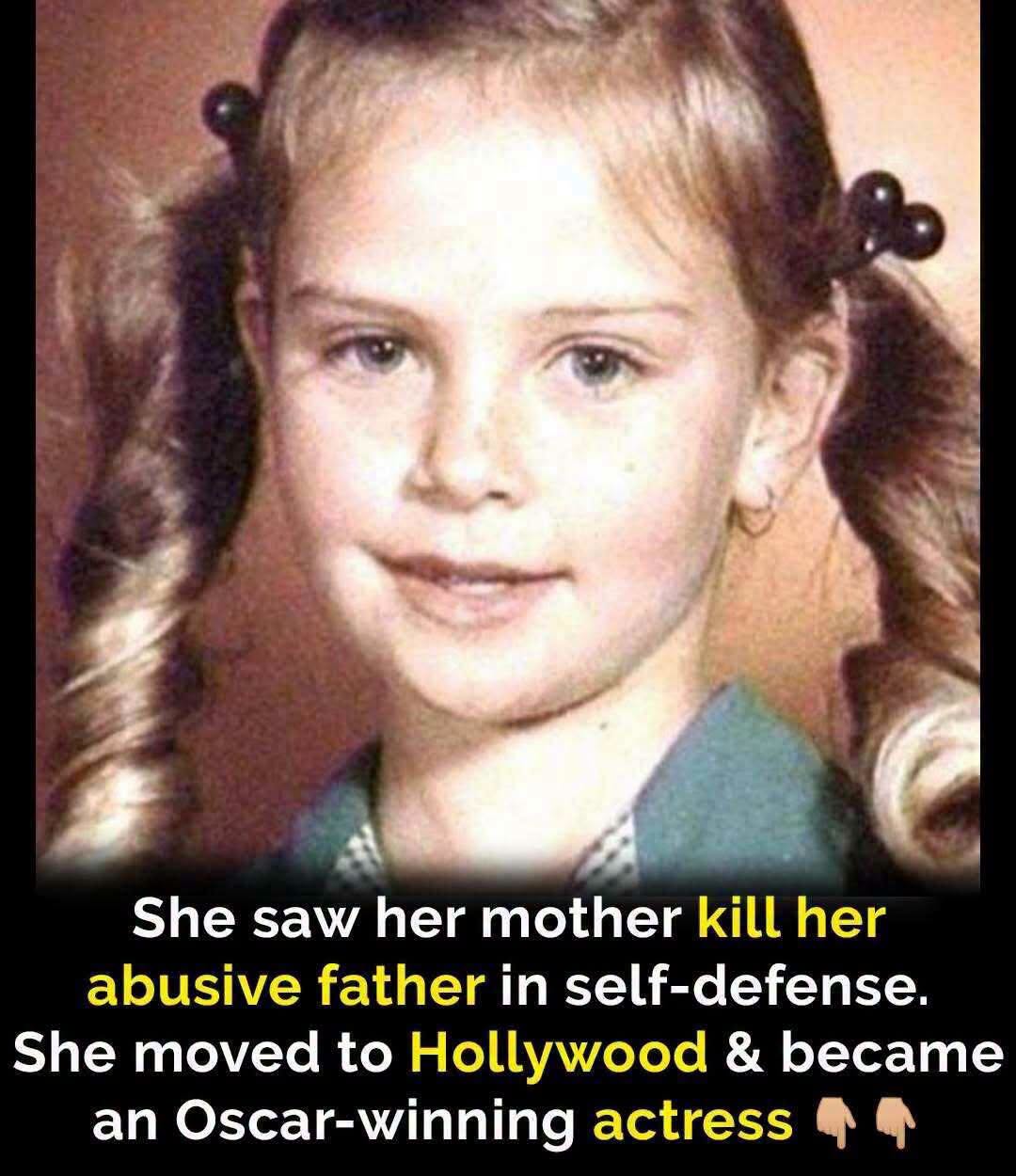
Long before Charlize Theron became an Oscar-winning actress and one of Hollywood’s most recognizable stars, she lived through a childhood marked by fear, isolation, and violence. Her journey did not begin on a film set or beneath the lights of a red carpet. It began on a farm in South Africa, where the comfort associated with a privileged upbringing existed alongside the instability created by her father’s alcoholism.
As a child, Theron often felt alone. She wore thick glasses, struggled with her confidence, and was bullied by classmates. The difficulties she faced at school were painful, but the danger inside her home was far more serious. Her father’s drinking made family life unpredictable, and the atmosphere could change without warning. What should have been a place of security instead became a place where Theron and her mother had to remain alert.
The most traumatic moment came when Theron was a teenager. During a violent confrontation, her intoxicated father threatened Theron and her mother. He fired a gun through a locked bedroom door, sending bullets through the wood while they were on the other side. Theron’s mother responded with a firearm, shooting him in self-defense. Her father died that night.
The event could easily have defined the rest of Theron’s life. She had witnessed a level of domestic violence that no teenager should have to experience, and the person who protected her was her own mother. Authorities determined that her mother had acted in self-defense. Even so, the legal conclusion could not erase the emotional consequences of what had happened.
Theron has spoken openly about the incident rather than hiding it behind a carefully managed celebrity image. Her willingness to discuss that chapter of her life has helped place attention on the realities of alcoholism, domestic abuse, and the long-term effects of trauma. She has made clear that surviving a violent home does not mean the experience simply disappears. Survival is only the first step; learning how to live beyond the experience is another challenge entirely.
At 19, Theron left South Africa and went to Los Angeles. She had little money, no established Hollywood connections, and no guarantee that acting would provide a future. What she did possess was determination and an emotional depth shaped by everything she had endured. She pursued opportunities in an industry known for rejection, slowly building a career from uncertain beginnings.
Her performances eventually demonstrated an ability to portray complicated and damaged characters without reducing them to stereotypes. That quality was especially visible in Monster, the film that earned her the Academy Award for Best Actress. She later brought a different kind of strength to Mad Max: Fury Road, playing a character defined not merely by physical toughness but by endurance, conviction, and the desire to escape oppression.
Those roles were not direct retellings of Theron’s own life, but the resilience behind them was difficult to overlook. Her past gave her an understanding of fear, power, shame, and survival that could be transformed into honest performances. Instead of allowing the violence of her childhood to silence her, she developed a career built on confronting emotionally difficult material.
Theron has also used her public platform to speak about addiction and violence. Her story reminds people that fame does not erase the past and that success can exist alongside painful memories. The polished photographs, awards, and major film roles came later. Before all of them was a frightened teenager who survived an unimaginable night and then made the deliberate choice to build a different life.
Her rise is therefore more than a conventional Hollywood success story. It is the account of someone who refused to let trauma become the final description of who she was. Theron could not change what happened inside that home, but she could decide what came afterward. By turning survival into purpose, she created a future that once seemed impossible and became a voice for people whose experiences are often kept behind closed doors.