I thought I really knew my neighbor.
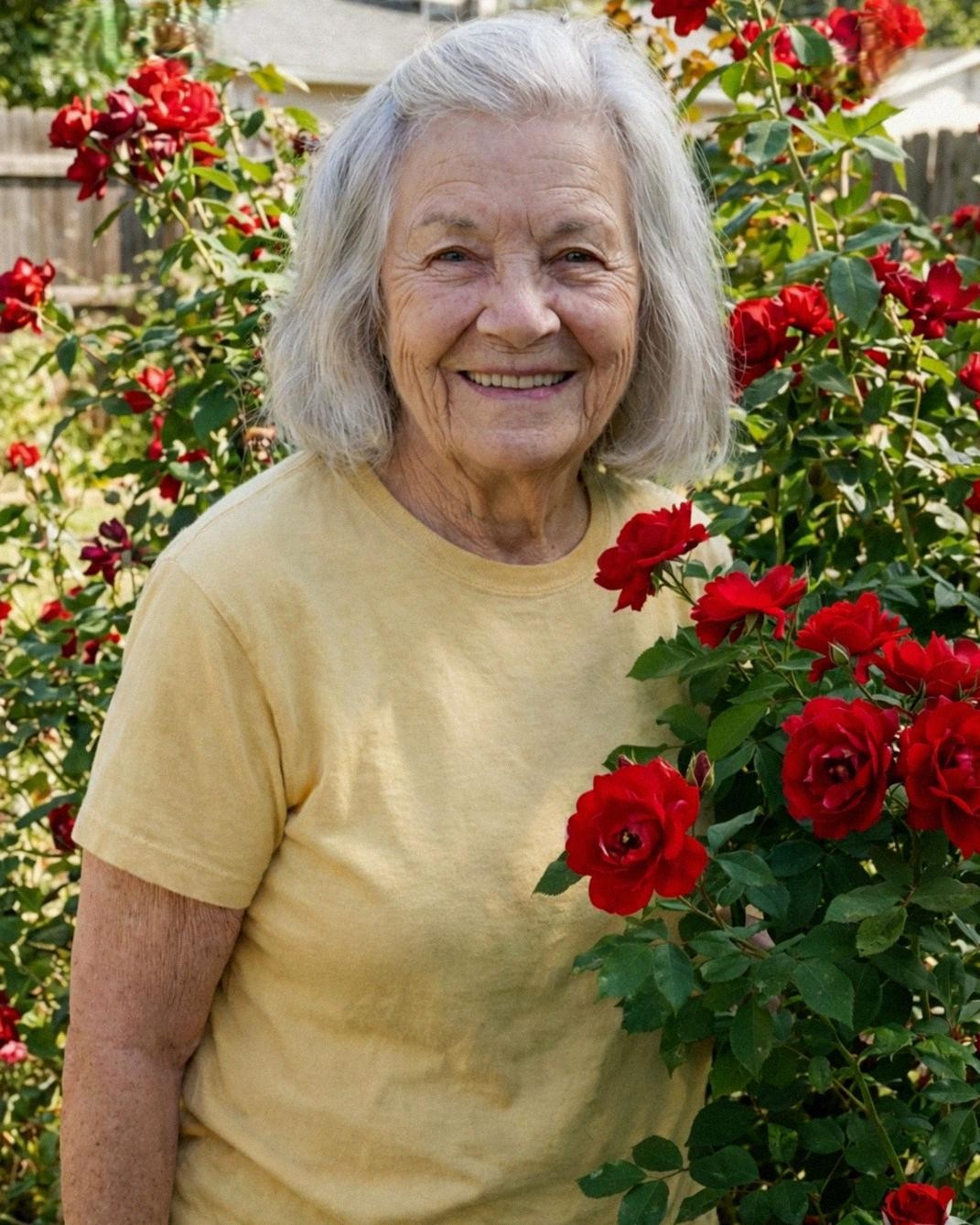
For three years, she was a constant in my life—one of those people who makes a neighborhood feel like home. Mrs. Whitmore was exactly what you’d hope for: kind, attentive, and quietly there when you needed her. She was the one who greeted me with a fresh blueberry pie before I’d even finished unpacking, the one who remembered every small detail I mentioned, and the one who made me feel like I belonged.
She lived just two houses away in a pristine white house with flower beds that seemed to change perfectly with every season. Everything about her life seemed orderly and intentional.
Except for one thing.
In the corner of her yard, tucked behind a fence, was an old wooden shed. It was the only part of her world that didn’t fit. The paint was peeling, and the door was locked tight with a rusted, heavy padlock. She never talked about it, never opened it, and never even looked toward it when we chatted.
Then, four days ago, she passed away quietly in her sleep.
The funeral was small and somber. Afterward, as I stood outside trying to make sense of the loss, a young girl approached me.
“Are you Amber?” she asked. When I nodded, she handed me a small envelope. “She told me to give you this today.”
Inside, I found a key and a note in Mrs. Whitmore’s unmistakable, careful script:
“Amber dear, I should have kept this a secret even after my passing. But I can’t. You deserve to know the truth. You will understand everything when you open my shed.”
I couldn’t wait. That evening, I let myself into her backyard. The air was heavy and still. I reached the shed, slid the key into the lock, and after a moment of resistance, the door creaked open.
The smell of dust and clay hit me first. The room was dim, filled with shapes hidden under white sheets. In the center stood the largest one—the height of a person.
My heart hammered against my ribs. I reached out, grabbed the cloth, and pulled.
I didn’t think; I just screamed.
I stumbled back, falling onto the grass as I frantically dialed 911. “I need help… there’s something here.”
When the police arrived, an officer pulled the sheet back the rest of the way and shined a light. He turned to me, his voice calm. “It’s a sculpture, ma’am.”
I stepped closer, trembling. He was right. It wasn’t a body. It was a life-sized figure made of wax and plaster, crafted with terrifying detail. But it wasn’t just any figure.
The face was mine.
Every feature, every curve, every detail was an exact replica. I couldn’t catch my breath.
After the police left, I stayed behind. I knew there had to be more. On a nearby workbench, I found stacks of sketches. I picked one up—it was the same face. But the date in the corner made my blood turn cold: 1995.
Decades ago.
I looked at another, then another. They all featured that same face, but at different ages. And then the realization hit me like a physical blow. The woman in the older drawings didn’t just look like me.
She looked exactly like my mother.
Tucked beneath the sculpture, I found another envelope. Inside were faded photographs. In one, a much younger Mrs. Whitmore stood with a young woman who was the spitting image of my mom. I suddenly remembered a day weeks after I moved in when I had shown Mrs. Whitmore a photo of my mother on my phone. She had gone completely silent, but I hadn’t thought anything of it.
Then I read the letter inside the envelope.
“Amber, you are my granddaughter. I knew the moment I saw your mother’s photo. She is my daughter.”I sank to the floor of the shed, unable to move. She had known all along. For three years, she had lived two houses away, caring for me and loving me, but she never told me who she really was.
I drove to my mother’s house that night and laid the photos out in front of her. I watched her face break as she recognized her own mother. Then, she told me the truth: she had been adopted, had run away young, and had spent her life buried in guilt and distance. She thought her mother was a closed chapter of her past.
She had no idea her mother had spent thirty years drawing her face over and over, trying to keep the memory alive.
The next day, we went back to the shed together. My mother walked in and collapsed in front of that sculpture. Thirty years of silence and pain washed away in a single moment. Later, at the cemetery, she finally whispered the apologies she had carried for a lifetime.
A few days later, a lawyer informed me that Mrs. Whitmore had left me everything—her house, her life savings, all of it. In her final letter to me, she explained why she stayed silent:
“I was afraid to tell you. Afraid of losing you before I truly had you. So I stayed close the only way I could.”Every pie, every chat over the fence, every wave from her porch—it wasn’t just a neighborly gesture. It was a grandmother’s love. She made sure that even after she was gone, I would finally know exactly who she was to me.