My name is Irene. I’m fifty-two years old, and I spent twenty-seven of those years married to a man who slowly taught me how to disappear.
Rick liked to say we’d built a life together. What he meant was that we shared a mortgage, bills, routines, and a version of me that got smaller every year. To the outside world, he was charming—loud, confident, the kind of man who could walk into a room and make people feel like they were in on a joke. The problem was that, lately, I was the joke.
More specifically, my menopause was.
I never expected sympathy or special treatment. I wasn’t looking for pity. But I also didn’t expect my own husband to turn a medical transition into a running gag.
It started with “harmless” comments. If I opened the freezer and lingered for a second, he’d grin and say, “Careful, hot flash incoming.” If I misplaced my keys, he’d chuckle, “Menopause brain strikes again.” When I forgot a detail in conversation, he’d announce it to the room like a punchline, blaming hormones and waiting for laughs.
At first, it was just at home. Then it leaked into dinners with friends, family gatherings, barbecues with neighbors. I’d feel the heat rise in my face—not from menopause, but from humiliation—while everyone laughed politely and I smiled like I was in on it.
Each joke shaved something off me. A little dignity. A little confidence. A little voice.
I learned how to survive it by becoming quieter. I smiled, counted my breaths, excused myself to the bathroom, and stared at my reflection until I could reassemble myself enough to go back out there.
Then Rick invited his boss to dinner.
He didn’t ask me. He informed me.
“This is big,” he said, adjusting his hair in the mirror. “This promotion is basically locked in. Just… be on your best behavior. Try not to get emotional.”
I cooked. I set the table. I wore a dress I hadn’t touched in years because I wanted, for once, to feel like myself again.
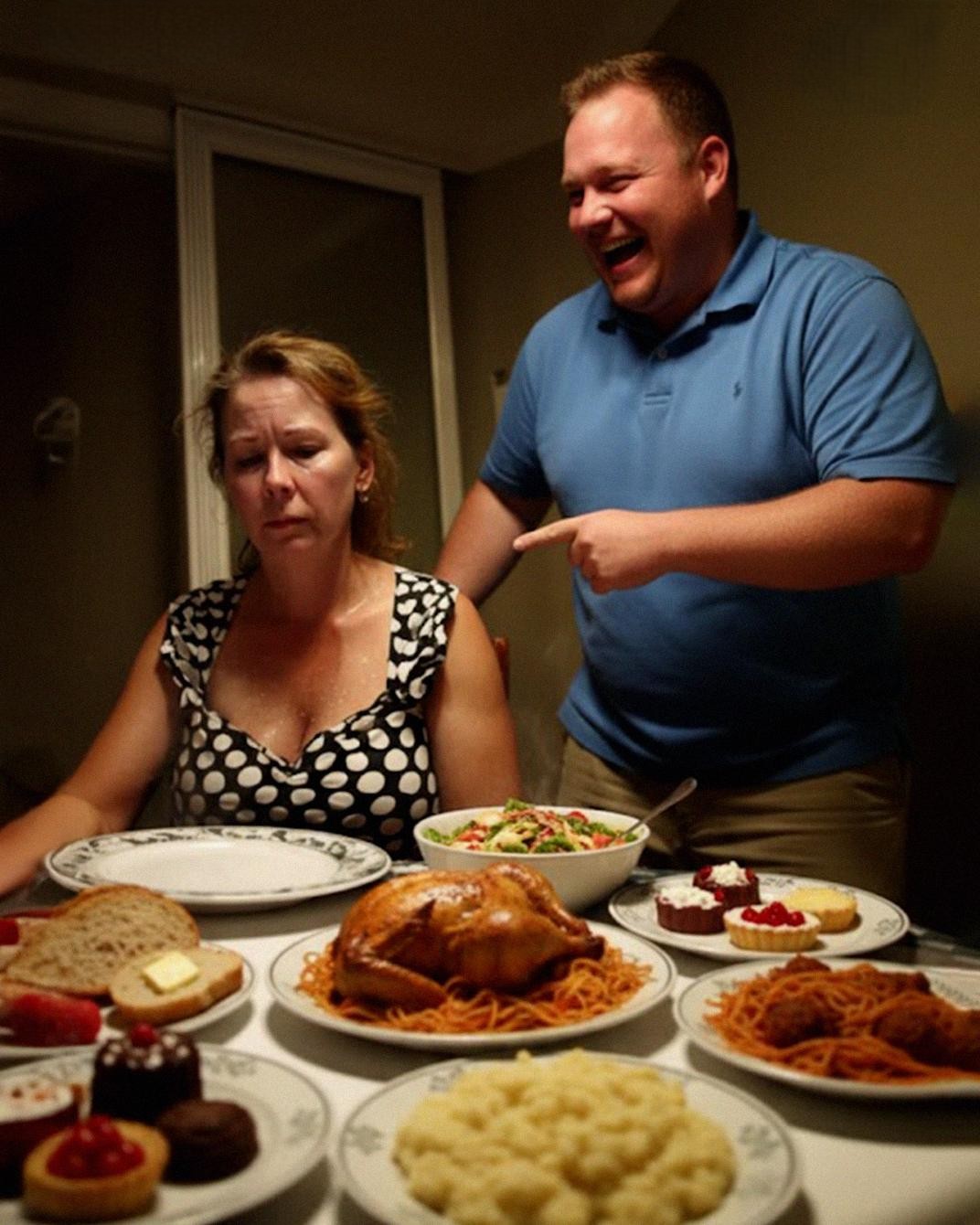
Rick performed all evening—interrupting me mid-sentence, correcting me with that smug little smile he saved for public settings. His boss, David, was polite and quiet. He watched more than he spoke.
Halfway through dinner, I stood to adjust the thermostat. Rick laughed loudly.
“Sorry,” he said to David. “She’s going through the change. You know. Menopause. Temperature issues.”
The words landed like a slap.
I froze, then sat back down, heart pounding, pretending I hadn’t just been reduced to a condition in my own home. David didn’t laugh. He blinked, looked at Rick, then looked away.
The rest of the evening blurred. Plates cleared. Dessert skipped. Rick bragged about himself like I wasn’t there at all.
After David left, Rick was euphoric.
“See?” he said. “Nailed it. Promotion’s finally happening.”
I went to bed without a word.
Later that night, I heard Rick on the phone downstairs. His voice was low, tense. The conversation didn’t sound like celebration. It sounded like damage control.
The next morning, my phone rang. An unfamiliar number.
“Hi, Irene,” a man said. “This is David. I’m calling privately.”
My stomach dropped.
“I saw everything last night,” he said calmly. “And the way your husband treated you was unacceptable.”
I couldn’t speak.
“There are… concerns at work,” he continued. “And I think it’s time Rick faces consequences. I wanted to ask if you’d be willing to talk.”
I told him the truth. That I was done being the punchline. That I’d reached my limit.
We met privately. And for the first time in years, someone actually listened.
Once I started paying attention, everything unraveled quickly. Rick’s late-night calls. Strange calendar entries. Weekend “meetings” that didn’t add up. One night, I overheard him say, “Just keep those numbers out of the report. I’ll handle it.”
That wasn’t ambition. That was panic.
I followed him one afternoon instead of going to the store. He met a woman in a business suit at a café. Papers changed hands. It wasn’t an affair. It was something worse.
I documented everything and brought it to David.
Rick had been padding hours. Inventing meetings. Inflating performance. Smoke and mirrors. He wasn’t chasing a promotion—he was trying to outrun exposure.
At home, he sensed the shift in me. Suddenly, he was generous. Compliments. Gifts. Sweetness.
When that didn’t work, he went back to cruelty.
At a barbecue, two beers in, he laughed and told a friend, “Careful, menopause rage. She’ll bite your head off.”
I looked at him and said quietly, “It’s impressive how confident you are mocking the one person who knows all your secrets.”
He laughed. But I saw the fear flash in his eyes.
The meeting was set soon after. Rick thought it was a private dinner with senior leadership. He didn’t know I’d be there. Or that compliance and HR would be joining.
When he walked in and saw me, his smile faltered.
David placed a folder on the table. “Rick, I wanted to promote you. But the inconsistencies became impossible to ignore. Time sheets. Client reports. Conflicts.”
Rick laughed nervously. “Is my wife poisoning you?”
I leaned forward. “You did that yourself.”
He wasn’t fired. He was demoted. Quietly. Professionally. Thoroughly.
At home, he exploded. Accused me of betrayal. Of ruining him.
I didn’t argue.
I had already filed for divorce.
Two weeks later, I moved into a small apartment with soft yellow walls and sunlight that felt like permission. The silence was strange at first. Then it became peaceful.
A week later, David came by with tea in a thermos. No expectations. Just company.
“I’ve never seen someone reclaim themselves so calmly,” he said.
“I didn’t know I’d lost myself,” I replied. “Not until someone stopped laughing.”
Life expanded after that. A part-time job at a bookstore. Old friends. Laughter that reached my eyes again.
Rick sent one message. I deleted it.
That evening, David asked if I wanted to go to a concert in the park. I said yes.
We sat on the grass as the sky turned purple. He reached for my hand. I let him take it.
I once thought menopause meant the end of something.
It turned out to be the beginning of everything.