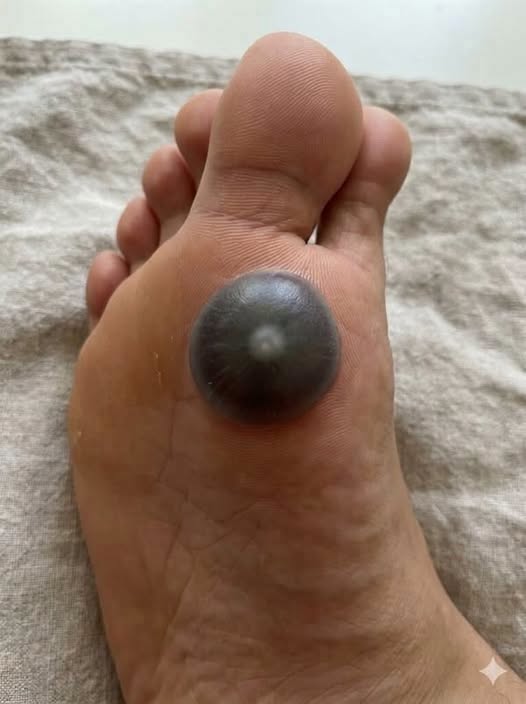
A large, dark, painful spot that appears suddenly on a child’s foot should not be diagnosed from a photograph alone. The source article suggests that the mark could be a blood blister caused by pressure or an unnoticed injury, but it also stresses that pain, swelling, color changes, and difficulty walking can point to problems requiring prompt medical assessment. When a child cannot move the foot normally or refuses to put weight on it, waiting several days to see what happens may not be the safest choice.
Blood blisters form when small blood vessels beneath the skin are damaged while the surface remains intact. Tight shoes, repeated friction, a pinching injury, sports, or stepping on an object can create them. They often look dark red, purple, or nearly black because blood is trapped under the skin. A child may not remember the exact moment of injury, especially if the blister developed gradually after an active day.
However, not every dark swollen area is a simple blister. Infection can cause increasing warmth, redness, tenderness, pus, or swelling that spreads beyond the original mark. Red streaks moving up the foot or leg, fever, unusual tiredness, or rapidly worsening pain are warning signs. A severe allergic or inflammatory reaction can also cause swelling. Less common causes exist, which is why an in-person examination matters when the appearance is unusual or symptoms are significant.
The mark should not be cut, punctured, or squeezed at home. Opening the skin can introduce bacteria and make an existing infection worse. It can also cause unnecessary bleeding and pain. Online comments sometimes recommend popping a blister and applying household products, but those suggestions are risky when nobody has confirmed what the lesion actually is. The safest immediate approach is to protect the area from pressure and keep it clean and dry until a clinician evaluates it.
A parent can gently observe several details without manipulating the spot. Is it soft and fluid-filled, or firm and very hot? Is the surrounding skin becoming redder? Has the mark grown over a few hours? Can the child move the toes and ankle? Is there numbness, unusual coldness, or a change in skin color beyond the lesion? These observations can help a pediatrician, urgent-care clinician, or emergency professional decide how quickly the child should be seen.
Same-day medical advice is appropriate when pain prevents normal walking, the spot is large, or the cause is unknown. Urgent care or an emergency department is more appropriate if swelling is progressing rapidly, pain is severe, the child has fever, red streaking appears, the foot becomes numb or pale, or there was a possible puncture, burn, bite, or exposure to a chemical. Children with diabetes, circulation problems, or a weakened immune system may need especially prompt care.
While waiting to be seen, avoid tight footwear and strenuous activity. If there is no open wound, the area can be protected with a clean, loose dressing that does not add pressure. Medication should be given only according to the child’s age, health history, and professional guidance. Do not apply peroxide, strong antiseptics, or unverified creams to an unexplained lesion, since they can irritate tissue and complicate examination.
Most foot blisters and minor injuries can be treated successfully, particularly when addressed early. The purpose of seeking care is not to assume the worst; it is to distinguish a routine injury from an infection or another condition that needs treatment. A photograph can raise possibilities, but it cannot show temperature, circulation, depth, or the child’s overall condition. When a painful foot lesion appears overnight and limits movement, a qualified clinician—not a comment section—should make the final call.