Eileen didn't mind helping family, but somewhere along the way, helping had turned into unpaid work. After one dismissive comment pushed her too far, she came up with a lesson that revealed more than just a pile of dirty clothes.
It started with one laundry basket.
"Would you mind throwing these in with yours?" my daughter-in-law, Vanessa, asked.
At the time, it really was fine.
My name is Eileen.
I'm 68, retired, and I have a washer and dryer in the basement of the house where I raised my son, Josh.
Vanessa and Josh usually brought the kids over on Saturdays, and that first basket didn't seem worth making a fuss over.
I was already doing laundry.
What difference could a few extra shirts and towels make?
Then one basket became two.
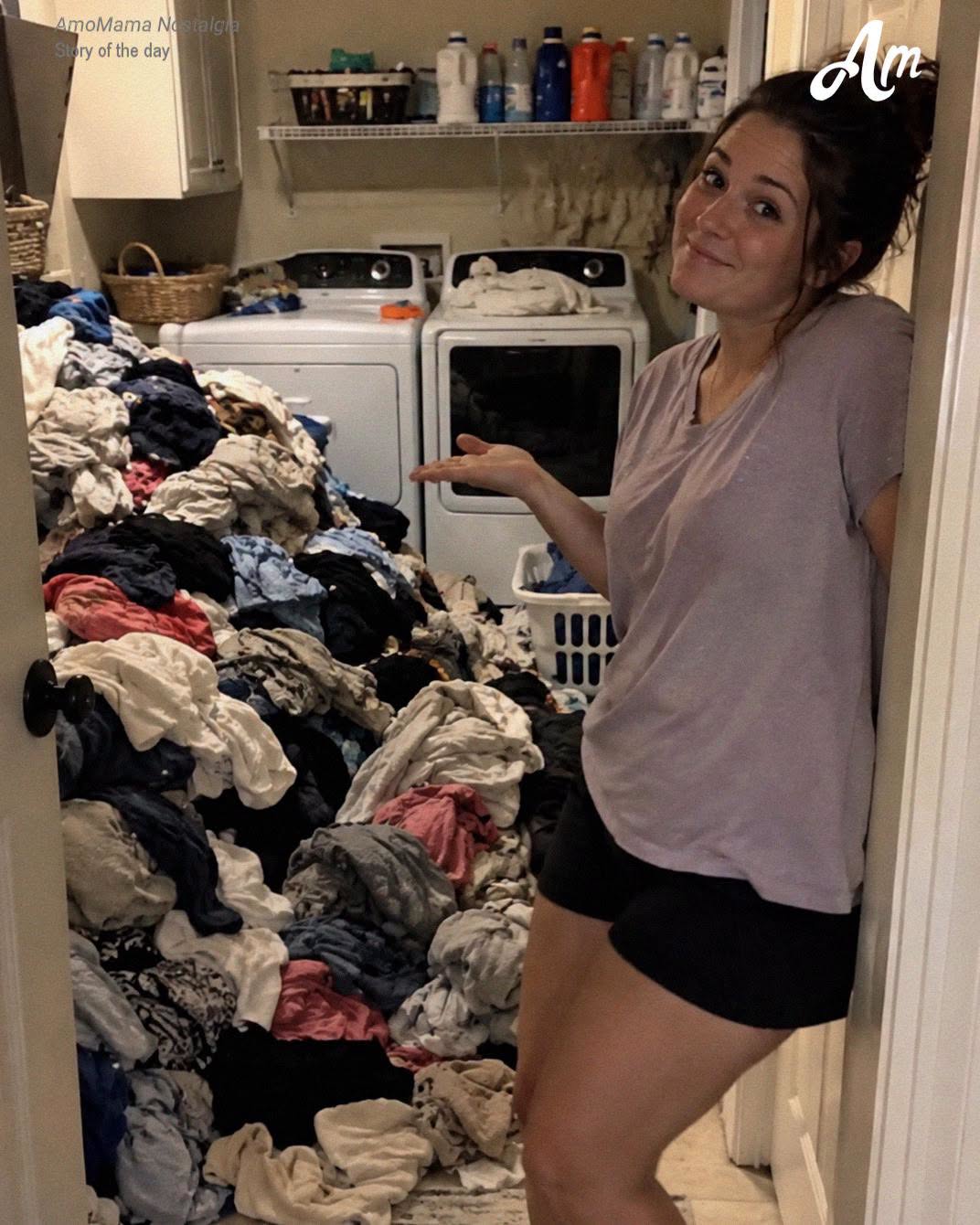
Soon, every Saturday, Vanessa would arrive with Josh and their kids, unload three enormous bags of dirty clothes, and leave them beside my washing machine.
She never asked anymore.
She just expected them washed, dried, folded, and waiting when they left.
At first, I told myself I was helping.
The kids were young.
Vanessa and Josh both had busy lives.
I remembered what it was like to have a house full of laundry that seemed to multiply overnight.
But helping someone is different from being assigned a job without anyone bothering to tell you.
I'd spend half my Saturday moving loads from the washer to the dryer while everyone else talked upstairs, played with the kids, or sat outside when the weather was nice.
By late afternoon, I'd be folding tiny shirts, socks, jeans, towels, pajamas, and whatever else Vanessa had stuffed into those bags.
Not once did she offer to help.
Eventually, she even stopped thanking me.
One Sunday, after they'd stayed overnight following a family dinner, I finally said something.
We were all sitting at the kitchen table. Vanessa was drinking coffee while I cleared breakfast plates.
"Vanessa, I'm 68. I'm happy to help sometimes, but I'm not your laundromat."
"You're home all day anyway."
Josh stared at his plate.
That hurt almost as much.
I wasn't expecting him to start an argument with his wife, but I expected something.
A look. A word. Some acknowledgment that what she'd said was rude.
Instead, he became extremely interested in a piece of toast.
I carried the plates to the sink and said nothing else.
I knew then that another complaint wasn't going to change anything.
So the next weekend, when Vanessa arrived with four bags, I didn't complain.
I watched Josh haul two through the kitchen while Vanessa dragged the others toward the basement door.
"Big week," she said lightly.
She looked almost disappointed.
Apparently, she'd prepared herself for another speech.
Instead, I poured lemonade for the kids and went outside with everyone else.
That afternoon, while everyone was eating in the backyard, I carried every bag into the laundry room.
But I didn't turn on the washer.
Instead, I did something I'd been considering all week.
I emptied every bag onto the floor and sorted everything into separate piles.
Then I noticed something strange.
Almost half of Vanessa's pile wasn't hers.
Men's dress shirts I'd never seen Josh wear.
A pair of expensive trousers far too small for him.
And three white button-down shirts with a dry-cleaner's tag still attached.
I stood there holding one of the shirts.
My first thought was unpleasant.
My second was that it was none of my business.
I almost called Josh.
This wasn't why I'd brought the bags downstairs.
I wasn't going to accuse my daughter-in-law of something based on a shirt.
But I also wasn't going to wash a mysterious man's clothes in my basement.
So I made a fourth pile.
Then I went upstairs, found four empty laundry baskets, and carried them down.
I put Vanessa's clothes in one.
The children's clothes went in the third.
Everything I couldn't identify went into the fourth.
I tore four sheets from a notepad and wrote labels.
Then I set detergent on the dryer, put dryer sheets beside it, and pulled a chair away from the wall.
Just four baskets of dirty laundry and everything Vanessa needed to deal with them herself.
I went back outside and had a hamburger.
At six, Vanessa went downstairs to collect everything.
Seconds later, I heard her scream.
"What did you do?!"
Vanessa stood in the middle of the laundry room staring at the baskets.
Josh came down behind her, followed by the kids, who stopped on the stairs when they sensed the mood.
I pointed toward the family room.
"Kids, go upstairs for a minute."
When they were gone, Vanessa turned to me.
"Why is everything still dirty?"
"I sorted it for you."
She stared at me.
"But you didn't wash anything."
Her face changed as if she genuinely didn't understand.
"We have to leave soon."
"So what are we supposed to do with four bags of dirty clothes?"
I gestured toward the washing machine.
She looked from the machine to me.
"You expect me to do all this now?"
That was when I knew my little lesson had worked better than I expected.
"You brought four bags here this morning because you expected me to do all this."
Vanessa opened her mouth, then closed it.
"You always do it," she finally said.
Not "I thought you wouldn't mind."
"You always do it."
I folded my arms.
Josh shifted beside her.
"Mom, maybe we can just take it home."
Vanessa turned on him.
"We can't take all of this home. The kids need clean clothes for school, and you need work shirts Monday."
He glanced at his basket.
"Then we can wash some tonight."
"We'll be doing laundry until midnight."
"Now you understand why four bags didn't seem like a small favor to me."
Vanessa's cheeks turned red.
"I didn't force you."
"No. You just stopped asking."
Her eyes moved to the fourth basket.
"Things that didn't belong in the other three."
She stepped toward it too quickly.
He reached in before she could stop him and pulled out one of the white dress shirts.
He checked the collar, then picked up the trousers.
I could feel the whole argument changing direction.
Josh looked at Vanessa.
"Whose clothes are these?"
"It matters if they're mixed in with our laundry."
She grabbed for the shirt, but he held it away.
"Give it to me."
I stepped between them before an argument about laundry turned into something uglier.
"I noticed them earlier," I said.
Josh looked at me.
"And you didn't tell me?"
"No, because I wasn't going to accuse your wife of something based on a shirt."
Vanessa looked at me, surprised.
I continued, "But if you've been bringing someone else's laundry into my house every weekend, then I think I'm entitled to know whose work I've been doing."
For the first time all day, she didn't look angry.
Vanessa sat on the edge of the chair I'd pulled out earlier.
"He moved three weeks ago."
She looked at him.
"To an assisted-living apartment."
Josh stared at her.
"He didn't want anyone knowing yet."
"You didn't tell me?"
"He made me promise."
The room went quiet.
I knew Vanessa's father lived alone, but I hadn't realized anything had changed.
She briefly buried her face in her hands.
"He was having trouble managing the house. Nothing dramatic happened. It just got harder. The stairs were difficult. He forgot meals sometimes. Laundry piled up because carrying baskets was hard for him."
She nodded toward the fourth basket.
"I've been stopping by after work. I get groceries, check his mail, help with whatever he needs. When he moved, I started clearing out his old place too."
Josh lifted one of the shirts.
"From his closet. Some things needed washing before I packed them. The shirts with the dry-cleaning tags were already clean, but I'd scooped them up with everything else when I emptied his closet and hadn't realized they were in the bags."
I looked at the fourth basket.
So that explained why there was even more laundry than usual that weekend.
My irritation didn't vanish.
"Why didn't you tell anyone you were doing all this?" I asked.
Vanessa laughed once, but there was no humor in it.
"Because everybody needs something from me."
"Dad needs me. The kids need me. The school needs forms, snacks, clean clothes, permission slips. The house needs groceries. Dinner needs making. Somebody has to remember appointments. Somebody has to notice when we're out of detergent."
"I help," whispered Josh.
Vanessa turned toward him.
"I do more than sometimes."
"You take the trash out and mow the lawn."
"I pick the kids up."
Josh glanced at me as if hoping I'd stop the conversation.
"I've been telling you for months that I'm exhausted."
"I knew you were stressed."
"No. You knew I said I was stressed. Then everything kept getting done, so you decided I must have it handled."
That sentence caught me.
Everything kept getting done.
I looked at my washer.
Suddenly, I could see the shape of the whole problem.
Josh had been taking Vanessa's effort for granted.
Vanessa had been taking mine for granted.
Each person had looked at the person doing the work and thought, "Well, they're managing."
So why change anything?
I turned to Josh.
"Did you know she was doing most of this?"
"I knew she handled more of the house stuff."
"I didn't bring laundry here because I wanted to make Eileen miserable."
"Then why didn't you ask me?" I said.
She looked at me.
That was the question I needed answered.
"If you were drowning, why didn't you say, 'Eileen, I'm overwhelmed. Can you help me?'"
For a moment, she said nothing.
Then she looked down at the baskets.
"Because you might have said no."
I hadn't expected that.
"At first, I asked. You said yes. Then I kept bringing more, and I started telling myself you didn't mind. After a while, I just stopped asking."
"Stopping asking made you feel less guilty?"
"I told myself you didn't mind."
"Even after I told you I did?"
"And 'You're home all day anyway'?"
Her eyes filled, but she didn't look away.
Josh started to speak, but I raised a hand.
"I probably would have helped you if you'd told me the truth," I said. "If you'd said your father needed you and you were falling behind, I might have taken a load or two. I might have kept the kids while you went to see him. But you didn't ask me for help. You assigned me a job."
"What hurt wasn't the laundry. What hurt was you deciding that because I'm retired and home more than you are, my time didn't count."
She wiped at her eyes.
I looked at Josh.
"When she told me I was home all day, you stared at your plate."
"I should have said something."
I pointed toward Vanessa.
"But there's something else you should be sorry about too."
He followed my gaze.
"You let her get overloaded because everything kept getting done."
Vanessa looked at me then.
Really looked at me.
The anger she'd had when she came downstairs was gone.
"I didn't realize how bad it was."
Vanessa gave him a tired look.
That surprised both of us.
Then he took a breath.
"I heard you. I just kept thinking if it got really bad, you'd tell me exactly what you needed."
"I shouldn't have to make you a list of everything in your own house," she said.
I picked up his basket and pushed it toward him.
"Good. Start with that."
He looked down at it.
I pushed her basket toward her.
Then I pointed to the children's basket.
"You two split that."
Finally, I touched the fourth basket.
"And you figure out together how you're going to help your father."
She glanced toward the washer.
"Aren't you going to help?"
There was enough hesitation in her voice that I knew she understood the question differently now.
For the rest of the evening, Josh and Vanessa did laundry.
He loaded the washer while she sorted clothes. She moved one load to the dryer while he folded another at the table upstairs.
At one point, he held up one of the kids' shirts and asked, "Does this go in the dryer?"
Vanessa stared at him.
"Then I guess you're learning two lessons tonight."
Even I laughed at that.
While the machines ran, we talked.
Not peacefully every second.
Josh agreed to take over several regular household jobs instead of saying he'd "help more."
He'd handle his own laundry, half the children's laundry, grocery shopping twice a month, and two school pickups each week.
Vanessa agreed she couldn't keep absorbing every need her father had without telling anyone.
And I made my own position clear.
"I love you," I told her. "I love the kids. If there's an emergency, ask me. If you're overwhelmed, ask me. I may say yes."
She gave me a small smile.
"And you may say no."
The following Saturday, they came over again.
Josh carried a container of food.
The kids ran straight into the backyard.
Vanessa walked through my kitchen empty-handed.
"No laundry?" I asked.
"I wanted to say something."
"I'm sorry for what I said. About you being home all day."
"I know. But I don't think I understood why it was so bad until this week."
She glanced toward Josh, who was outside with the kids.
"I've been furious for months because I felt like everybody thought my time belonged to them. Then I turned around and did exactly that to you."
That was the apology I needed.
Not because it was longer.
I still help sometimes.
Last month, Vanessa called and asked if I could wash a load of the kids' clothes because her father had an appointment and she was stretched thin.
A week later, she asked if I could do another.
And do you know what happened?
The world kept turning.
Those four baskets taught all of us something I wish we'd understood earlier.
Work becomes invisible when someone does it reliably enough.
Josh stopped seeing how much Vanessa carried because she kept carrying it.
Vanessa stopped seeing what she was asking of me because I kept doing it.
And I had been so focused on proving that Vanessa was taking advantage of me that I hadn't realized she was struggling too.
Her struggle didn't excuse what she did.
It explained how she got there.
These days, when someone in our family needs help, we try to ask instead of assume.
And when one of us says no, nobody treats it like an insult.
Most Saturdays, my basement is quiet now.
The washer holds my clothes.
The dryer holds my towels.
And beside them, where enormous bags of somebody else's dirty laundry used to appear every weekend, there is nothing at all.
I like it that way.
If a relative repeatedly turned a favor into an expectation, would you keep helping, confront them again, or stop doing it without warning?
Enjoyed reading this story? Here's another one you might like: When my future daughter-in-law asked me to change one small thing for her wedding, I agreed without arguing. I thought I was helping her feel comfortable on an important day. I had no idea my answer mattered to her for a completely different reason.