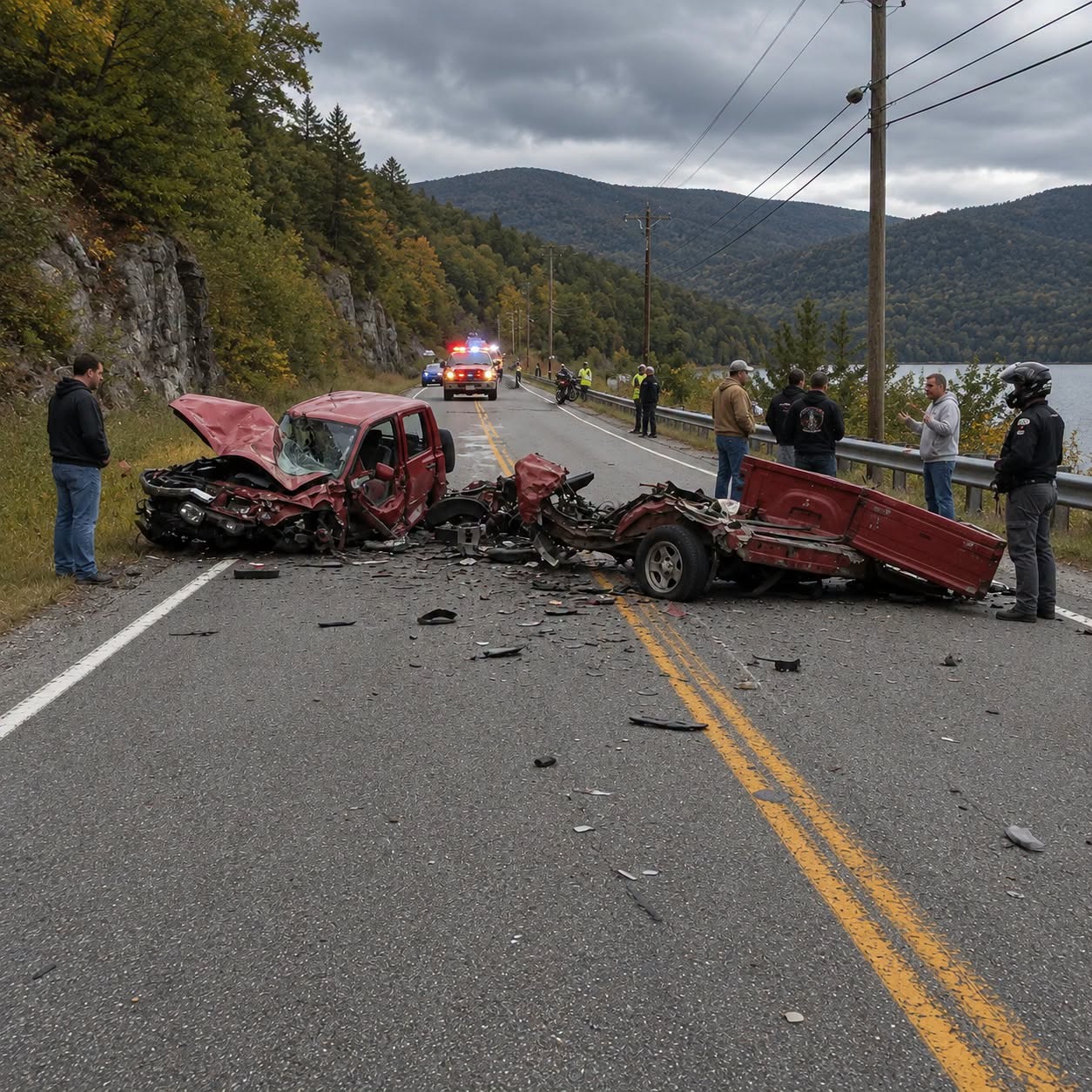
A fatal crash on Manhattan’s Upper West Side left two people dead and three others seriously injured on May 15, 2026. Although the Facebook caption describes a crash happening “just minutes ago,” the matching incident was reported months earlier. This article concerns that May incident, not a newly confirmed crash.
Police said the collision happened around 6 p.m. near Amsterdam Avenue and West 109th Street. A 61-year-old man was driving a Mercedes-Benz SUV north on Amsterdam Avenue when the vehicle struck a parked car. The collision continued through the area, involving other vehicles and pedestrians. What had been an ordinary stretch of city street became the scene of an emergency response.
Early reports described two men killed and three other people hospitalized with serious injuries. Those numbers reflected the information available immediately after the crash. They should not be read as a new update about the surviving victims’ conditions, and the material reviewed for this article does not establish their later recovery.
The driver was identified in subsequent reporting as Elvin Suarez. Police charged him with manslaughter, vehicular manslaughter and driving while intoxicated. Those charges are allegations, and they do not by themselves establish guilt. No final court outcome is presented here. The distinction matters because an arrest, a charge and a conviction are different stages, and early coverage cannot substitute for a later court record.
The original source article focused on the questions confronting investigators after the impact. It described medics treating the injured while officers kept crowds away and began documenting the scene. It also emphasized the need to examine the circumstances carefully rather than assume that a single early explanation accounted for everything that happened.
For a crash involving several vehicles and people, the sequence is important. The position of the first impact, the movement of the SUV afterward, and the locations of the pedestrians help explain how a collision developed. Witness accounts and available recordings can provide different pieces of that sequence. An initial report may summarize only part of it, leaving details to be established through further investigation.
The source raised possible explanations such as a medical problem, mechanical failure or driving error. Those were questions in that article, not established findings. Later reporting about intoxication-related charges is a significant addition to the early account. It is more accurate to report the charges as police allegations than to repeat the earlier uncertainty as though no further information had emerged.
The human consequences remain central. Two people died in a sudden collision, and others were left needing hospital care. Families and neighbors faced the aftermath while investigators worked to determine responsibility. A short social-media caption cannot convey either the full sequence or the distinction between confirmed facts and unresolved questions.
Readers encountering the shared post now should keep the date in view. The matching reporting places this crash in May 2026. This account does not confirm another incident on an unspecified “Sa” road, and it does not supply new casualty figures. It preserves the subject of the linked report while adding the date and subsequent police allegations needed to avoid presenting an older tragedy as breaking news.
Reporting: FOX 5 New York; ABC7 New York.