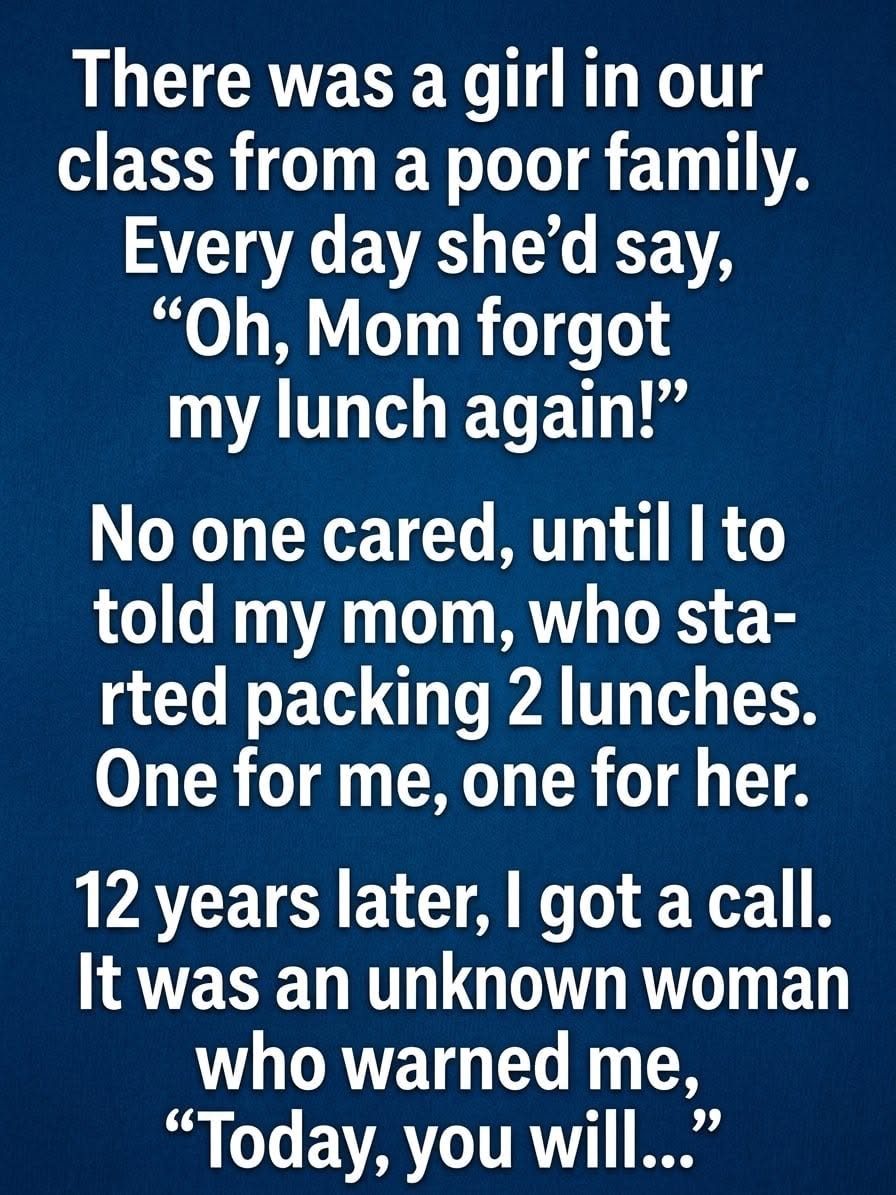
It was not one dramatic moment that made me notice the girl in my class. It was the repetition. Every day at lunch, she sat at the same end of the cafeteria table without food. When anyone asked, she smiled and said her mother had forgotten her lunch again. She said it lightly, but after hearing the same explanation day after day, I realized she had learned how to hide hunger without asking anyone for help.
One evening, I told my mother what I had been seeing. I expected questions or uncertainty, but Mom answered immediately. She said that the next morning she would prepare two lunches. There was no speech about charity and no plan to embarrass the girl. She simply packed two of everything, one meal for me and one for her.
I carried the extra lunch into school nervously. Offering it felt more difficult than discussing it at home because I did not know whether the girl would feel exposed. I placed it in front of her without drawing attention. She froze for a moment, as though accepting food required permission, and then whispered thank you.
From that day forward, we ate together. My mother continued packing an extra meal and never treated it as a burden. The routine made the gesture feel normal instead of pitying. The girl no longer had to invent a forgotten lunch, and I no longer watched her sit through the meal period pretending not to be hungry.
As we became friends, she told me what was happening at home. Her mother worked two jobs and still struggled to cover everything the family needed. Some days there was not enough money left for food. The girl had understood the pressure and chose silence because she did not want to add another problem for her exhausted mother.
The lunches gave her more than something to eat. They created a safe place at the table where she did not have to perform or disappear. We talked about school, complained about homework, and laughed like any other classmates. My mother’s quiet help protected the girl’s dignity because the meal arrived through friendship rather than as a public announcement of need.
Eventually, we moved on to different schools and lost contact. Years passed, and the lunches became one of those childhood memories I carried without knowing what had happened to the other person. Then an unfamiliar number appeared on my phone. When I answered, I heard her voice.
She told me she had never forgotten the meals. What stayed with her most was not the food itself, but the realization that someone had noticed her when she felt invisible. She had grown into a confident woman and had begun donating lunches to children at a local shelter. She was also preparing to launch a community meal program inspired by what my mother had done.
When I shared the call with Mom, she smiled and said that kindness does not stay where it is placed. It keeps moving. Her words explained what the extra lunch had become. A simple decision in our kitchen had crossed years and reached children my mother and I would never meet.
I had once thought meaningful help had to solve an entire problem. My mother could not change the family’s income, remove the strain of two jobs, or guarantee that no difficult day would return. She could make sure one child ate lunch and felt welcome. That smaller act gave the girl strength, memory, and an example she later chose to repeat.
I still remember how uncertain I felt when I placed the first meal on the table. I could not see a community program in that paper bag. I saw only a classmate and one hungry afternoon. That was enough. Kindness often begins before anyone knows how far it will travel, with one person paying attention and deciding that another person should not have to remain invisible.