Marianne’s school prom included an unusual tradition: every graduating senior walked onstage with a sibling, and that sibling presented a handmade gift meant to represent who the senior truly was. Marianne’s younger brother Danny had Down syndrome, and she worried that the ceremony would invite classmates to compare his work with polished gifts made by older siblings with art training, jobs, and money.
Her fear was not embarrassment about Danny. It was fear of the audience and the way teenagers could turn a sincere effort into a contest. One student’s brother studied at Parsons and had painted a portrait. Another had spent months buying materials for an elaborate shadow box. Marianne wanted Danny seated safely with their mother, enjoying the evening without being measured against anyone.
Danny had other plans. Beginning in January, he spent every afternoon in the garage with the door closed. Their mother kept the key, protecting the surprise. Marianne was busy preparing for advanced placement exams and often returned from the library after the garage light had gone dark.
One night she caught Danny entering through the side door with sawdust on his sleeves. When she asked what he was making, he grinned and refused to tell her. Three weeks before prom, Marianne suggested to their mother that an aunt could walk her onstage instead. Her mother listened and then reminded her that Danny had already worked for months.
Backstage on prom night, Marianne watched siblings carry paintings, jewelry, framed photographs, and carefully wrapped packages. The curtain blocked her view of Danny. She could hear an unfamiliar scraping sound and imagined every possible problem. Then the master of ceremonies announced her name.
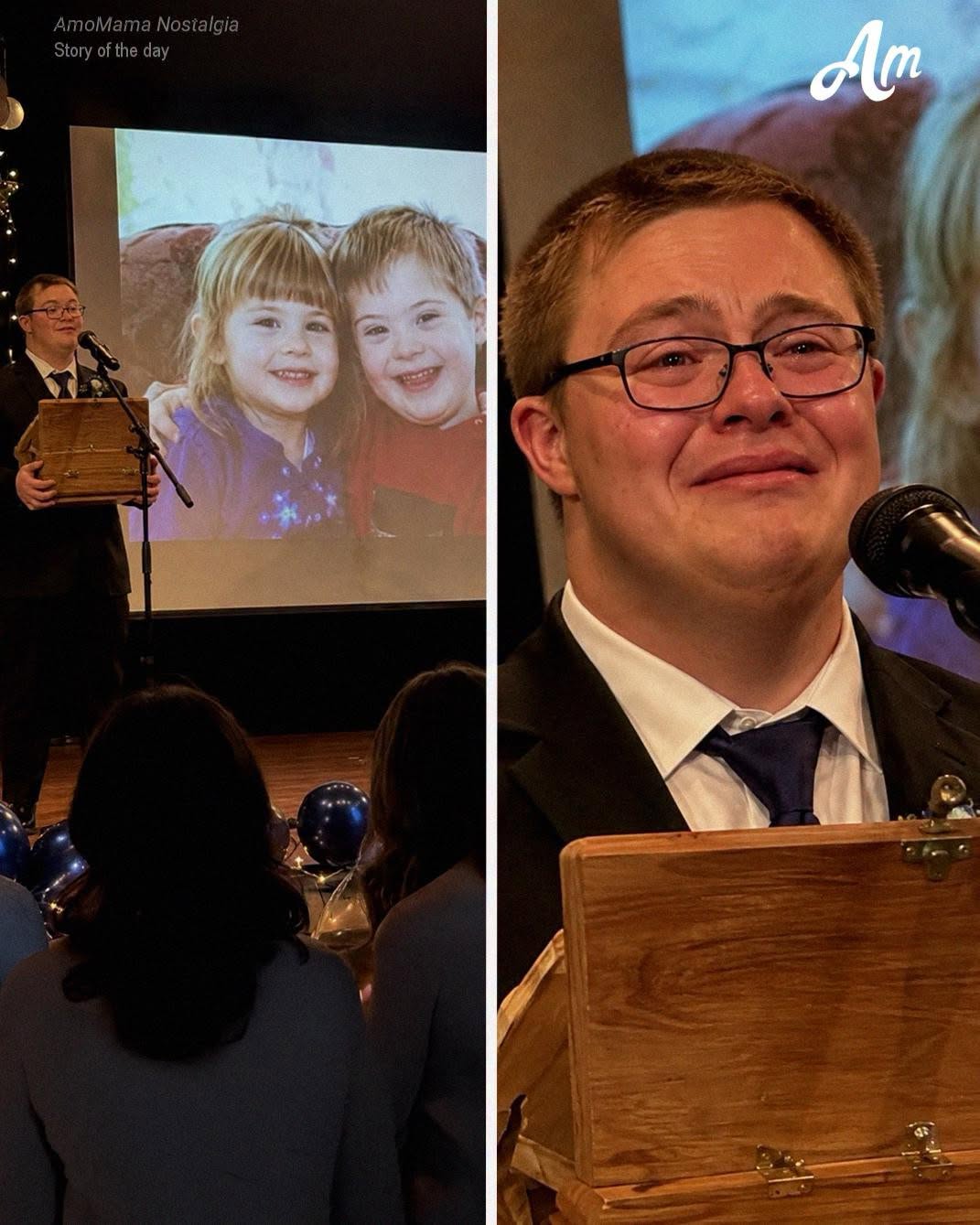
Danny stepped into the light carrying an oak box about the size of a shoebox. He had sanded the wood until it felt soft and fitted brass hinges from the hardware store on Ferry Road. He held it against his chest with both hands, moving carefully toward a microphone that was slightly too high.
The screen behind him displayed a photograph of the siblings on their grandmother’s brown couch. Marianne was four and Danny was one. Her arm was around him, and both children were laughing at something outside the frame. Danny had found the picture in an album stored in their mother’s closet.
He opened the box and removed dozens of small wooden pieces. Each had been cut, sanded, and painted by hand. When arranged on the podium, they formed a timeline: a tiny couch for the old photograph, a school bus, a library book, a birthday cake, and a graduation cap. The final piece was unfinished on one side.
Danny explained that the unfinished side represented everything Marianne had not done yet. He told the audience that she helped him read, defended him when children stared, and always came back to sit with him even when she was busy. Then he apologized because the box was the only thing he had to give her.
The room remained quiet for a moment before the applause began. Marianne realized that Danny’s gift could not be compared with a professional portrait because it carried five months of attention. Every object represented a memory he had selected and shaped. The uneven edges proved how many hours he had spent learning skills rather than reducing the value of the result.
She joined him at the microphone and admitted that she had tried to protect him from the ceremony without asking whether he needed protection. Danny had understood the purpose of the tradition better than she had. It was never supposed to reward money or artistic training; it was supposed to reveal what one sibling saw in another.
Marianne placed the unfinished final piece in the center of the box. The gift became the most important object she took from high school, not because the audience applauded but because it corrected her fear. Danny had not gone onstage to be measured. He went there to tell his sister who she was, using the patience, memory, and love only he could give.