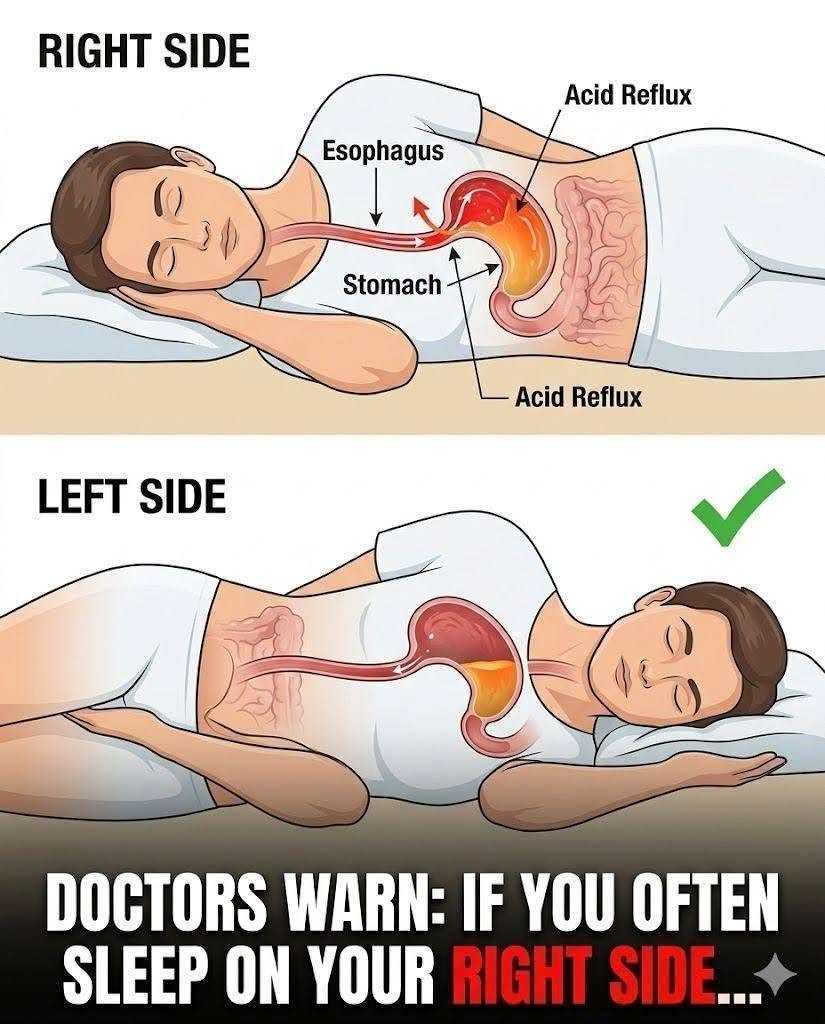
People who regularly wake with heartburn may not realize that sleeping position can affect how easily stomach contents move toward the esophagus. Acid reflux occurs when the valve between the stomach and esophagus does not keep digestive material where it belongs. Lying down removes much of gravity’s help, which is why symptoms often become worse at night. Medical guidance increasingly recognizes that the side a person sleeps on can make a noticeable difference.
Sleeping on the left side often reduces nighttime reflux. The stomach sits mainly on the left side of the abdomen, and this position tends to keep the junction with the esophagus above much of the stomach’s contents. Gravity then makes it harder for acid to travel upward. Studies using monitoring equipment have found that acid may clear from the esophagus more quickly when a person lies on the left.
The right side can have the opposite effect for some people. In that position, the stomach’s contents may rest closer to the lower esophageal sphincter, making reflux easier. This does not mean every person who sleeps on the right will develop a medical problem, nor does it mean changing sides will cure established reflux disease. It is one practical factor that may reduce symptoms, especially when combined with other habits.
Back sleeping can also be difficult when the upper body lies flat. Raising the head and chest by about six to eight inches may help. A wedge pillow or an elevated bed frame is generally more effective than stacking ordinary pillows, which can bend the body at the waist and increase pressure on the abdomen. People with mobility, breathing, spinal, or heart conditions should discuss major sleep-position changes with a qualified clinician.
Meal timing matters. Eating a large meal shortly before bed leaves the stomach full at the time the body becomes horizontal. Many clinicians advise allowing roughly three hours between the final meal and lying down. Smaller evening portions may help, as can identifying personal triggers. Common triggers include alcohol, chocolate, peppermint, high-fat foods, acidic foods, spicy meals, and caffeine, but they are not identical for everyone.
Weight, smoking, pregnancy, certain medications, and hiatal hernia can influence reflux. Tight clothing around the abdomen may add pressure. A symptom diary can help reveal patterns involving food, timing, activity, and sleeping position. It is better to identify an individual pattern than to remove many foods unnecessarily based on a generic list.
Occasional heartburn is common, but frequent symptoms deserve medical attention. Persistent reflux can irritate and damage the esophagus. Warning signs include difficulty or pain with swallowing, unexplained weight loss, vomiting blood, black stools, anemia, repeated vomiting, chest pain, or symptoms that do not improve. Chest pain should never automatically be assumed to be indigestion because heart problems can feel similar and may require emergency care.
Over-the-counter antacids or acid-reducing medicines can provide relief, but regular use should be discussed with a healthcare professional. The right treatment depends on the frequency, cause, other health conditions, and medicines already being taken. A clinician may recommend lifestyle changes, a monitored medication plan, or testing when necessary.
For many people, the simplest first experiment is to sleep on the left side, keep the upper body appropriately elevated, and avoid late heavy meals. The goal is not to blame one sleeping position for every episode of reflux. It is to use anatomy and gravity to reduce an avoidable source of discomfort while seeking proper care when symptoms are frequent, severe, or accompanied by warning signs.
Comfort still matters. A person may be unable to remain on the left because of shoulder pain, pregnancy discomfort, a medical device, or another condition. Side-sleeping pillows and gradual changes can help, but no one should worsen another health problem to follow a general reflux tip. The most useful plan is the one that can be sustained and is reviewed when symptoms continue. Position is a tool, not a diagnosis.