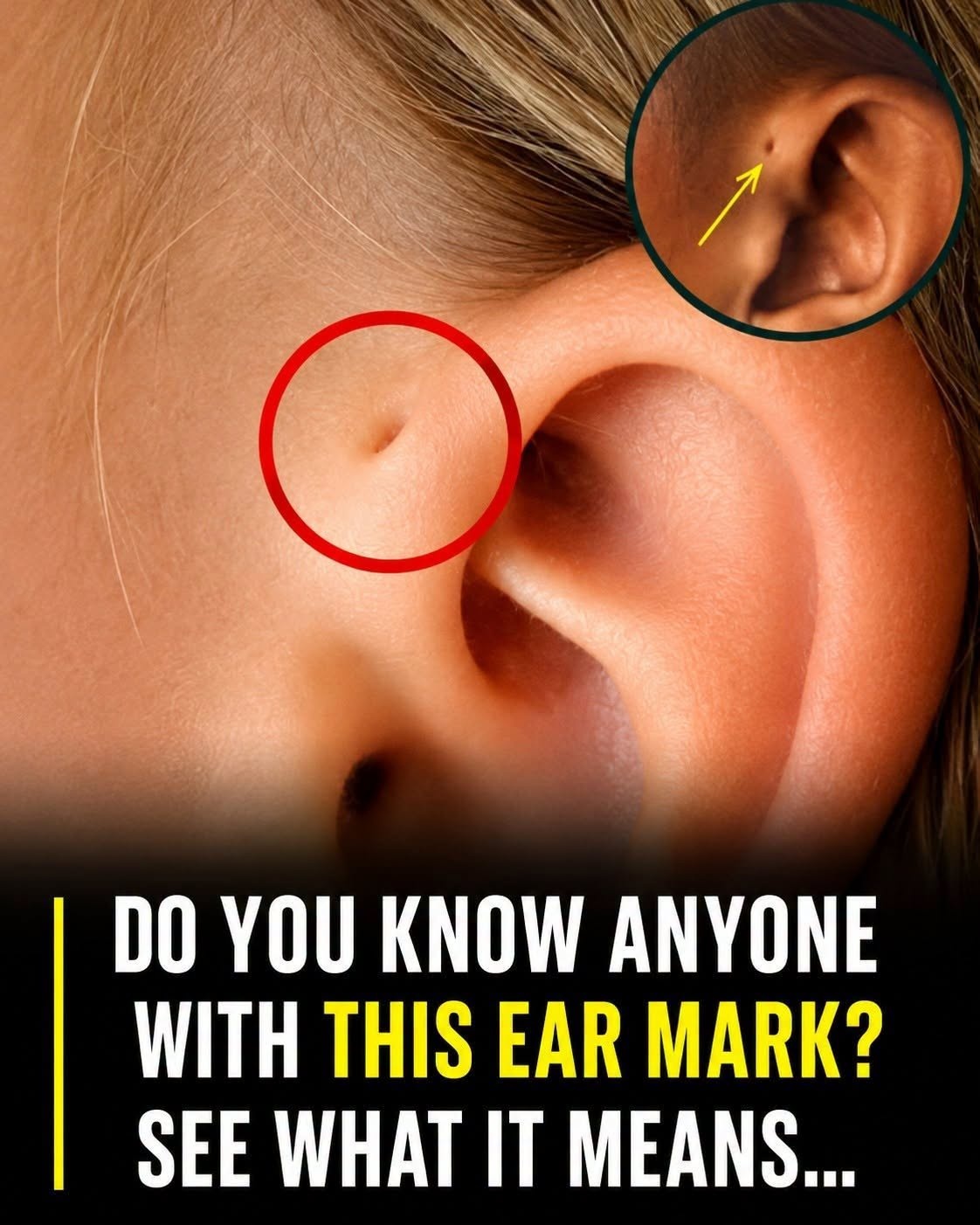
A tiny hole or dimple just in front of the ear may seem unusual, but it is often a harmless congenital feature called a preauricular pit. It develops before birth and is usually present throughout a person’s life.
Preauricular pits form during early fetal development, when the tissues that create the outer ear come together. If this process does not occur completely, a small opening or narrow channel may remain near the ear.
This feature can appear on one or both ears. In many cases, it runs in families, although people with no family history can also have it. Experts generally consider it a natural anatomical variation rather than a disease.
For most people, a preauricular pit causes no symptoms and does not require treatment. Many individuals may have one for their entire lives without even noticing it or experiencing any complications.
However, the opening can sometimes allow bacteria to enter a small tract beneath the skin, leading to an infection. Warning signs include redness, swelling, pain, tenderness, or fluid and pus draining from the opening. Fever may occur in more serious cases.
If an infection develops, a healthcare professional may recommend antibiotics or drainage if an abscess forms. When infections repeatedly return, surgical removal of the tract may be considered to help prevent further problems.
Preauricular pits usually do not affect hearing, and most people with this feature have normal ear function. Rarely, if the pit occurs alongside other unusual symptoms or features, a doctor may recommend additional evaluation.
Medical advice is important if the area becomes painful, swollen, repeatedly infected, or continuously drains fluid, or if a lump grows rapidly nearby. Otherwise, keeping the area clean and leaving it alone is generally sufficient. A tiny mark near the ear is often nothing to worry about, but any new or concerning changes should be checked by a healthcare professional.
The location of the opening is part of what makes a preauricular pit recognizable: it is usually just in front of the outer ear rather than a new wound or a piercing. Because it is a developmental feature, a person may first notice it in childhood or learn that another relative has a similar mark. Discovering it later does not necessarily mean it has recently appeared.
An opening that has always been present and causes no discomfort is different from an area that becomes red, painful, or swollen. The source's advice centers on that change in symptoms. When irritation or drainage develops, a healthcare professional can examine the area and decide whether an infection or another condition needs attention. The appearance of a tiny hole alone does not establish a need for medication or a procedure.
Leaving the opening alone also means avoiding the assumption that something must be squeezed or removed from it. The tract beneath the skin is not fully visible from the surface. If problems recur, an assessment can help determine the appropriate next step rather than relying on repeated attempts to treat the opening without knowing its structure.
For most people, the reassuring point remains that this small anatomical variation can exist without affecting daily life. Paying attention to new symptoms offers a practical balance between unnecessary worry and overlooking a change that deserves care. A clinician can provide advice suited to the individual's history and examination.