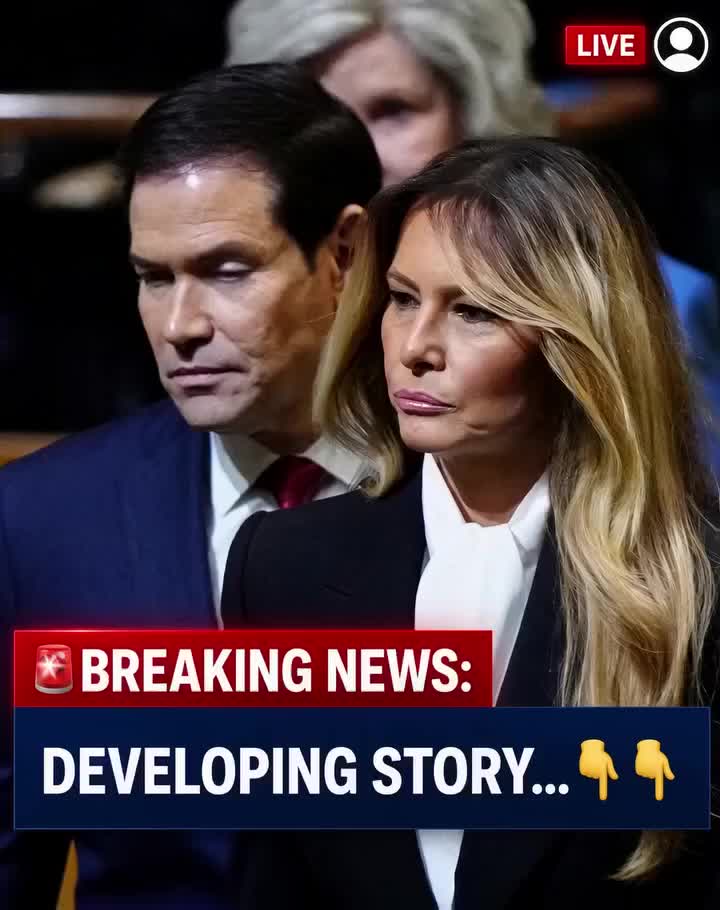
A federal judge on Friday dismissed a preemptive lawsuit brought by author and journalist Michael Wolff against First Lady Melania Trump, sharply criticizing the filing as a “contorted” attempt that does not align with how federal courts operate.
U.S. District Judge Mary Kay Vyskocil, a Trump appointee serving in Manhattan, declined to exercise jurisdiction over the case despite acknowledging a genuine underlying dispute between the parties. In a 45-page opinion, Vyskocil described the litigation as marked by an “inappropriate level of tactical gamesmanship” and said she would not allow the court to be drawn into “an abusively presented spat.”
“While Plaintiff and the First Lady have a real dispute, they must litigate it according to the same procedures as everyone else,” Vyskocil wrote. “Plaintiff asks for a declaration that, if the First Lady sues him, he deserves to win. That is not how the federal courts work.”
The ruling stems from statements Wolff made linking Melania Trump to the late financier Jeffrey Epstein, who died in jail in 2019 while awaiting trial on child sex trafficking charges. Last year, Trump’s attorney Alejandro Brito sent Wolff a demand letter calling on him to delete the statements, warning that failure to do so would leave the first lady with “no alternative” but to sue for defamation. The letter cited “overwhelming reputational and financial harm.”
The distinction in the opinion concerns the way the dispute was brought before the court. Wolff sought a declaration about the outcome of a possible future defamation action. The judge's response, as quoted in the report, separates the existence of a disagreement from the question of whether this particular lawsuit was an appropriate way to resolve it. A real dispute does not, in her reasoning, remove the requirement to follow ordinary procedures.
That is also why the description of the filing matters. The opinion did not simply deny that the parties had conflicting positions. It acknowledged a genuine underlying disagreement while refusing to take up the preemptive case in the form presented. The criticism of tactical gamesmanship addresses that procedural approach rather than supplying a substitute account of the underlying allegations.
The demand letter provides the background for Wolff's attempt to act first. According to the report, Brito demanded that the statements be deleted and warned of a potential defamation suit. Wolff's filing asked the court to determine that he should prevail if that threatened action were brought. The quoted ruling rejects that proposed sequence as inconsistent with the way the federal court should be used.
The dismissal therefore should be read with attention to its stated scope. The report describes a decision declining jurisdiction over the preemptive litigation. It does not reproduce a judgment deciding the truth of every disputed statement, nor does the quoted language establish the result of a separate future action. Those questions should not be collapsed into the fact that this filing was dismissed.
At the center of the judge's explanation is the insistence that both parties use the same procedures required of other litigants. The prominence of the people involved does not change the procedural criticism expressed in the opinion. Understanding that distinction gives the ruling its meaning beyond the headline.