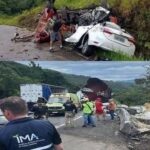
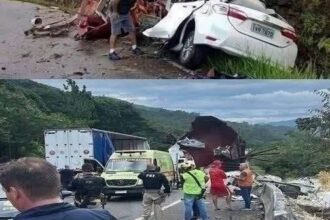
For thousands of commuters, the morning began like any other ordinary weekday. Cars filled the roads, buses carried passengers toward their destinations, and workers hurried through familiar routines while trying to arrive at their offices on time. Parents were taking their children to school, delivery drivers were preparing for busy schedules, and countless travelers were making their way through the usual rush-hour congestion.
Nothing about the morning appeared particularly unusual.
The familiar sounds of engines, traffic signals, and impatient horns created the soundtrack of another busy day. Drivers moved slowly through crowded lanes, occasionally glancing at their dashboards or checking the time as they navigated the constant flow of vehicles.
But within moments, that ordinary scene transformed into a frightening emergency.
A serious traffic collision involving multiple vehicles brought a normally busy roadway to an almost complete standstill. What initially appeared to be an accident between two cars reportedly developed into a chain reaction, leaving several vehicles damaged and debris scattered across multiple lanes.
Drivers approaching the area suddenly found themselves facing flashing brake lights, clouds of dust, shattered glass, and vehicles that could no longer move.
Some motorists immediately pulled over and contacted emergency services. Others remained inside their cars, uncertain whether it was safe to move forward or leave their vehicles.
Within minutes, emergency responders began arriving. Police officers worked to secure the scene, firefighters assessed damaged vehicles, and paramedics prepared to provide medical assistance to anyone who might have been injured.
Flashing emergency lights soon illuminated the roadway.
Reports of helicopters overhead and a growing crowd of concerned bystanders added to the atmosphere of urgency. Meanwhile, information about the accident spread rapidly through social media, where eyewitness observations mixed with speculation and unverified claims.
For those caught in the congestion, the situation was both confusing and deeply unsettling.
What had caused the initial collision? How many vehicles were involved? Were people trapped inside the wreckage? How long would the roadway remain closed?
As emergency crews concentrated on their work, these questions remained unanswered.
The incident illustrates how quickly a routine journey can become a dangerous situation and how an unexpected collision can affect far more people than those directly involved.
It also highlights the importance of emergency preparedness, responsible driving, public cooperation, and accurate information during a rapidly developing roadside crisis.
A Morning That Began Like Countless Others
Morning rush hour is one of the busiest periods on any major roadway.
Thousands of drivers often travel along the same routes at approximately the same time, creating conditions in which even a small disruption can have widespread consequences.
Some commuters leave home early to avoid congestion. Others have little flexibility because their work schedules, school commitments, or appointments require them to travel during peak hours.
As traffic builds, vehicles frequently move in tightly packed groups. Drivers accelerate when gaps appear, slow when congestion increases, and change lanes in hopes of finding a faster route.
Under ordinary circumstances, this movement can seem predictable.
Experienced commuters know where traffic typically slows, which lanes tend to become congested, and how long their journeys usually take.
However, familiarity can sometimes create a false sense of security.
A roadway traveled hundreds of times may still present unexpected hazards. A sudden mechanical problem, an abrupt lane change, poor visibility, or a momentary lapse in attention can create conditions that require immediate action.
In the reported incident, witnesses described traffic as already heavy before the collision occurred.
That detail is significant because congested roadways leave drivers with less room to respond when something goes wrong.
Vehicles following closely behind one another may have only seconds to recognize a developing danger.
A driver who brakes suddenly can force the motorist behind to react just as quickly. If that second driver cannot stop in time, another impact may follow.
In dense traffic, the resulting sequence can spread through multiple vehicles before the drivers farther back fully understand what is happening.
For those approaching the accident, there may have been little visible warning beyond rapidly illuminating brake lights.
One moment, traffic was progressing through its normal morning pattern.
The next, drivers were confronted by a scene of damaged vehicles, scattered debris, and an unexpected road closure.
The difference between an ordinary commute and a major emergency can sometimes be measured in seconds.
The Initial Impact and the Chain Reaction
According to the account provided by witnesses, the accident appeared to begin with an impact involving two cars.
The precise circumstances surrounding that first collision were not established in the available account.
There was no confirmed information explaining whether the initial impact resulted from sudden braking, a lane-changing maneuver, a mechanical problem, reduced visibility, or another factor.
Determining the cause of a traffic collision generally requires more than eyewitness impressions.
Investigators may need to examine physical evidence, review available recordings, assess roadway conditions, and interview the people involved before reaching reliable conclusions.
What witnesses described, however, was the rapid escalation that followed the initial impact.
As the two vehicles collided, nearby drivers apparently reacted by braking suddenly.
The abrupt reduction in speed created a dangerous situation for vehicles traveling immediately behind them.
In heavy traffic, stopping distances become critically important.
A vehicle moving at highway speed cannot stop instantaneously, even when its brakes are functioning properly.
The driver must first recognize the hazard, decide how to respond, and physically apply the brakes.
During those moments, the vehicle continues moving forward.
Once braking begins, additional distance is required to bring the vehicle to a complete stop.
If the available distance is insufficient, a collision may become difficult or impossible to avoid.
This helps explain why one accident can trigger several others in rapid succession.
In the reported crash, the first impact was apparently followed by additional collisions involving vehicles traveling through nearby lanes.
The resulting chain reaction reportedly extended across multiple portions of the roadway.
Some vehicles suffered relatively minor damage, while others sustained much more substantial impacts.
Several were described as badly crumpled, indicating that considerable force had been involved.
As damaged vehicles came to rest, they obstructed traffic and prevented other motorists from passing safely.
The accident quickly became more than a collision between two cars.
It developed into a complicated roadside emergency involving damaged vehicles, uncertain injury conditions, blocked lanes, and potential hazards that required immediate professional attention.
For responders, this type of scene presents several challenges at once.
Their first responsibility is to protect human life, but they must also prevent the situation from becoming even more dangerous.
That means identifying possible injuries, checking for trapped occupants, controlling traffic, and assessing the risk of additional collisions.
A multi-vehicle incident can require coordination between several emergency services because no single team can safely manage every aspect of the situation alone.
What Drivers Saw as They Approached the Wreckage
Motorists who were traveling shortly behind the accident described a disturbing scene.
Instead of the usual flow of traffic, they encountered sudden congestion and vehicles that had stopped unexpectedly.
Some reported seeing dust rising from the roadway.
Others noticed scattered glass and debris surrounding disabled cars.
The damaged vehicles were reportedly positioned across multiple lanes, leaving little room for other traffic to continue.
For drivers approaching at speed, such conditions can be especially dangerous.
The first indication of an accident may be a line of brake lights appearing ahead.
If visibility is limited by a curve, a hill, dust, smoke, weather, or surrounding traffic, motorists may have even less time to react.
An important part of avoiding a secondary collision is recognizing that the traffic ahead has slowed or stopped.
Unfortunately, drivers approaching an unexpected obstruction may not immediately understand the seriousness of the situation.
Some may assume that congestion is temporary.
Others may try to change lanes without realizing that the obstruction extends across several lanes.
During the first moments after a major accident, confusion can become a hazard in its own right.
Drivers must make decisions quickly, often without knowing whether the vehicles ahead are moving, disabled, or involved in an emergency.
Witnesses in this case reportedly realized that a serious collision had occurred only after approaching close enough to see the damaged cars.
The sight of shattered glass and severely damaged vehicles made the situation unmistakable.
Several motorists immediately contacted emergency services.
Others carefully exited their vehicles to determine whether anyone nearby needed assistance.
These reactions reflected a natural concern for people who might have been hurt.
However, moving around an active accident scene can be dangerous, particularly when traffic is still approaching.
A person standing beside a damaged vehicle may be exposed to another collision if an approaching motorist fails to stop.
Debris can create tripping hazards, and damaged vehicles may contain broken glass, unstable components, or leaking fluids.
The desire to help is important, but it must be balanced with personal safety.
In many situations, the most valuable action a bystander can take is to contact emergency services, provide accurate location information, and follow instructions from dispatchers.
When assistance can be offered safely, witnesses may help responders understand what happened or identify people who need urgent attention.
The actions taken in the first few minutes can influence how quickly emergency crews locate and reach those involved.
The First Calls for Emergency Assistance
When a major accident occurs, emergency dispatchers become an essential link between the scene and the professionals responding to it.
They may receive numerous calls within a short period, especially when a collision happens on a busy roadway.
Different callers can provide different descriptions of the same incident.
One person may report a collision between two vehicles, while another sees several damaged cars and describes a much larger accident.
A caller closer to the scene may notice someone requiring medical assistance.
Someone farther away may report only that traffic has stopped and debris is blocking the road.
Dispatchers must organize these observations into usable information.
Their immediate priority is to determine where the emergency is happening, what kinds of assistance may be required, and whether any urgent hazards have been reported.
The exact location is particularly important on a highway.
A description that includes the roadway name, direction of travel, nearby exits, mile markers, or recognizable landmarks can help responders reach the correct area.
Emergency vehicles sometimes encounter difficulty when an accident occurs between distant access points or where congestion blocks the normal approach.
Clear information from callers can therefore save valuable time.
In the reported incident, emergency dispatchers sent police officers, firefighters, and paramedics to the scene.
This type of coordinated response is common when a collision involves multiple vehicles or possible entrapment.
Police officers generally focus on traffic control, scene security, and collision investigation.
Firefighters may be responsible for rescue operations, vehicle stabilization, and controlling hazards.
Paramedics concentrate on assessing patients and providing emergency medical care.
Although their responsibilities differ, their work must be carefully coordinated.
The first crews to arrive may discover that the situation is more complicated than originally reported.
A collision involving several vehicles can spread across a considerable distance, making it difficult to immediately determine the number of people involved.
Responders may need to request additional ambulances, rescue equipment, or traffic-control resources after completing an initial assessment.
For motorists watching from behind the emergency scene, the arrival of flashing lights can signal that help is finally reaching those who need it.
For emergency personnel, however, arrival marks the beginning of a demanding and potentially dangerous operation.
Emergency Vehicles Converge on the Highway
Within minutes, the roadway reportedly became an active emergency response area.
Police vehicles, fire apparatus, and ambulances moved toward the collision site.
Their flashing lights served both as warning signals for approaching motorists and as visible indicators that emergency operations were underway.
On a busy highway, reaching the scene can be a challenge.
Stopped traffic may occupy every available lane.
Drivers may be uncertain where to move, particularly when barriers or narrow shoulders limit the space available.
Emergency crews must approach carefully because motorists can behave unpredictably under stress.
Some drivers may attempt to move into the shoulder.
Others may stop abruptly when they notice an ambulance or fire engine approaching.
In areas where local traffic rules require the formation of an emergency corridor, drivers can assist by moving their vehicles appropriately and leaving sufficient space for responders.
A clear route can be particularly valuable when patients require urgent treatment.
The response in this incident involved several distinct tasks.
Officers needed to secure the affected portion of the roadway and reduce the possibility of more vehicles entering the crash area.
Firefighters needed to assess the condition of damaged vehicles and determine whether anyone was trapped.
Paramedics needed to identify injured occupants and decide who required immediate medical attention.
These tasks are closely connected.
Medical personnel cannot safely treat patients if approaching traffic threatens the scene.
Rescue workers cannot begin certain operations until damaged vehicles are stabilized.
Investigators may also need to preserve evidence while ensuring that safety and medical needs take priority.
Every decision requires coordination.
A seemingly simple action, such as opening a damaged vehicle door, may become complicated when the vehicle is unstable or positioned near another wreck.
Likewise, moving a vehicle to reopen traffic may not be appropriate until occupants have been assisted and essential investigative information has been documented.
The emergency response therefore follows priorities rather than the expectations of motorists who want the road cleared quickly.
Protecting lives comes first.
Restoring traffic is important, but it must not interfere with essential rescue work.
Firefighters Face the Challenge of Damaged Vehicles
One of the most serious elements described in the original account was the need to free occupants from heavily damaged vehicles.
In a severe collision, the structure of a car can deform around the people inside.
Doors may become jammed.
Seats, dashboards, and other interior components may shift from their original positions.
The surrounding metal can bend in ways that make ordinary entry or exit impossible.
Even when a vehicle remains upright, occupants may be unable to leave without assistance.
Firefighters trained in vehicle rescue use specialized equipment to create safe access.
Depending on the circumstances, rescuers may use hydraulic cutters, spreaders, rams, stabilization devices, and other tools designed for damaged vehicles.
Such equipment can help move or separate components that cannot be displaced by hand.
However, successful rescue involves far more than cutting through metal.
Before beginning, firefighters must evaluate the stability of the vehicle.
A badly damaged car may be resting at an unusual angle or pressed against another vehicle.
If rescue equipment changes the distribution of weight, the car could move unexpectedly.
Stabilization helps reduce that risk.
Crews must also consider the location of airbags, seat belt mechanisms, batteries, and other vehicle systems.
Modern cars include numerous components that can create additional hazards when damaged.
Electric and hybrid vehicles introduce specific high-voltage considerations that require appropriate training and procedures.
Responders may also need to assess the condition of the occupants before deciding how to create access.
A person who is trapped may have injuries that require careful handling.
Removing surrounding metal without planning can increase movement around the patient.
For this reason, rescue teams often coordinate closely with medical personnel.
Paramedics may begin assessing a patient while firefighters prepare an extraction route.
The goal is not simply to remove someone as quickly as possible.
It is to create a safe path while minimizing additional harm.
The original account states that firefighters worked carefully to free occupants from heavily damaged vehicles.
It does not establish the total number of people trapped, how long individual rescue operations lasted, or the eventual medical outcomes.
Those details should not be assumed.
Nevertheless, the need for specialized rescue equipment indicates why a multi-vehicle collision can require a substantial emergency response.
Paramedics Begin Their Critical Work
While firefighters address access and rescue challenges, paramedics must evaluate the medical needs of the people involved.
The visible condition of a vehicle does not always reveal the severity of an occupant's injuries.
A car with extensive exterior damage may protect its occupants through the performance of its safety systems.
Conversely, a vehicle that appears relatively intact can still contain someone who has sustained a serious injury.
For this reason, emergency medical assessments focus on the patient rather than appearances alone.
Paramedics may evaluate consciousness, breathing, circulation, pain, and other indicators of injury.
They also consider the mechanism of the collision, including the direction and apparent severity of an impact.
When several patients require attention at once, responders may use triage procedures to prioritize care.
Triage is especially important during incidents where available medical personnel must assess multiple people in a limited period.
The aim is to identify those who require the most urgent intervention while ensuring that everyone is assessed as resources permit.
Some people involved in traffic accidents may be able to walk and communicate normally.
Others may be frightened, disoriented, or unable to describe what happened.
Certain symptoms may become more noticeable only after the initial shock of the collision has passed.
The body's stress response can temporarily affect how pain is perceived.
That is one reason people involved in significant accidents should follow the advice of qualified medical professionals, even when they initially believe they are unharmed.
Emergency personnel must also consider the emotional condition of those involved.
A person who has just experienced a violent collision may be trembling, confused, or overwhelmed.
Reassurance, clear communication, and a calm approach can help patients cooperate with necessary assessments.
The available account does not provide verified information about the number of injured people or whether anyone required hospitalization.
It would therefore be inappropriate to describe specific diagnoses or outcomes as established facts.
What can be understood is the importance of having trained medical personnel present whenever a major collision occurs.
Their work is essential not only for treating visible injuries but also for recognizing conditions that may not be immediately obvious.
Securing the Scene Against Additional Hazards
Rescue operations can become dangerous if the accident scene itself is not properly controlled.
The damaged vehicles in a multi-car collision may create hazards beyond the initial impacts.
Broken glass, detached vehicle components, leaking fluids, and unstable wreckage can threaten both victims and responders.
Emergency personnel therefore conduct safety assessments while providing assistance.
One priority is identifying any signs of fuel leakage.
Gasoline and other flammable substances can create fire risks under certain conditions.
Although not every leaking vehicle presents an immediate ignition threat, responders must evaluate the situation carefully.
Damaged electrical components can also require attention.
Firefighters may need to isolate certain systems when doing so is appropriate and safe.
At the same time, they must remain alert to approaching traffic.
A major accident does not automatically prevent another vehicle from entering the affected area.
Drivers who are distracted or traveling too quickly for conditions may fail to recognize that traffic has stopped.
This risk is one reason emergency vehicles and traffic-control measures are positioned to warn approaching motorists.
Police may close lanes or redirect traffic away from the collision site.
Additional signs, cones, barriers, or specialized traffic-management vehicles may be used depending on the roadway and available resources.
The original account describes bystanders attempting to direct vehicles away from the wreckage before first responders arrived.
Their actions reflected concern about the developing danger.
However, traffic direction on an active highway is hazardous and is best handled by trained personnel with appropriate protective equipment.
People without such training can unintentionally place themselves in the path of approaching vehicles.
The safest response for most bystanders is to remain clear of moving traffic, report the emergency, and avoid creating additional obstacles.
Once police and other professionals have established control of the scene, rescue and medical teams can operate with greater protection.
That coordination helps reduce the risk of a second emergency developing around the first.
A Highway Brought Almost Completely to a Halt
For commuters who had not witnessed the accident itself, the first indication of trouble may have been a sudden and unexplained traffic jam.
Vehicles slowed.
Then they stopped.
Drivers who had expected a routine journey found themselves sitting in long lines with little information about what was happening ahead.
Some may have assumed that the delay was caused by ordinary congestion.
Others could see emergency lights in the distance but had no clear view of the damaged vehicles.
As word of the collision spread, uncertainty grew.
Traffic disruptions from major crashes can extend far beyond the immediate scene.
When several lanes are blocked, the number of vehicles able to pass through a roadway can fall sharply.
Cars approaching from behind continue to arrive, even though the normal flow has been interrupted.
This creates a growing queue.
The longer the obstruction remains, the farther the congestion can spread.
Nearby intersections and connecting routes may also become affected as drivers seek alternatives.
A crash on one important highway can therefore influence movement across an entire surrounding road network.
Public transportation services may be delayed.
Delivery schedules can be disrupted.
Workers may arrive late, appointments may be missed, and businesses may experience temporary logistical problems.
For commercial vehicles carrying time-sensitive goods, even a relatively short closure can create complications.
Emergency traffic management must balance these consequences against the overriding need to protect people at the scene.
Reopening lanes before they are safe can expose motorists and responders to unnecessary danger.
Damaged vehicles may need to be removed.
Debris must be cleared.
Investigators may need access to certain areas.
Roadway surfaces may require inspection if a collision has caused substantial damage or left hazardous materials behind.
Consequently, the duration of a closure cannot always be predicted immediately.
In the reported incident, traffic was described as coming to a complete standstill.
The available account does not specify how long that disruption lasted or when normal conditions were restored.
It does, however, demonstrate how one sudden event can affect thousands of people who were never directly involved in the collision.
The Human Experience Behind the Traffic Jam
When a highway becomes blocked by a serious accident, the situation is often discussed primarily in terms of damaged vehicles and traffic delays.
Yet behind every stopped car is a person with a destination, a schedule, and personal concerns.
Some commuters may be trying to reach work.
Others may be heading to medical appointments, school activities, or important family commitments.
Unexpected delays can generate frustration, especially when drivers have no reliable information about when they will be able to continue.
But the emotional experience can change when motorists realize that the disruption involves a potentially serious emergency.
The concern that initially centers on lost time may shift toward the welfare of the people involved.
An accident scene can also be disturbing for those who witness it.
Seeing severely damaged cars, rescue equipment, and emergency medical personnel can remind observers of their own vulnerability on the road.
Many drivers spend years commuting without experiencing a major collision firsthand.
When they suddenly encounter one, the event may leave a lasting impression.
For individuals directly involved, the experience can be more profound.
A traffic collision may happen so quickly that those inside the vehicles have little time to understand what is occurring.
The immediate aftermath can involve confusion, fear, and uncertainty.
People may struggle to remember the exact sequence of events.
They may be concerned about other occupants or wonder whether nearby drivers have been injured.
Even when physical injuries are limited, the emotional consequences of a frightening collision can persist.
Some individuals experience temporary anxiety about driving or traveling as passengers afterward.
Others may need additional support depending on the severity of the experience and their personal circumstances.
These effects should not be assumed for any particular person involved in the reported incident.
Nevertheless, recognizing the human dimension of road accidents helps explain why emergency responses involve more than vehicles and infrastructure.
At the center of every rescue operation are people whose lives have been unexpectedly interrupted.
Eyewitness Accounts Spread Rapidly
As emergency crews worked at the scene, information about the accident began circulating online.
According to the original account, social media platforms quickly filled with observations, speculation, and conflicting reports.
This is a familiar pattern during major emergencies.
People near an incident often share what they see before official information becomes available.
A photograph of stationary traffic may be posted within minutes.
Another person may describe emergency vehicles arriving.
Someone else may report hearing a helicopter or seeing damaged vehicles from a distance.
Each observation offers only a limited view of the situation.
However, when these separate fragments circulate together, they can create the appearance of a complete account.
The problem is that early reports may contain misunderstandings.
A witness may overestimate the number of vehicles involved because damaged cars are partially hidden by other traffic.
Another person may confuse the sounds of rescue equipment with a different event.
A photograph may be shared without a clear indication of when or where it was taken.
Social media users may then repeat these claims without checking their accuracy.
As information travels, speculation can gradually become presented as fact.
This is particularly concerning when posts make claims about injuries, fatalities, or the cause of an accident.
Such information can cause unnecessary alarm among people who believe someone they know may have been involved.
It can also affect families who are waiting for reliable updates.
Eyewitness accounts can be valuable, especially when they help establish a timeline or identify important circumstances.
But firsthand observation is not the same as a completed investigation.
A person who sees the aftermath may not have witnessed the initial impact.
Someone who witnessed the first collision may not know what happened farther down the roadway.
These limitations matter.
Responsible reporting distinguishes between what witnesses say, what authorities have confirmed, and what remains unknown.
During an unfolding emergency, uncertainty should be acknowledged rather than filled with dramatic assumptions.
Why Conflicting Reports Are Common During Emergencies
Confusion during a major traffic accident does not necessarily mean that witnesses are deliberately spreading false information.
Different people may simply observe different parts of the same event.
A driver positioned several vehicles behind the initial collision may see only the later chain reaction.
A passenger looking through a side window may notice a car entering another lane but miss what happened immediately afterward.
Someone standing on an overpass may have a wider view of the damaged vehicles but be unable to determine which impact occurred first.
Human perception also becomes less reliable under sudden stress.
Unexpected events can unfold faster than people can process them.
Witnesses may remember certain vivid details while overlooking others.
Loud sounds, sudden movement, and concern for personal safety can influence what attracts attention.
Later, conversations with other witnesses or exposure to online reports can affect how individuals interpret their memories.
This is why investigators generally seek multiple sources of evidence.
Statements from witnesses may be compared with vehicle damage, roadway markings, available camera footage, and other physical information.
Each source contributes a different piece of the reconstruction.
The purpose is not merely to determine who first described the accident.
It is to identify which explanation is most consistent with the available evidence.
In the present account, the collision is described as beginning with two cars and developing into a multi-vehicle chain reaction.
That sequence reflects the reported observations, but the exact initiating circumstances remain unconfirmed.
Similarly, the presence of helicopters or numerous emergency vehicles should not automatically be interpreted as proof of a particular injury severity.
Emergency resources may be deployed for several operational reasons.
Without official confirmation, readers should avoid drawing conclusions based solely on the appearance of the response.
Accurate communication is especially important when an incident is still developing.
The public benefits most from information that is timely, clear, and appropriately qualified.
The Role of Helicopters and Aerial Observation
The account mentions helicopters circling above the area as the emergency unfolded.
The presence of aircraft can attract attention and make an accident appear even more dramatic to people watching from the ground.
However, an aircraft overhead does not by itself establish its mission.
Depending on the location, available resources, and nature of an incident, helicopters may be used for traffic observation, news coverage, law-enforcement operations, or emergency medical transport.
Each of these activities serves a different purpose.
Traffic-monitoring aircraft may help identify the length of congestion and the condition of nearby routes.
Aerial observations can provide information that is difficult to obtain from ground level, particularly when a highway is obstructed across several lanes.
News organizations may also use aircraft to observe major road closures and report developments to the public.
Medical helicopters, where appropriate, can transport selected patients to specialized facilities.
Their use depends on clinical needs, geography, operational conditions, and local emergency medical systems.
It would be inaccurate to assume that a helicopter observed near an accident was necessarily transporting an injured person.
The original report does not establish which organizations operated the aircraft or why they were present.
What the detail does convey is the scale of public attention surrounding the disruption.
From the ground, the combination of flashing emergency lights, stationary traffic, and helicopters overhead created a scene far removed from the normal morning commute.
For nearby residents and motorists, the aerial activity may have reinforced the impression that something serious had occurred.
At the same time, the safest and most responsible response was to allow emergency professionals to conduct their work without interference.
Why Rescue Operations Cannot Always Be Rushed
When people see emergency crews working around a heavily damaged vehicle, they may wonder why the rescue process is taking time.
From a distance, every additional minute can feel alarming.
However, vehicle rescue is a technical operation that requires careful judgment.
A person trapped inside a damaged car may be surrounded by components that have shifted during the impact.
Removing those components without preparation can create new hazards.
Rescuers first need to understand how the vehicle is positioned and what may happen if certain parts are moved.
They may need to stabilize the vehicle using blocks, supports, or specialized equipment.
Medical personnel may need to assess the occupant and plan how to protect them during extraction.
Firefighters must then select an approach that provides sufficient access.
In some circumstances, opening a damaged door may be enough.
In others, crews may need to displace sections of the vehicle's bodywork or remove structural components.
The appropriate technique depends on the circumstances.
Another important consideration is communication.
Firefighters operating rescue tools must coordinate their actions with the medical team.
If a patient experiences discomfort or if a hazard changes, the operation may need to be adjusted.
There may also be several vehicles requiring attention at once.
Emergency commanders must determine how to distribute personnel and equipment so that urgent needs are addressed effectively.
The objective is to complete rescue operations safely and efficiently, not simply to move as fast as possible.
This distinction matters because rushing without proper planning can expose both patients and responders to unnecessary risk.
The account describes firefighters working carefully to free occupants from the wreckage.
That careful approach reflects the importance of balancing urgency with controlled, professional procedures.
The Importance of Cooperation Among Emergency Services
A multi-vehicle collision requires different organizations to work toward a common goal.
Police officers, firefighters, paramedics, dispatchers, and roadway management personnel each contribute specialized capabilities.
Their effectiveness depends on communication.
For example, police may need information from firefighters about which lanes must remain closed for rescue access.
Paramedics may need to know when a trapped patient can be safely reached.
Roadway personnel may need guidance about where to position barriers or when recovery vehicles can enter.
Dispatchers may continue coordinating additional resources as the situation develops.
In a well-managed response, information moves between teams so that actions do not conflict.
A decision to reopen a lane, for instance, must account for the safety of personnel still working nearby.
Likewise, moving a damaged vehicle may affect access to another car or alter the stability of wreckage.
Effective emergency management involves anticipating these consequences.
It also requires adaptability.
The first information received by dispatchers may not fully describe the incident.
Once responders arrive, they may discover new hazards or medical needs.
Plans must then change.
Additional rescue equipment may be requested.
Traffic restrictions may be expanded.
Medical resources may be repositioned.
The situation may also become less complicated as crews complete assessments and determine that certain hazards are not present.
This flexibility is a major part of emergency preparedness.
Although individual responders may be most visible to the public, the response depends on a much larger network of people and systems working together.
The coordination described in the original account demonstrates why serious traffic accidents are treated as complex operational events rather than ordinary interruptions to road travel.
How Investigators Work to Understand a Multi-Vehicle Crash
Once immediate rescue priorities have been addressed, attention typically turns toward understanding how the collision occurred.
In a chain-reaction accident, this process can be complicated.
Multiple vehicles may have collided at different times and from different directions.
The damage visible on one car may result from more than one impact.
A vehicle may have been struck from behind and then pushed into another car.
Another driver may have attempted to avoid the first collision and become involved in a separate impact.
Investigators must consider the sequence carefully.
They may document the final positions of vehicles, the location of debris, roadway markings, and visible damage.
Photographs and measurements can help preserve details before the scene is cleared.
Investigators may also interview drivers, passengers, and witnesses.
Depending on the circumstances and available technology, they may review traffic cameras, dashboard-camera footage, or relevant vehicle data.
The condition of the roadway can also be important.
Weather, lighting, pavement condition, traffic density, and visibility may influence how an incident developed.
However, none of these factors should be presumed to have caused the accident without evidence.
The original account does not identify a confirmed cause.
It would therefore be speculative to blame distracted driving, excessive speed, aggressive behavior, mechanical failure, or any other specific factor.
Even when a collision appears straightforward, the underlying sequence may prove more complicated after investigation.
A responsible account should leave room for the findings of qualified authorities.
The available information establishes a reported multi-vehicle collision and a substantial emergency response.
It does not establish legal responsibility.
Distinguishing those points protects the accuracy of the story and avoids unfairly assigning blame to people whose actions have not been fully examined.
The Dangers of Secondary Collisions
One of the most significant concerns during a major highway accident is the possibility of another collision occurring after the initial crash.
Secondary collisions can happen when approaching drivers fail to recognize that traffic has stopped or slowed dramatically.
They may also occur when vehicles attempt sudden maneuvers to avoid congestion.
This danger can remain even after emergency vehicles have reached the scene.
A stopped queue may extend well beyond the area where police and firefighters are working.
Drivers approaching the back of that queue may encounter a sudden change from normal highway speeds to stationary traffic.
If they are following too closely or not paying sufficient attention, they may have inadequate room to stop.
That is why roadway warnings are so important.
Depending on local infrastructure, authorities may use electronic message boards, traffic alerts, police vehicles, or other methods to warn approaching motorists.
Drivers can reduce risk by remaining attentive, maintaining appropriate following distances, and slowing early when conditions ahead become uncertain.
Sudden lane changes can be especially hazardous in heavy traffic.
Trying to escape a queue by moving rapidly between lanes may increase the chance of another collision.
Motorists should also avoid using road shoulders or emergency access areas as shortcuts.
Those spaces may be required by ambulances, fire engines, police vehicles, or recovery crews.
In the accident described, the reported chain reaction illustrates how danger can spread beyond the original point of impact.
The lesson extends to the traffic approaching the scene afterward.
One collision should not be allowed to create the conditions for another.
What Ordinary Drivers Can Learn From the Incident
Although the cause of the reported accident remains unknown, the circumstances provide an opportunity to consider general road-safety principles.
Heavy traffic demands constant attention.
Drivers may become accustomed to repeated braking and acceleration, but this familiar pattern can change unexpectedly.
Leaving sufficient space between vehicles is one of the most important ways to preserve reaction time.
The appropriate following distance depends on speed, weather, road conditions, visibility, and other circumstances.
A gap that appears adequate in slow-moving traffic may become dangerously short as speed increases.
Drivers should also look beyond the vehicle directly in front of them whenever possible.
Observing traffic farther ahead can reveal developing congestion before the nearest car begins braking.
Brake lights appearing several vehicles away may signal that traffic conditions are changing.
Maintaining awareness of surrounding lanes can also help drivers respond more safely.
Another important principle is avoiding unnecessary distractions.
A brief glance away from the road can reduce the time available to recognize a sudden hazard.
Mobile devices, in-vehicle screens, and other activities can interfere with attention.
Even routine tasks should not take priority over the safe operation of a moving vehicle.
Speed is another factor that affects stopping distance and collision severity.
Driving at a speed appropriate for conditions provides more opportunity to respond.
The posted speed limit is not always a safe speed during congestion, poor visibility, or hazardous weather.
Drivers should also ensure that their vehicles are properly maintained.
Tires, brakes, lights, and other essential systems contribute to road safety.
These are general preventive measures, not conclusions about what caused the specific crash.
The broader lesson is that road safety depends on a combination of attention, judgment, vehicle condition, and respect for other road users.
The Importance of Seat Belts and Vehicle Safety Features
Modern vehicles are designed with numerous systems intended to reduce the risk of injury during collisions.
These include seat belts, airbags, structural protections, and technologies that can help drivers avoid certain hazards.
However, no system can eliminate every danger.
Seat belts remain among the most important protective measures available to vehicle occupants.
They help restrain people during sudden deceleration and reduce the risk of being thrown into interior surfaces or ejected from a vehicle.
Airbags are designed to work alongside proper restraint use, not replace it.
The protective performance of vehicle structures also depends on the nature and severity of a collision.
Engineers design certain areas to absorb crash energy while helping preserve the passenger compartment.
In multi-vehicle accidents, however, impacts can come from several directions.
A vehicle may experience a frontal collision followed by a rear or side impact.
Such sequences can create complex forces.
Advanced driver-assistance technologies may help reduce certain collision risks, but their capabilities vary.
Automatic emergency braking, forward-collision warnings, and other systems can support attentive driving under appropriate conditions.
They do not remove the driver's responsibility to monitor the roadway.
The condition of the vehicles described in the original report varied considerably.
Some reportedly had minor damage, while others were badly crumpled.
That contrast demonstrates how differently vehicles can be affected within the same incident.
It does not, by itself, establish the injuries suffered by their occupants.
A complete understanding would require reliable medical and investigative information.
Still, the scene is a reminder that protective equipment and careful driving practices are essential every time a vehicle is used, even for a familiar morning commute.
Why the Actions of Bystanders Matter
The original account describes several motorists stopping to contact emergency services and check whether assistance was needed.
These moments illustrate the important role ordinary people can play immediately after an accident.
Emergency responders cannot be present at every collision the instant it occurs.
The first people to recognize a problem are often other motorists, passengers, or nearby pedestrians.
Their observations may help emergency dispatchers understand the situation.
A caller who provides an accurate location and describes visible hazards can assist in directing resources.
Witnesses may also be able to report whether vehicles are blocking traffic or whether someone appears unable to leave a damaged car.
However, the desire to help should not lead people into unnecessary danger.
Before approaching an accident scene, a bystander must consider moving traffic, damaged vehicles, possible fires, and other hazards.
On high-speed roads, remaining inside a safely positioned vehicle or moving to a protected location may be safer than entering the roadway.
People should follow emergency-dispatch instructions and local safety guidance.
Those who have appropriate first-aid training may be able to provide assistance when the scene is safe and the situation permits.
Others can still contribute by contacting authorities, keeping access routes clear, and avoiding interference with rescue work.
Bystanders should not move seriously injured people unless there is an immediate danger that makes remaining in place more hazardous.
Unnecessary movement can complicate certain injuries.
Another valuable contribution is providing calm, accurate information.
Sharing unverified claims or dramatic speculation does not help responders or families.
In an emergency, responsible behavior can be just as important as quick action.
When Curiosity Becomes an Obstacle
A serious accident naturally attracts attention.
Drivers may slow to look at damaged vehicles, emergency workers, or rescue operations.
People in nearby areas may gather at a distance to observe what is happening.
This curiosity is understandable, but it can create additional problems.
Motorists who focus on a crash scene rather than the roadway may react too slowly to traffic ahead.
This behavior, sometimes described as rubbernecking, can contribute to congestion and increase collision risks.
In extreme cases, drivers may attempt to photograph or record an accident while operating their vehicles.
Such behavior diverts attention at precisely the moment careful driving is most necessary.
Bystanders who approach too closely may also interfere with emergency operations.
Rescue teams need space to move equipment, access vehicles, and transport patients.
Crowding can restrict that movement.
It can also expose private and distressing moments to unnecessary public attention.
People involved in an accident deserve dignity and privacy, particularly when receiving medical care.
Photographs of injured individuals may circulate widely online before their families have been informed.
Once images have spread, removing them can be difficult.
Responsible witnesses should therefore consider not only what they can record but also whether sharing it serves a legitimate public purpose.
Traffic information and official safety alerts can be useful.
Graphic footage, unsupported accusations, and identifiable images of vulnerable people may cause harm without improving public understanding.
The appropriate response to a major emergency is concern and cooperation, not spectacle.
The Ripple Effects on the Surrounding Community
A severe traffic collision can disrupt much more than one stretch of highway.
When a major route closes, vehicles may be redirected through surrounding streets.
Those streets may not be designed to accommodate the sudden increase in traffic.
Intersections become busier, travel times grow less predictable, and local residents may experience congestion that would not normally occur.
Public transportation services using the affected route may also be delayed.
Passengers who depend on those services can face missed connections or disruptions to their schedules.
Commercial transport is particularly sensitive to unexpected closures.
Delivery drivers may need to revise routes.
Freight vehicles may encounter delays that affect later stops.
Businesses waiting for supplies may have to adjust operations.
For workers paid according to delivery schedules or completed trips, congestion can also have financial consequences.
Emergency services must consider these broader effects when deciding how to manage the road network.
Nevertheless, traffic restoration cannot take precedence over lifesaving operations.
A major collision may require extensive recovery work before lanes can reopen.
Damaged vehicles must be removed safely.
Debris may need to be collected.
Any hazardous materials must be addressed.
If road infrastructure has been damaged, additional inspection or repair may be necessary.
The available account does not establish whether these particular circumstances occurred in the reported incident.
They are among the issues authorities may need to consider after comparable accidents.
For the wider community, the disruption is a reminder that transportation networks are interconnected.
A single unexpected event can influence movement, schedules, and daily routines far beyond the location where it began.
The Emotional Weight Carried by Emergency Responders
The work of emergency responders is often described in practical terms.
Firefighters operate rescue equipment.
Paramedics assess injuries.
Police officers secure roads and investigate collisions.
Yet these tasks also involve considerable emotional responsibility.
Responders may arrive at scenes where people are frightened, confused, or in urgent need of assistance.
They must make decisions while working under pressure and facing uncertain conditions.
In vehicle rescue situations, firefighters may need to communicate with trapped occupants while operating equipment only a short distance away.
Paramedics may have to assess several patients and determine priorities with limited initial information.
Police officers may need to manage traffic while also helping preserve the safety and dignity of everyone involved.
These responsibilities require technical knowledge, training, and composure.
Emergency workers learn to follow established procedures even when a situation appears chaotic.
Their calm behavior can provide reassurance to people who are frightened.
However, professional composure does not mean emergency situations have no emotional impact.
Repeated exposure to distressing incidents can be demanding.
Emergency organizations increasingly recognize the importance of peer support, appropriate rest, and access to mental health resources for personnel who encounter difficult events.
The original report does not describe the personal experiences of individual responders.
Still, acknowledging the human side of emergency work helps explain the dedication required to manage major accidents.
The visible rescue operation is supported by training, coordination, and many responsibilities that observers may never see.
Why Accurate Updates Matter to Families
During a major collision, some of the most concerned people may be far from the accident scene.
Family members who know that a loved one regularly travels along the affected highway may become anxious when reports begin circulating.
A brief message about a serious crash can quickly generate worry.
If social media posts include unverified claims about severe injuries or fatalities, that concern may intensify.
People may attempt to contact relatives who are driving, working, or otherwise unable to answer immediately.
The absence of a response can lead to further speculation.
This is one reason accurate communication during emergencies is so important.
Authorities generally need time to verify information before releasing sensitive details.
Medical information and identities may be subject to privacy protections and notification procedures.
Early public statements may therefore focus on confirmed road closures, general traffic conditions, and safety instructions rather than personal details.
That limitation should not be interpreted as evidence that officials are withholding a particular outcome.
It may simply reflect the need to establish reliable facts.
Responsible media coverage can support families by clearly distinguishing confirmed developments from unresolved questions.
The same principle applies to social media users.
Before forwarding a claim about an accident, it is worth considering whether the information comes from a reliable source.
A dramatic message can travel much farther than a correction published later.
For families awaiting news, accuracy and restraint are more valuable than speculation.
The Challenge of Returning the Roadway to Normal
After immediate rescue and medical operations, authorities must determine when and how traffic can safely resume.
This stage can involve several organizations.
Police may need to finish essential documentation.
Recovery operators may be called to remove vehicles that cannot be driven.
Road maintenance personnel may inspect the surface and clear remaining debris.
If fluids have spilled onto the roadway, appropriate cleanup procedures may be necessary.
Traffic may then be restored gradually.
One lane might reopen before others, depending on the location of remaining equipment and hazards.
Alternatively, authorities may need to maintain a complete closure until the scene is sufficiently clear.
The decision depends on safety rather than convenience alone.
For drivers waiting in the queue, even partial movement can bring relief.
However, traffic may remain slow long after the physical obstruction has been removed.
A large backlog of vehicles takes time to disperse.
Traffic flowing from nearby exits and connecting roads may further complicate recovery.
Transportation specialists sometimes describe this as the lingering effect of a disruption.
The original incident reportedly blocked nearly the entire roadway, making significant congestion unsurprising.
The account does not provide a verified reopening time.
It also does not specify how many recovery vehicles were needed or whether the roadway required repairs.
What is clear is that restoring normal conditions after a major multi-vehicle collision is a process involving more than moving damaged cars aside.
It requires ensuring that motorists can travel through the area without encountering unresolved dangers.
The Broader Problem of Rush-Hour Vulnerability
Rush-hour traffic presents a difficult balance between high demand and limited roadway capacity.
Road networks are designed to accommodate large numbers of vehicles, but traffic conditions can become unstable when too many drivers occupy the same space.
Small changes in speed may spread backward through a line of vehicles.
A driver braking slightly can cause the next driver to brake more sharply.
That reaction can continue through traffic, producing substantial slowdowns even when no physical obstruction is present.
When an actual collision occurs, the effect can be much greater.
Heavy traffic means more vehicles may be close enough to become involved or affected.
Congestion also complicates access for emergency vehicles.
The reported morning accident illustrates these vulnerabilities.
A collision involving two vehicles apparently expanded into a multi-car incident while surrounding traffic struggled to respond.
The precise cause remains unknown, but the broader traffic dynamics are familiar.
Road safety measures often focus on reducing the likelihood that ordinary disruptions become severe emergencies.
These measures can include effective roadway design, clear signage, speed management, traffic monitoring, and timely incident warnings.
Driver behavior remains essential.
Infrastructure and technology can support safer travel, but they cannot compensate for every unexpected situation.
Maintaining concentration and adapting to changing conditions remain central responsibilities for all motorists.
The challenge is particularly important on routes where commuters travel daily and may become less attentive because the journey feels routine.
How Technology Can Support Safer Roads
Transportation technology has created new tools for identifying hazards and managing traffic disruptions.
Traffic cameras can help roadway operators observe congestion and detect unusual conditions.
Electronic message signs may warn drivers about incidents ahead.
Navigation services can distribute traffic information and suggest alternate routes.
Some modern vehicles are equipped with systems intended to alert drivers to potential collisions.
These developments can improve awareness, but they have limitations.
Traffic information may not update immediately.
A navigation application may not know whether a lane has reopened or whether emergency vehicles still need access.
Drivers should therefore treat digital guidance as supplementary information rather than an unquestionable instruction.
A suggested alternate route may also become congested when many motorists receive the same recommendation.
Likewise, advanced vehicle safety technologies cannot guarantee that a collision will be avoided.
Their performance depends on operating conditions, system design, maintenance, and other factors.
Human judgment remains important.
After an accident, recorded information can sometimes assist investigators.
Dashboard cameras or roadway footage may help establish the sequence of events.
However, recordings should be evaluated carefully and in context.
A short clip may not capture the full circumstances leading to a collision.
Technology is most valuable when used to support informed decisions and accurate assessments.
It should not become a source of overconfidence or premature blame.
The Need for Responsible Traffic Reporting
Major highway accidents often become public stories before investigators have completed their work.
That creates a challenge for journalists, content creators, and ordinary social media users.
The public has a legitimate interest in understanding road closures and safety risks.
People need to know whether routes are blocked, whether delays are expected, and whether authorities have issued specific instructions.
However, reporting that goes beyond verified information can create confusion.
In the present case, the original account describes a morning collision involving several vehicles and an emergency response.
It does not identify a date, precise location, official accident report, confirmed casualty figure, or investigative conclusion.
A responsible expanded account must preserve those limitations.
It should not invent an exact number of vehicles or claim that particular people suffered particular injuries.
It should not identify a driver as responsible without evidence.
It should not suggest that helicopters were performing medical evacuations unless that role has been confirmed.
These distinctions may seem less dramatic than sensational headlines, but they are essential to trustworthy storytelling.
An engaging article can still explain the urgency of a rescue operation, the difficulties faced by responders, and the wider effects of a highway closure without manufacturing facts.
The strongest reporting combines clear descriptions with appropriate uncertainty.
Readers should finish an article understanding not only what is known but also what remains to be established.
Remembering That Every Vehicle Carries a Human Story
A photograph of a multi-vehicle collision can make the event appear primarily mechanical.
Damaged metal, broken glass, and blocked lanes dominate the visual scene.
Yet every vehicle represents people with ordinary lives that were suddenly interrupted.
Someone may have been traveling to work.
Another may have been returning home.
A passenger may have been looking forward to an important event later in the day.
The original account does not provide personal details about the individuals involved, so their circumstances should not be invented.
Nevertheless, recognizing that human reality changes how an accident is understood.
The central concern is not simply the number of cars damaged or the length of the traffic jam.
It is the safety and well-being of the people inside those vehicles.
For those involved, the experience may continue after the road reopens.
There may be medical assessments, vehicle repairs, insurance procedures, transportation difficulties, or emotional concerns.
For some, the consequences may be relatively limited.
For others, they may be more significant.
Without verified information, the outcomes in this particular incident remain unknown.
That uncertainty should encourage empathy rather than assumptions.
When discussing a serious accident, it is worth remembering that the people involved are not merely subjects of an online story.
They are individuals whose privacy, safety, and dignity matter.
A Reminder of How Quickly Ordinary Life Can Change
Perhaps the most striking element of the reported incident is the speed with which an ordinary morning became an emergency.
Thousands of commuters were following familiar routines.
Traffic was heavy, but that was not unusual.
Drivers were concentrating on reaching their destinations.
Then a collision occurred.
The initial impact reportedly led to further crashes, turning several lanes into a scene of damaged vehicles and scattered debris.
Emergency calls followed.
Police, firefighters, and paramedics arrived.
Rescue crews began the difficult work of securing vehicles and assisting occupants.
Traffic stopped, and concern spread through the surrounding area.
For motorists nearby, the experience was a powerful reminder that daily travel always involves some degree of risk.
No matter how familiar a route becomes, unexpected events remain possible.
This does not mean that people should approach every journey with fear.
It means that careful driving, appropriate vehicle maintenance, and attention to changing conditions remain important.
Road safety is built through repeated decisions.
A driver who leaves extra following distance gives themselves more room to react.
A motorist who slows when visibility deteriorates reduces unnecessary risk.
Someone who avoids distractions remains better prepared for sudden changes ahead.
A bystander who reports an emergency accurately can help responders reach the scene.
These actions may appear ordinary, but their collective value is substantial.
The Lasting Lessons of a Serious Highway Accident
As attention eventually shifts away from an accident scene, the deeper questions about road safety remain.
Could the consequences of a similar event be reduced?
How can drivers better recognize developing hazards?
What can communities do to help emergency responders reach collisions more efficiently?
How can people share urgent information without spreading misinformation?
These questions do not depend on knowing the final outcome of a particular incident.
They reflect broader challenges faced by transportation systems everywhere.
Traffic safety requires cooperation among drivers, passengers, emergency services, road authorities, and the public.
No individual can control every risk.
However, many hazards can be reduced through preparation, responsible behavior, effective infrastructure, and timely emergency response.
The reported accident demonstrates the importance of maintaining safe distances in congested traffic and reacting carefully to unexpected slowdowns.
It also shows why emergency access must be protected and why bystanders should prioritize safety.
Perhaps equally important, it highlights the need for responsible communication.
In an age when photographs and rumors can spread within seconds, accurate information is essential.
An eyewitness observation may be valuable, but it should not automatically become an established conclusion.
A dramatic image may attract attention, but it does not reveal every important fact.
The purpose of reporting should be to inform, not to intensify fear.
Conclusion: A Morning Commute That Became a Powerful Road-Safety Reminder
What began as an ordinary morning journey reportedly developed into a major traffic emergency when an initial collision involving two cars triggered a chain reaction across a busy roadway.
Several vehicles were damaged, with some sustaining substantial impacts.
Debris and disabled cars blocked multiple lanes, bringing traffic to a standstill.
Witnesses contacted emergency services, and police officers, firefighters, and paramedics responded to secure the scene and assist those involved.
Firefighters faced the difficult task of reaching occupants inside heavily damaged vehicles, while medical teams worked to assess potential injuries and other responders managed traffic and surrounding hazards.
At the same time, conflicting reports spread across social media, demonstrating how quickly uncertainty can grow during an unfolding emergency.
The available account does not establish the precise cause of the crash, the number of casualties, or the eventual outcome of rescue operations.
Those details should remain open until reliable information is available.
What the incident does make clear is how quickly a routine commute can be interrupted and how important preparation and cooperation become when a serious accident occurs.
For drivers, the message is to remain attentive, maintain appropriate following distances, and adapt to traffic conditions.
For bystanders, the priority is to seek professional assistance while avoiding unnecessary risks.
For the wider public, the responsibility is to share verified information and respect the people affected.
And for the emergency workers who respond when ordinary journeys go wrong, every incident underscores the importance of training, teamwork, and careful decision-making.
The road may eventually return to its usual rhythm, and commuters may resume their familiar schedules.
Yet the scene remains a reminder of something easily overlooked during the rush of everyday life: reaching a destination safely matters far more than reaching it a few minutes earlier.
Because behind every steering wheel is a human life, and every safe journey home is worth protecting.