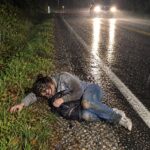
An ordinary walk on a favorite trail became a scene of sirens, shouting, and a father calling his son’s name. Daniel’s death has left Michael and Sarah grieving, while their community in Maple Ridge gathers around them. The places and photographs connected with his life now carry a painful new significance.
In the days since Daniel’s death, Maple Ridge has moved more slowly, as if the entire town is holding its breath. Neighbors who once waved from a distance now cross the street to embrace Michael and Sarah, unsure what to say, but knowing silence is better than empty clichés. The nature trail where Daniel took his last steps has become a quiet sanctuary, lined with candles and stuffed animals that grow in number each night.
Michael walks there sometimes at dusk, clutching the camera that still holds their final photos. In one, Daniel’s smile is wide, his arms thrown open to the trees he loved. That is how his parents choose to remember him—not on the hospital bed, but under the sky, alive with wonder. Their grief is immeasurable, but so is the love that now binds a town determined never to forget one small, irreplaceable life.
For parents, the familiar details of a child's life can become inseparable from the experience of loss. A photograph is more than an image: it holds a particular expression, a shared afternoon, and the memory of the person who stood behind the camera. The final pictures described here preserve Daniel's happiness on the trail. His parents' wish to remember that smile keeps attention on the life they loved rather than allowing its ending to become his entire story.
The candles and stuffed animals along the trail serve a different but related purpose. They give neighbors a way to acknowledge a loss that words cannot make smaller. A place once associated with an ordinary outing has become a setting for remembrance. Each object represents someone choosing to pause, recognize Daniel's place in the community, and express care for the family left behind.
Support does not require a perfect explanation or an attempt to make grief disappear. The account describes neighbors crossing the street to embrace Michael and Sarah, even when they do not know what to say. That willingness to remain present matters. It recognizes that a family's sorrow does not end when the immediate public attention fades or when the visible memorial becomes familiar to people passing by.
Michael's walks with the camera also reveal the distance between public mourning and private memory. Other people may know the outline of the tragedy, but the photographs belong to a relationship built from countless small moments. Daniel's outstretched arms and delight in the trees are details his parents can return to without needing to explain them to everyone else.
The community cannot return the family to the afternoon before their loss. What it can offer is recognition, patience, and an enduring place for Daniel's memory. The love described around Michael and Sarah does not cancel their pain. It ensures that they do not have to carry it without anyone beside them.