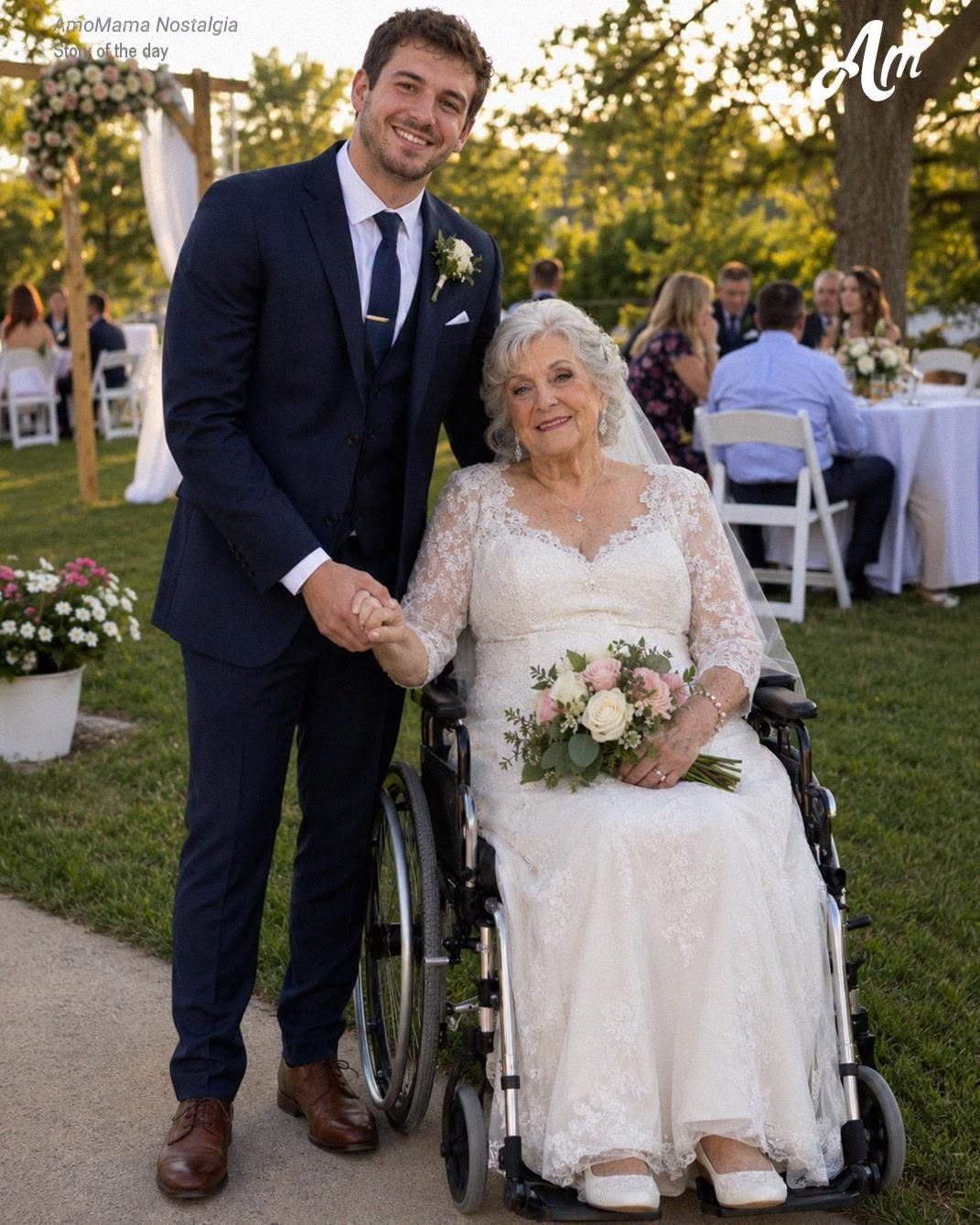
I was twenty-nine when I met Ayla outside a grocery store. She was almost fifty years older than me, using a wheelchair and arguing with overloaded shopping bags. I offered to help. She warned me not to touch her chair without permission, then let me carry the groceries six blocks to an enormous stone house. When I saw where she lived, kindness stopped being my only motivation.
My father had suffered a stroke, my mother was buried in bills, and my savings were disappearing. I returned with coffee because I had started imagining what Ayla’s wealth might solve. Still, something real grew between us. I fixed things around the house, listened to her mock television hosts, and took her to dinner. When her furnace failed during a winter storm, I crossed town and stayed until the heat returned. I refused the money she offered for Dad because accepting it felt wrong.
Two years after we met, Ayla proposed. I said yes. Our marriage was made of coffee, pills, thermostat arguments, crosswords, and laughter. It also contained the future I secretly calculated whenever I looked at the house and antiques. I cared for her, but I never fully stopped thinking about what would happen when she died. That contradiction followed me until illness took her almost three years after our wedding.
A week after the funeral, her lawyer Daniel handed me a cardboard box instead of the fortune I expected. Inside were photographs, letters, a notebook, and legal papers. The deed showed that the mansion had belonged to Ayla’s late husband Walter’s family. She held only the right to live there for the rest of her life. Walter’s nephew Martin would take possession after her death. I had built an entire future around property that had never been hers to leave me.
The worst discovery was Ayla’s note. Six months after we met, she had overheard me telling a friend that staying close to her might solve my financial problems. She knew why I had returned. Her notebook recorded her suspicion. Early entries described my quick smile when money came up. Later entries noted that I drove through a storm, canceled plans when she was sick, refused money for my father, and stayed after every chore was finished.
Her final conclusion broke me. People can begin for the wrong reason and stay for love. Ayla had watched my motives change before I was honest enough to name them. She left enough money to clear my parents’ mortgage and pay for several years of Dad’s care, but not the vast inheritance I had imagined. Martin would take the house in thirty days.
I was angry and ashamed. When Martin arrived, I expected judgment. Instead, he said Ayla had written about me constantly. Everyone else had treated her like a fragile old woman after Walter died. I argued with her, teased her, took her places, and made her final years ordinary again. Martin offered me extra time in the house, but I declined. I needed to learn that leaving it did not erase what Ayla and I had become.
I packed clothes, books, photographs, a wooden chair from our morning coffee, and the faded green grocery bag from the day we met. Months later, Dad had better care and Mom no longer hid overdue notices under cookbooks. The green bag remained in my kitchen drawer as proof that the mansion had never been the true inheritance.
Ayla did not excuse the person I had been. She gave me time to become someone else and enough honesty to see the difference. I had promised myself the house room by room without ever asking whether it belonged to her. By the time I understood what she could truly leave me, she had already given it: love that saw my worst motive clearly and still allowed me to choose a better one.