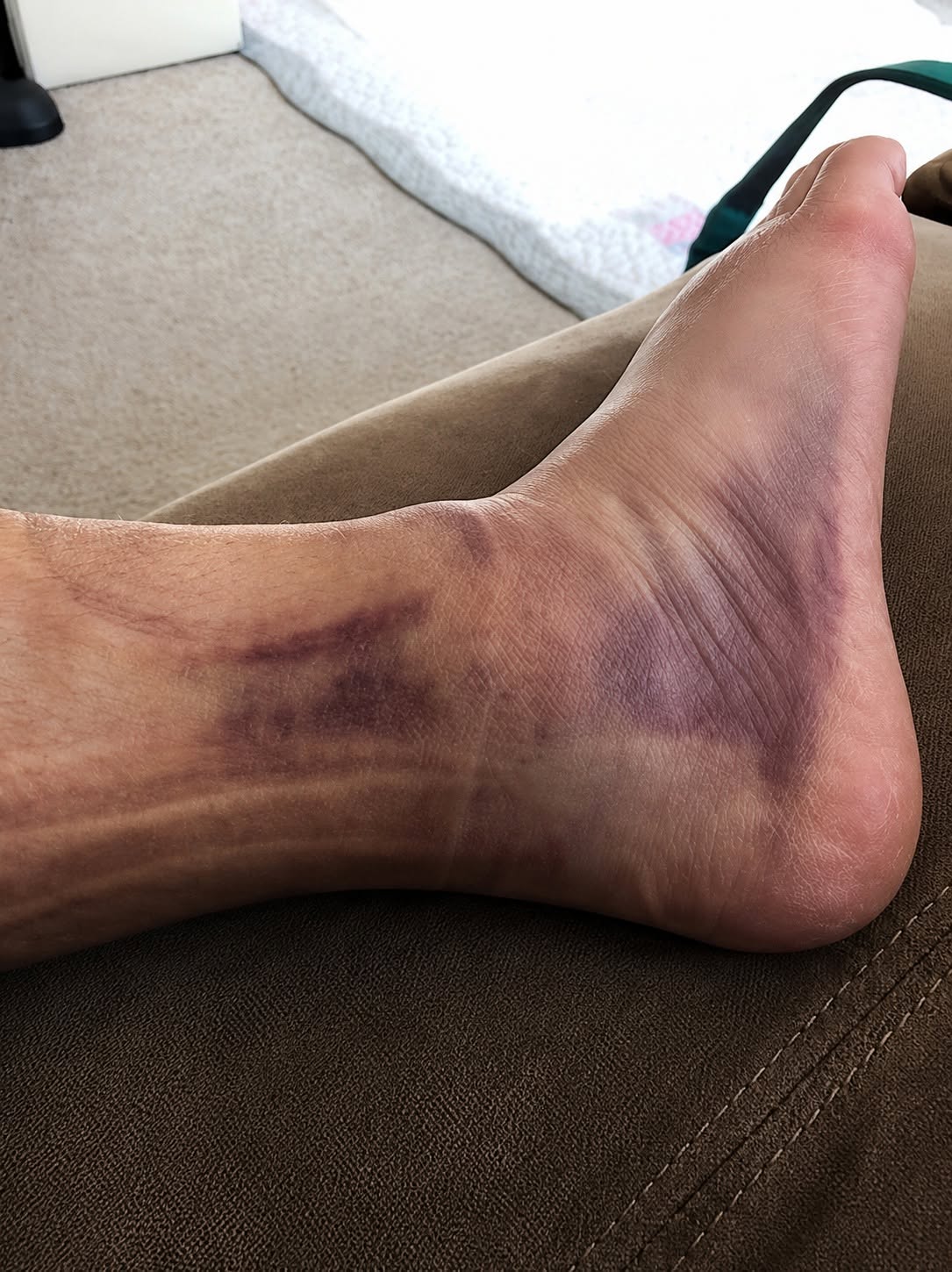
A dark ring around the ankle can be unsettling, especially when it resembles a bruise and there is no memory of an injury. One common explanation is pressure from something worn for many hours: a tight sock band, boot, ankle support, compression garment, or fitted piece of clothing. The linked article explains how to distinguish a temporary pressure mark from a symptom that deserves medical attention.
Elastic material presses into the skin throughout the day. After the item is removed, a shallow indentation or red line may remain where the fabric sat. On sensitive skin, friction can also cause irritation, itching, or a darker patch. These marks often fade after circulation and the skin surface return to normal. A garment that repeatedly leaves deep impressions, however, may simply be too small or too tight.
A pressure line is not necessarily a bruise. Bruising occurs when small blood vessels beneath the skin are damaged and blood collects in surrounding tissue. It may change from purple or blue to green, yellow, or brown as it heals. An indentation from a sock is caused by compression and may disappear much faster. Watching how the mark changes after the clothing is removed provides useful information.
Swelling can make ordinary socks leave unusually strong rings. Fluid may collect around the ankles after prolonged standing, a long journey, hot weather, or high salt intake. It can also be associated with pregnancy, medications, vein problems, or conditions affecting the heart, kidneys, or liver. A sock mark does not diagnose any of these causes, but persistent or increasing swelling should not be dismissed as a clothing problem.
Fit should be checked first. Socks should stay in place without digging painfully into the leg. Boots should allow the toes to move and should not create numbness, coldness, or color change. An ankle brace should be used according to professional instructions. Compression garments are designed to apply pressure, but the correct strength and size matter, particularly for people with circulation problems or diabetes.
Skin also needs attention. Repeated rubbing can cause chafing, broken skin, or contact dermatitis from dyes, rubber, detergent, or fabric. Keeping the area clean and dry, changing damp socks, and choosing breathable material can reduce irritation. Anyone with reduced sensation should inspect the feet and ankles regularly because a pressure injury may develop without producing strong pain.
Several warning signs justify prompt medical advice. These include one-sided swelling, warmth, redness, significant pain, an open sore, spreading discoloration, or a mark that does not improve. Sudden swelling accompanied by chest pain, shortness of breath, faintness, or coughing blood requires emergency assessment. Those symptoms can indicate a serious circulation or cardiopulmonary problem rather than a tight garment.
Unexplained bruising is another reason to seek guidance, especially when bruises appear frequently, are unusually large, or occur with nosebleeds, gum bleeding, fever, or weakness. Medicines that affect clotting can make bruising easier, but doses should never be stopped or changed without speaking to the prescribing clinician. A professional can review medications, examine the area, and order tests if necessary.
For a mild mark that fades quickly, practical changes may be enough. Try a larger size, a softer cuff, or a different fabric. Alternate footwear, take movement breaks, and elevate the legs after long periods of standing when appropriate. Photographing a recurring mark with the date and noting associated swelling or pain can help a clinician understand the pattern.
The central lesson is simple: clothing can leave harmless pressure marks, but not every dark line is caused by clothing. Duration, pain, swelling, temperature, sensation, and changes in color all matter. If the mark persists, repeatedly returns, or appears with other symptoms, an examination is safer than relying on a viral photograph for a diagnosis.