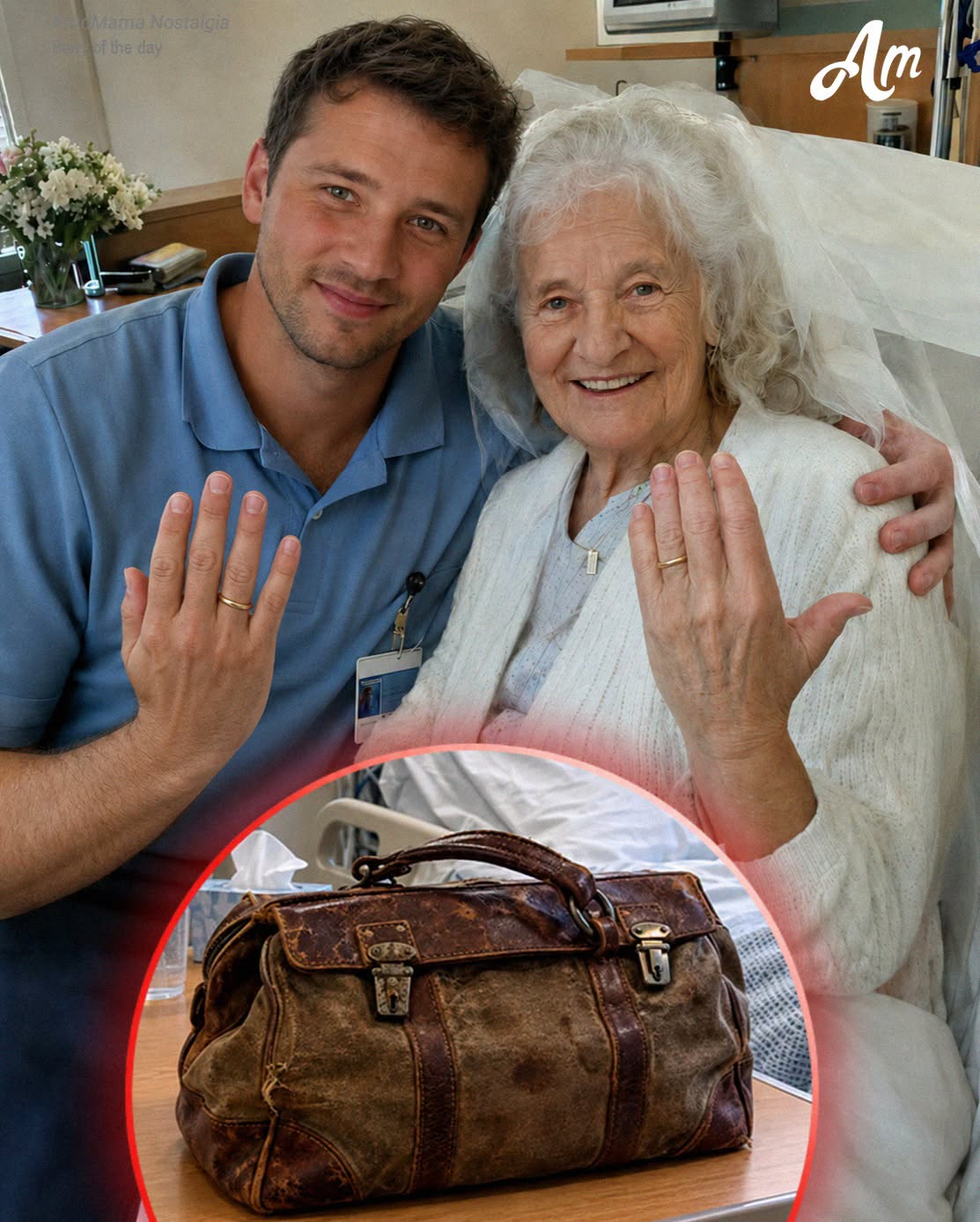
Daniel was thirty-four when he began working as an orderly in a small nursing home. Having grown up in foster care, he noticed kindness and loneliness more quickly than most people. Gloria, an eighty-two-year-old resident with a sharp sense of humor, began asking about his life from the first breakfast tray he delivered. Their daily conversations soon felt less like work and more like family.
Gloria had no regular visitors. She mentioned a nephew named Marcus who had stopped coming, but she refused to become bitter. The one mystery was an old canvas hospital bag she carried everywhere. Nurses were not allowed to move it, and Gloria closed it whenever Daniel noticed the photograph kept near the top. She said everything important to her was inside.
When Gloria’s health declined, Daniel rode with her to the hospital because no relative answered. There she made an extraordinary request. She knew she had little time and did not want to die feeling that she had nobody to call her husband. Daniel understood how the marriage might look, but he also knew her request was about companionship and peace, not romance or money.
A small hospital ceremony was held one week later. Gloria died peacefully three days after becoming Daniel’s wife. Following the funeral, her lawyer, Mr. Charleston, gave Daniel the guarded bag and told him she had chosen him for a reason. Before the lawyer could fully explain, Marcus appeared and accused the young orderly of exploiting a vulnerable woman.
Marcus announced that he would challenge the marriage and will. Gossip also reached the nursing home, where management opened an inquiry. Humiliated, Daniel considered surrendering everything. His friend Sarah reminded him that Gloria had known exactly how people would react and had prepared for it.
Inside the bag, Daniel found no cash or jewelry. There were hundreds of letters tied with ribbon, a cracked photograph of a young Gloria holding a baby, and a sealed envelope bearing his name. Gloria’s letter revealed that at seventeen she had placed a baby boy for adoption. She spent fifty years writing letters to the son she could not find.
By the time Gloria located the records, her son had died. He had left a child who grew up in foster care and became an orderly at a nursing home. That child was Daniel. Gloria recognized her grandson when he began working near her, but she did not want to approach him as an obligation or inheritance. She chose to know him first through the ordinary friendship they built.
The marriage had a practical purpose as well as an emotional one. Mr. Charleston explained that naming Daniel only in a will could have allowed Marcus to freeze the estate through years of challenges. A legal spouse became next of kin immediately. Gloria had adoption records, a birth certificate, and DNA evidence establishing the family connection.
Faced with the documents, Marcus left without continuing his accusation. Daniel inherited Gloria’s small house and savings, but the most important discovery was the photograph of his father and the realization that a grandmother had searched for him across decades. Her request had not been a dying woman’s whim; it was the final step in restoring a family history that adoption and silence had hidden.
Daniel used part of the inheritance to create a visitor program at the nursing home so residents without relatives would not sit alone. The project reflected what Gloria had given him before he ever knew they were related: attention, belonging, and the feeling of being someone’s chosen person. The hospital bag held proof that the family Daniel believed he never had had been looking for him all along.