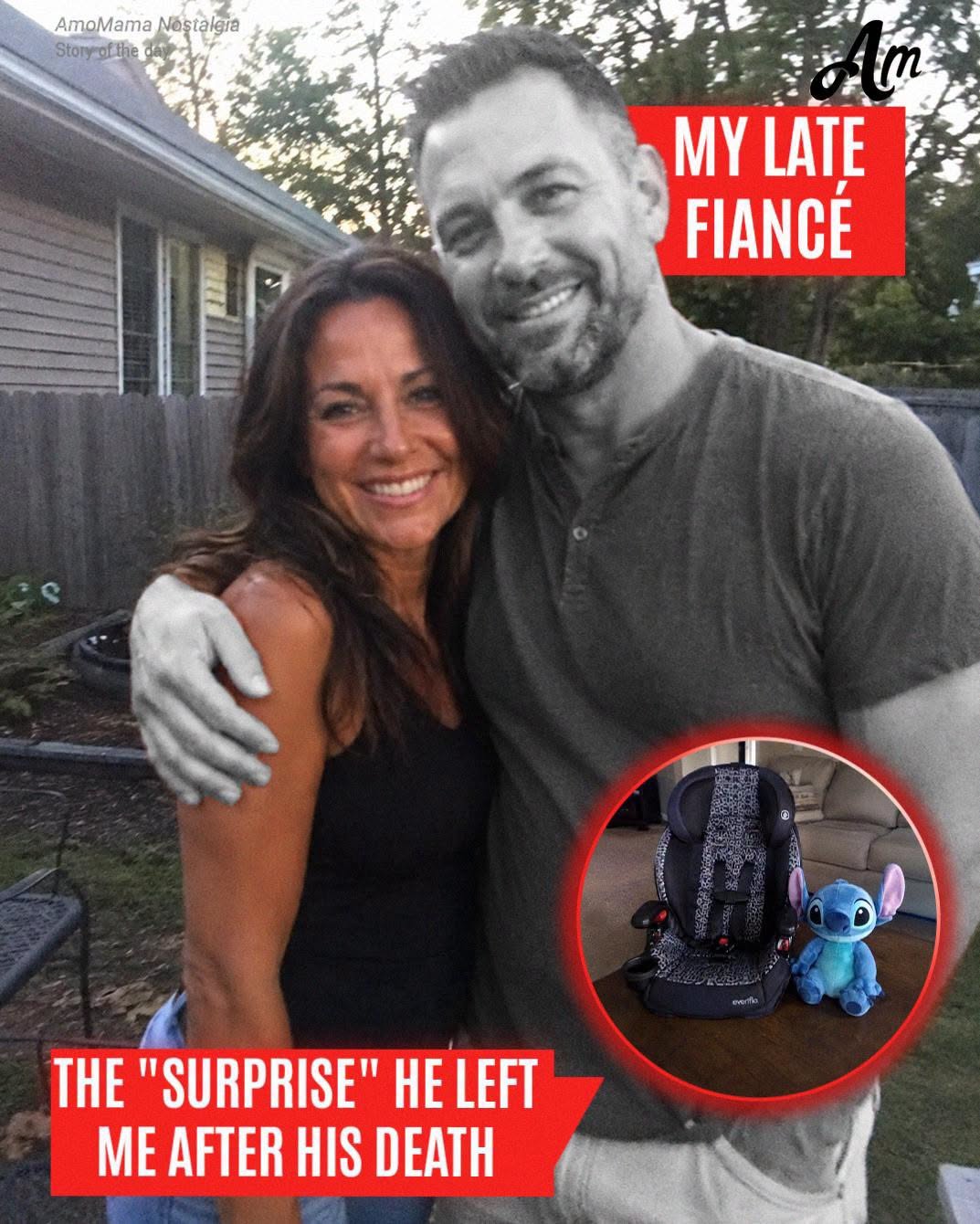
Three weeks after my fiancé Daniel died, I woke on what should have been our wedding morning and found a baby car seat on my porch. His mother had left it there with a key and directions to a storage unit. I followed them, expecting answers. Instead, I found a crib, baby supplies, and photographs of Daniel beside a heavily pregnant woman.
The woman entered the unit and introduced herself as Rebecca. For several terrifying minutes, I believed Daniel had been unfaithful and that she was carrying his child. Rebecca insisted the baby was not his. She was the sister of Michael, Daniel’s late college friend, and she had called him after trying to escape an abusive boyfriend named Lucas.
Daniel helped Rebecca find safety. He arranged an apartment through a friend, bought supplies, assisted her lawyer and the police, and documented injuries and property damage. The photographs I first interpreted as romantic evidence showed hospital visits, bruises, and dated records for her case. He had stepped between Rebecca and Lucas during one confrontation and came home with a split lip, telling me he had been injured while moving furniture.
His help was generous, but it was also built on repeated lies. Daniel spent about eleven thousand dollars while we were saving for our wedding. He claimed to be visiting his sick mother when he was actually helping Rebecca. She urged him to tell me, but he always found another reason to wait until she was safer.
A letter taped beneath the crib was addressed to me in Daniel’s handwriting. He wrote that he had never cheated and did not father Rebecca’s child. He admitted that secrecy had initially protected her from Lucas, who monitored people around her, but confessed that fear of losing me eventually became the real reason he kept lying.
The car seat was connected to another request. Because Lucas had threatened Rebecca and the baby, her lawyer wanted an emergency guardianship plan. Her mother had serious health problems and her brother was gone. Daniel had agreed to help, then told Rebecca there was one person he trusted even more. He wanted her to ask me to serve as a secondary guardian, but had refused to put my name on any document without my consent.
Daniel included a draft email written the night before his death. Its subject said we needed to talk before the wedding, and it finally explained Rebecca, the money, the storage unit, and the lies. He planned to tell me Saturday morning. An undiagnosed heart condition killed him Friday afternoon in a parking garage.
The timing explained why he never confessed, but it did not erase what he had done. His mother knew for four months and had promised to deliver the car seat if he ran out of time. Daniel had told her not to let his cowardice become my mystery. I did not forgive him that day. Death could not transform every bad decision into a noble one.
Rebecca gave birth six days later and named her daughter Michaela after Michael. The danger was real: Lucas violated the restraining order and sent threatening messages. After considering the request, I agreed to become Michaela’s secondary emergency guardian, with Rebecca’s mother first. I was not replacing Daniel. I was finishing something he began while making the choice for myself.
The car seat remained in my hallway for months until Rebecca needed a second one. Our friendship developed slowly. She shared stories about Daniel and Michael, and I shared memories of the man I had planned to marry. On what would have been our first anniversary, Rebecca, Michaela, and Daniel’s mother joined me for chocolate cake, the flavor Daniel had wanted.
Daniel was neither a perfect hero nor merely a liar. He helped a frightened woman escape, spent generously to keep her safe, and deceived the person he intended to marry. All of those truths remained together. The baby car seat that first made me question our entire relationship eventually led me to the fuller, more difficult truth about the good man I loved and the cowardly choice he never had time to correct.