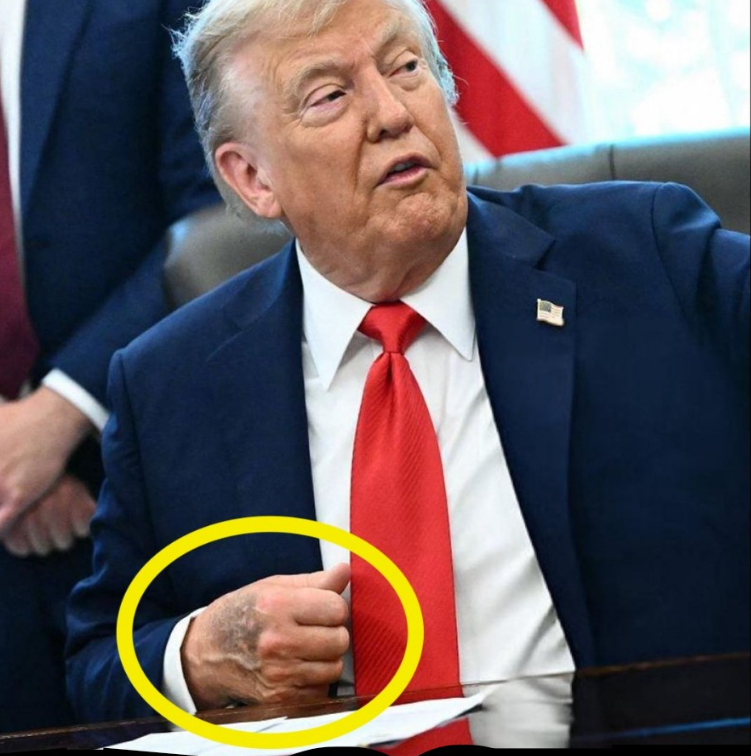
Karoline Leavitt confirmed that President Donald Trump had been diagnosed with chronic venous insufficiency after doctors evaluated mild swelling in his lower legs. The announcement followed public questions about the swelling and bruising visible on the back of his hand.
The condition affects the veins that carry blood from the legs back toward the heart. Small valves inside those veins can gradually become less effective, allowing blood to pool in the lower limbs. It is common among older adults and can cause swelling, heaviness, aching or skin changes.
Leavitt said the White House Medical Unit arranged a comprehensive examination that included vascular studies and ultrasound testing. According to the presidents physician, the evaluation found no evidence of deep vein thrombosis or arterial disease. Those findings were important because a blood clot or blocked artery would represent a different and potentially more serious problem.
The medical review also included cardiac testing. The physician reported normal heart structure and function and said there were no signs of heart failure, kidney impairment or a broader systemic illness. The White House characterized the vein condition as benign and common in people over seventy.
Questions about Trumps hand were addressed separately. Leavitt said the bruising was consistent with irritation caused by frequent handshaking combined with aspirin use. Aspirin can make bruising more noticeable because it affects the way blood platelets form clots.
The diagnosis does not mean that Trumps heart is failing. Chronic venous insufficiency concerns the return of blood through the veins, most often in the legs. Management can include walking, periodically elevating the legs and using medical compression stockings when recommended by a clinician.
More advanced cases can produce persistent skin changes or ulcers, but many people live with mild or moderate forms of the condition. The White House did not describe the presidents symptoms as painful and did not release a detailed treatment plan.
The disclosure immediately became political because presidential health is never treated as a purely private matter. Every public appearance, step from an aircraft or moment at a rally can become material for speculation. Supporters emphasized the reassuring test results, while critics focused on questions about transparency and age.
The source account presents the diagnosis as a rare interruption in an image built around relentless movement and personal strength. Trump has long made stamina part of his political identity. A health announcement therefore carries symbolic weight even when doctors describe the underlying condition as common.
That tension explains the intense reaction. Supporters responded with prayers and messages of loyalty, interpreting the news as another challenge he would confront. Opponents examined the disclosure for signs of vulnerability. Others saw a reminder that age and physical limits apply even to the most powerful public figures.
Medical facts can easily be distorted in a campaign environment. Swelling does not by itself establish the severity of a condition, and photographs cannot replace diagnostic testing. The information released by the physician said serious causes considered during the evaluation were not found.
At the same time, the public has a legitimate interest in the health of a president because the office carries continuous responsibilities. Meaningful transparency requires enough detail to understand a diagnosis without turning ordinary medical care into spectacle.
Leavitts confirmation placed a name on symptoms that had already attracted attention. It also shifted the discussion from rumors to documented findings. Chronic venous insufficiency may require ongoing management, but the released tests did not indicate a cardiac emergency, a blood clot or arterial disease.
The broader political consequences will depend less on the diagnosis alone than on how Trump performs his duties and how openly the White House communicates future changes. For now, the announcement shows how quickly a common health issue can become a national political story when it involves a president whose public identity is built on endurance.