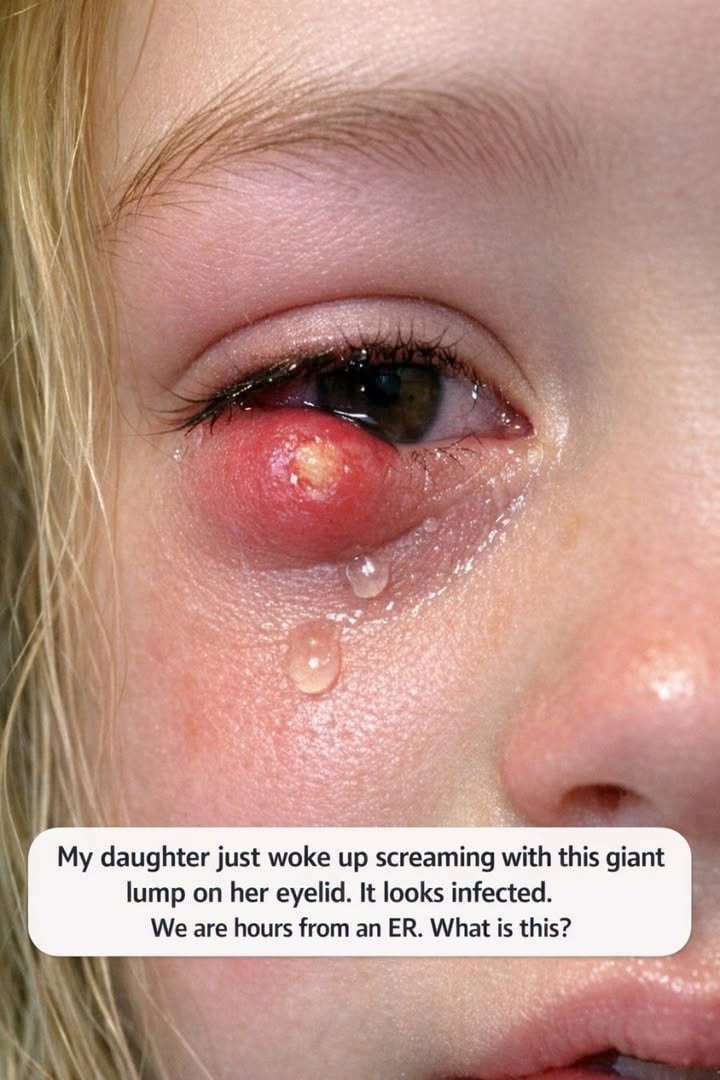
A child waking with a swollen, painful eyelid can frighten any parent. The eye may look dramatically different within hours, and children often struggle to explain whether the discomfort is on the lid, behind the eye, or affecting their vision. Many eyelid lumps are styes and improve with simple care, but some symptoms require urgent medical evaluation.
A stye, medically called a hordeolum, is a tender red bump caused by an inflamed or infected oil gland near the eyelashes or inside the eyelid. It may resemble a pimple and can produce watering, irritation, crusting, and sensitivity to light. Styes are common and are usually not dangerous, although they can be very uncomfortable.
Another possibility is a chalazion. This develops when an eyelid oil gland becomes blocked. It often begins with mild tenderness but may turn into a firmer, less painful lump. A chalazion is not necessarily an active infection, and it can remain after the original irritation has faded.
The safest home measure for a suspected uncomplicated stye is a warm compress. A clean cloth soaked in comfortably warm—not hot—water can be held against the closed eyelid for about ten to fifteen minutes several times daily. Warmth may encourage drainage and loosen material blocking the gland.
Parents should not squeeze, puncture, or pop the lump. Doing so can push bacteria deeper into the tissue and increase swelling. Avoid sharing towels, wash hands before touching the area, and pause contact-lens use or eye makeup until the problem resolves. Medicines or leftover antibiotic drops should not be used unless recommended for that child by a clinician.
Some warning signs point beyond a routine stye. Seek urgent medical care if the swelling spreads around the eye, the child develops fever, the eye becomes difficult to open, or redness rapidly worsens. Pain when moving the eye, reduced vision, double vision, severe headache, vomiting, unusual sleepiness, or an eye that appears pushed forward need immediate assessment.
Those signs can occur with cellulitis around the eye. Preseptal cellulitis affects tissues in front of the eye socket and requires medical treatment. Orbital cellulitis occurs deeper in the socket and is a medical emergency because infection can threaten vision and spread to nearby structures. A parent cannot reliably distinguish these conditions from photographs alone.
Age and medical history matter. Infants, children with weakened immune systems, and those with recent sinus infections, facial injuries, or eye surgery should be assessed more cautiously. If the family is hours from an emergency department, calling a pediatrician, urgent-care service, nurse line, or local emergency number can help determine the safest next step.
A clinician may examine vision, eye movement, pupil response, temperature, and the location of swelling. Treatment depends on the diagnosis. A simple stye may need only continued warm compresses, while bacterial infection may require prescription medication. Persistent chalazia sometimes need specialist treatment.
Most small eyelid bumps resolve without lasting harm, but dramatic swelling should never be dismissed when red flags are present. The goal is not to panic at every stye; it is to recognize when the problem has moved beyond the eyelid. Careful observation, clean warm compresses, and timely professional advice offer the safest balance between unnecessary alarm and dangerous delay.
Parents can prepare for a medical call by noting when swelling began, whether fever is present, what the child can see, and whether eye movement causes pain. Take a clear photograph for comparison, but do not rely on social-media diagnosis. If symptoms are mild, monitor whether warmth and time reduce the lump. If they worsen, spread, or affect vision, escalate promptly. Children may rub the eye and transfer bacteria, so frequent handwashing and short fingernails help. A calm, methodical response reassures the child while giving clinicians useful information. The appearance can be dramatic, but the pattern of symptoms—not the size of the photograph—determines urgency.