Eight-year-old Tyler had visited Mr. Lewis’s barbershop since he was four. The barber knew his favorite baseball team, saved grape lollipops for him, and let him choose the music. Because the shop was only three blocks away, Tyler’s mother had recently allowed him to walk there alone as a small step toward independence.
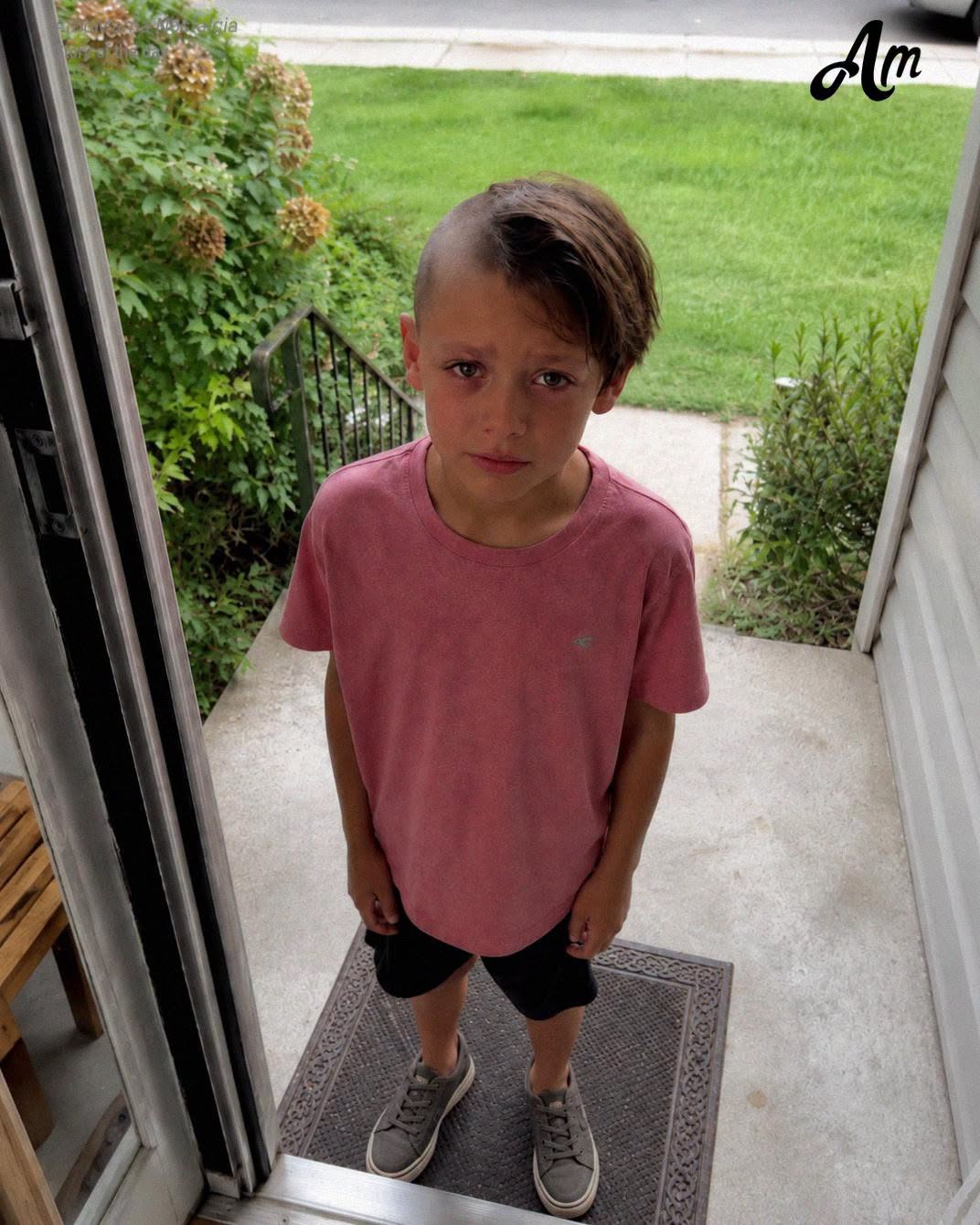
One Saturday, Tyler returned with only the right side of his hair cut. The left side remained long and untouched. He said merely that Mr. Lewis had stopped. That silence was unusual for a child who normally shared every detail, so his mother called the shop expecting to hear about broken clippers or an emergency.
Mr. Lewis answered while crying. He apologized and said he could not finish after what Tyler had done. Rather than explain by phone, he asked them to come back because there was something they needed to see. Tyler remained quiet throughout the walk, increasing his mother’s fear.
The shop was closed even though it was not yet noon. Inside, the reason became clear. Mr. Lewis had been struggling privately with financial and family problems. The exact situation had overwhelmed him during Tyler’s appointment. Tyler noticed the barber’s distress and responded with compassion rather than impatience.
Instead of complaining about the unfinished haircut, the boy offered what help he could. His action was simple, but it reached Mr. Lewis at a moment when the adult felt invisible and defeated. The barber stopped cutting because emotion made it impossible to continue safely. His tears came not from anger at Tyler, but from being moved by the child’s concern.
Tyler had kept quiet because he did not believe the barber’s private difficulty belonged to him to announce. He understood that Mr. Lewis might feel embarrassed and wanted to protect his dignity. That judgment surprised his mother as much as the unfinished haircut. Her son had shown discretion and empathy beyond what she expected from an eight-year-old.
Once the truth was explained, the strange hairstyle no longer mattered. The half-finished cut became evidence of a moment in which human need was more important than appearance or schedule. His mother had entered the shop fearing Tyler had caused a problem and discovered that he had instead responded kindly to one.
The family helped Mr. Lewis in practical ways and ensured he was not left alone with the burden. Assistance did not erase every difficulty, but it reminded him that people in the community cared. When he was ready, he finished Tyler’s haircut, though the story attached to it mattered far more than the final style.
Parents teach children to look for danger, follow rules, and ask adults for help. Tyler’s experience revealed another lesson: children also watch how adults treat people who are struggling. Compassion becomes real when it costs time, convenience, or the willingness to pause an ordinary task.
The trip to the barbershop began as a test of independence and became a demonstration of character. Tyler walked home looking unfinished, yet he had completed something more important. He saw another person’s pain, did not exploit it, and chose kindness. His mother went pale expecting the worst, then realized her son had given her a reason to be deeply proud.
The event also reminded the adults not to place full responsibility for an adult crisis on a child. Tyler’s compassion mattered, but Mr. Lewis still needed support from other adults and appropriate professional help. Praising a child’s kindness should not turn him into someone’s permanent caretaker. His mother could honor what he did while restoring safe boundaries and explaining that emergencies should be shared with trusted grown-ups. Kindness is strongest when supported by a community. Tyler opened the door through empathy; the adults had to walk through it with practical assistance, privacy, and respect for everyone involved.