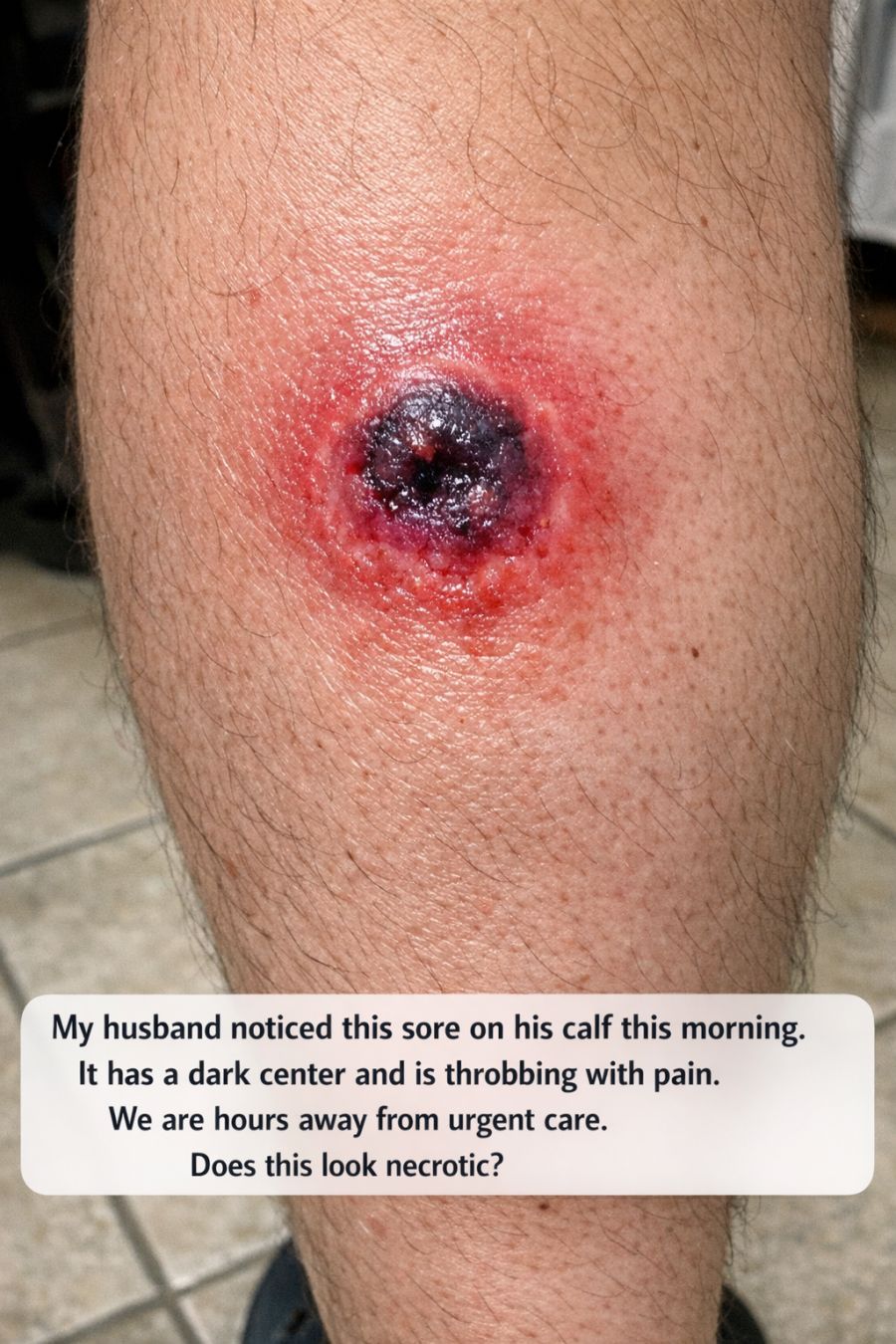
Discovering a mysterious, dark-centered, and intensely painful sore on a loved one can feel like the start of a terrifying countdown. Early Monday morning, my husband woke up, pulled back the sheets, and grimaced in pain as he pointed to his calf. A mark had appeared overnight that simply wasn’t there before. It was deceptively small, yet the center was already turning a deep, bruised purple, surrounded by an expanding ring of red, swollen skin. The throbbing pain was so intense that he winced and broke into a sweat with every step. Living in a remote, rural area, the realization that we were hours from the nearest urgent care hit us with a wave of panic and uncertainty.
When a wound darkens and swells this fast, your mind immediately jumps to the scariest possibilities. Could this be a necrotic spider bite? The thought of a brown recluse immediately comes to mind, bringing images of decaying flesh and deep, crater-like wounds. Watching this unfold while isolated from medical professionals is agonizing. We had to decide exactly what was “bad enough” to justify a long, difficult trip to the hospital, weighing the risk of waiting against the hours of winding country roads ahead of us.
How to Take Control While Waiting
Being miles from help doesn’t mean you are powerless. In these moments, organization and observation are your best tools.
- Track the Progression: We needed hard data for the doctors. Every few hours, we measured the diameter of the redness and took clear, well-lit photos. This created a visual timeline so the ER staff could see exactly how the wound evolved over time, not just how it looked the moment we arrived.
- Monitor Vitals: We kept track of color changes, skin temperature, and pain levels to provide the necessary context for an accurate diagnosis.
Managing Discomfort Safely
While waiting to make the trip, managing the physical pain is essential, but you must be careful not to make things worse.
- Cold Compresses: We applied cold packs to the calf to numb the throbbing and reduce inflammation.
- Elevation: Keeping his leg above his heart helped prevent blood from pooling and eased the pressure in his lower leg.
- Over-the-Counter Relief: Standard pain relievers helped take the edge off the sharp aches.
- What to Avoid: We knew not to use home remedies. We didn’t cut, squeeze, or apply heat to the sore, as heat can sometimes spread venom or speed up tissue damage. We also stayed away from harsh creams that could irritate the skin or hide the true extent of the injury.
Identifying the Red Flags
Despite managing the symptoms, we stayed alert for signs of a true emergency. We knew we would have to leave immediately if:
- The sore began to enlarge rapidly.
- The center sank or turned blacker.
- Systemic Symptoms appeared: High fever, sudden chills, nausea, or difficulty breathing.
These signs indicate that an infection or venom is no longer localized but is spreading through the body. Seeking early medical attention is the difference between a manageable skin issue and permanent tissue loss.
The Power of Preparation
Vigilance is the most critical step in protecting those you love. While being far from a doctor is frightening, every photo taken and symptom recorded improves the final outcome. We watched his leg closely all day, ensuring the redness stayed within our markers and the pain remained manageable.
Facing a mysterious, throbbing wound is daunting, but preparation gives you the upper hand. By tracking the wound’s progress, managing swelling carefully, and knowing the exact moment to seek emergency care, you protect your loved one from the risks of waiting too long. Even in the most isolated places, staying calm and prepared will guide you toward the help you need.