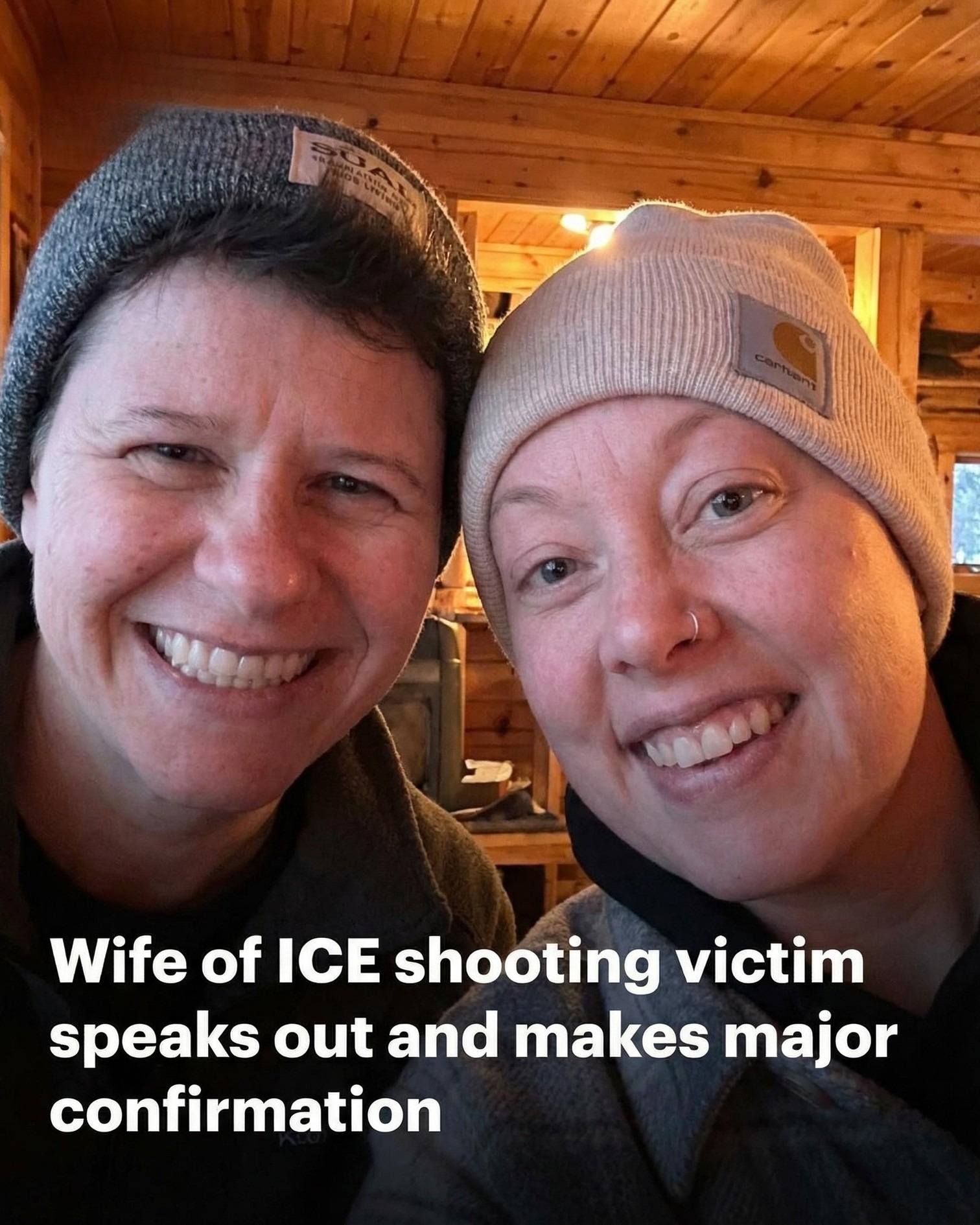
In a quiet corner of South Minneapolis, a tragedy has unfolded that has reverberated far beyond the city limits, touching the hearts of those who value community, faith, and the pursuit of justice. Renee Nicole Good, a thirty-seven-year-old mother and devoted community member, lost her life on January 7, 2026, during an encounter with federal law enforcement. In the wake of this devastating event, her wife, Rebecca Good, has broken her silence, offering a poignant look at the woman Renee was and the peaceful intentions that led them to that fateful location. Speaking with a voice heavy with grief but resolute in her truth, Rebecca described a morning that began not with an intent for conflict, but with a profound sense of neighborly duty.
The incident occurred during an active immigration enforcement operation in a residential neighborhood. According to Rebecca, the couple had not planned to be part of a major confrontation; rather, they stopped their vehicle to stand in solidarity with neighbors who felt vulnerable and afraid. In a statement that has since become a focal point for public discourse, Rebecca underscored the stark power imbalance of the encounter: “We had whistles,” she said. “They had guns.” This simple, harrowing contrast highlights the peaceful nature of their protest—a community-driven effort to draw attention to local actions through sound and presence rather than force.
Federal authorities have presented a different narrative, stating that officers on the scene believed the situation posed an immediate and significant safety risk during their operation. They maintain that the split-second decision to use a firearm was made under the pressure of an active, high-stakes enforcement action. However, as video footage of the moments leading up to the shooting began to circulate across social media and news platforms, the public has been left to grapple with sharply conflicting interpretations of the event. To many, the footage raises urgent questions about the necessity of lethal force in the face of non-violent community action.
While the legal and investigative battles begin to take shape, Rebecca Good has chosen to pivot the conversation toward the life Renee lived rather than the manner in which she died. She describes Renee as a woman of immense compassion, someone whose joy was infectious and whose commitment to her Christian faith was not just a private belief, but a public practice of kindness. Renee’s life was defined by the radical idea that love for one’s neighbor requires action, especially when those neighbors are in distress. For the Good family, faith was a verb, expressed through being present for those who might otherwise be overlooked.
The couple had moved to Minnesota in search of a welcoming community and a stable environment to raise their six-year-old son. They wanted him to grow up in a world where everyone, regardless of their background or status, was treated with dignity and care. Rebecca shared that their son was being raised with these values at the core of his education—lessons in empathy that Renee lived out until her final moments. The tragedy has left a small child without a mother and a spouse without her partner, turning a family’s quest for a peaceful life into a nightmare of loss and legal scrutiny.
The community response in Minneapolis has been swift and deeply emotional. In the days following Renee’s death, vigils have been held in the very streets where the incident occurred. Candles, flowers, and handwritten notes now mark the pavement, serving as a makeshift memorial for a woman who died trying to protect the sanctity of her neighborhood. Community leaders, activists, and neighbors have united in a call for absolute transparency and a full, independent review of the federal agents’ actions. There is a growing demand for accountability, with many questioning whether the tactics used by federal enforcement agencies are compatible with the safety and values of the communities they operate within.
The case of Renee Nicole Good has become a catalyst for a wider national debate on immigration enforcement, the militarization of law enforcement, and the rights of citizens to engage in peaceful observation. It highlights the tension between federal mandates and local community safety, raising questions about what constitutes a “threat” in the eyes of an armed officer versus the eyes of a concerned citizen. As the investigation moves forward, forensic experts and digital analysts are expected to scrutinize every frame of the available video to determine the exact sequence of events. Yet, for those who knew Renee, the technical details of the investigation are secondary to the loss of a vibrant soul who believed that silence in the face of suffering was not an option.
Despite the intensity of the public interest, Renee’s loved ones have requested privacy as they navigate their unimaginable grief. They have urged the public to remember Renee not as a statistic or a headline, but as a mother, a wife, and a friend who loved fiercely. Her legacy, they say, is found in the small acts of kindness she performed daily and the unwavering courage she showed in her final hour. Rebecca’s public comments serve as a reminder that behind every viral video and every official press release is a human story—a life cut short and a family forever altered.
As Minneapolis moves through the cold January days, the memory of Renee Nicole Good remains a burning ember of hope for those seeking a more just and transparent system. The city, known for its history of social activism, stands at a crossroads, waiting for answers that may take months or years to arrive. The investigation by the Bureau of Criminal Apprehension and federal oversight bodies will eventually provide a formal report, but the moral verdict is already being discussed in the living rooms and community centers across the state.
In the end, the story of Renee Good is a story of what it means to be a neighbor in the truest sense of the word. It is a story of a woman who took the teachings of her faith literally, laying down her peace for the peace of others. As Rebecca and her son begin the long process of healing, they are supported by a community that refuses to let Renee’s death be in vain. The call for justice continues to grow, echoing the sound of the whistles that Renee carried—a clear, piercing demand for a world where dignity is defended and where no mother has to fear the agents of the law while standing up for her neighbors.
Leave a Reply