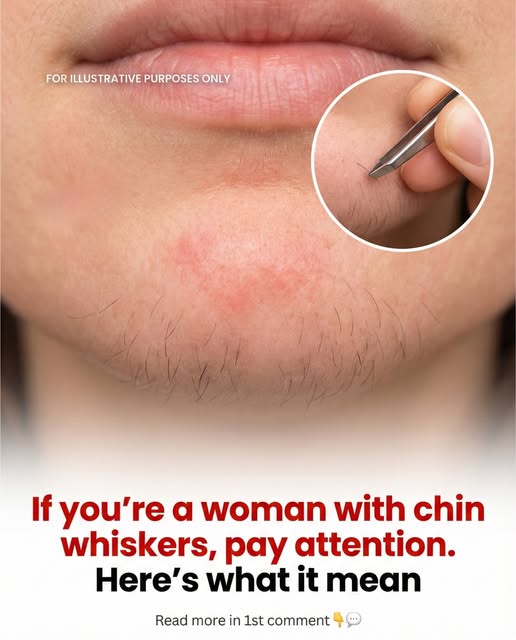
The discovery of a singular, coarse hair on the chin is a moment of quiet revelation that many women experience, yet few discuss openly. While it can initially feel like a surprising or even unsettling departure from one’s familiar self-reflection, the reality is that terminal hair growth on the face is a widespread and common biological occurrence. It is a phenomenon shaped by a complex interplay of genetics, chronological age, and the subtle, natural ebbs and flows of the body’s endocrine system. For the vast majority of women, these stray hairs are a purely cosmetic curiosity—a natural byproduct of the aging process rather than a herald of medical distress. However, understanding the “why” behind this growth is essential for moving from a place of self-consciousness to one of informed confidence.
At the heart of chin hair development lies the intricate world of hormones. Every person, regardless of gender, produces a baseline level of androgens, which include hormones like testosterone. While these are often labeled as “male” hormones, they play vital roles in the female body as well. Hair follicles are remarkably sensitive to even minute shifts in these androgen levels. When the delicate balance between estrogen and androgens fluctuates, the soft, barely visible vellus hairs—often referred to as “peach fuzz”—can transform into terminal hairs. These are thicker, darker, and more deeply rooted, specifically appearing in androgen-sensitive zones like the chin, jawline, and upper lip.
These hormonal shifts are most commonly associated with significant life transitions. Menopause is perhaps the most frequent catalyst; as estrogen levels naturally decline, the relative influence of androgens becomes more pronounced, leading to new patterns of hair growth. Similar variations can be triggered by the cessation or adjustment of hormonal birth control, which recalibrates the body’s internal chemistry. Furthermore, the thyroid gland—the master regulator of metabolism—can influence hair patterns if its function becomes irregular. When new facial hair appears in tandem with other systemic changes, such as shifts in energy levels, skin clarity, or cycle regularity, it serves as a gentle prompt for the body to seek a professional healthcare consultation to ensure internal systems are in harmony.
Beyond the natural aging process, specific medical conditions can play a role in more significant hair growth, known clinically as hirsutism. Polycystic Ovary Syndrome (PCOS) is a frequently cited condition in these discussions. PCOS is a complex endocrine disorder that can lead to an overproduction of androgens, resulting in hair growth in areas typically associated with male patterns. However, it is crucial to maintain a sense of perspective: the appearance of a few stray chin hairs is rarely enough to diagnose a syndrome. PCOS is typically characterized by a cluster of symptoms, including irregular menstrual cycles, persistent acne, and metabolic challenges. For most women, chin hair is simply a localized trait, often inherited from family members or brought about by the standard passage of time.
In an era where personal health and body autonomy are increasingly central to the global conversation, the way we address these small physical changes reflects a broader shift toward “compassionate realism.” Just as the medical community is calling for greater transparency in public health data and vaccine monitoring, individuals are seeking honest, straightforward information about their own bodies. The silence that once surrounded topics like female facial hair is beginning to evaporate, replaced by a recognition that the body is a dynamic, changing system. Whether we are discussing the long-term effects of a global health intervention or the sudden appearance of a hair on the jawline, the underlying requirement is the same: accurate information that empowers the individual.
Management of chin hair is as varied as the women who experience it, ranging from quick home fixes to long-term professional interventions. For many, simple mechanical removal like plucking, waxing, or threading is sufficient and fits easily into a standard grooming routine. For those seeking a more permanent reduction, professional treatments such as laser hair removal or electrolysis have become increasingly accessible. These technologies work by targeting the follicle directly, offering a path to smoother skin for those who find the hair to be a source of persistent frustration. However, the choice to remove or keep the hair is entirely personal. The goal of modern health education is not to dictate an aesthetic standard, but to provide the “light of truth” that allows a woman to make decisions based on comfort rather than shame.
This focus on self-knowledge mirrors the current geopolitical and social climate of 2026. As the world navigates the “absolute” tensions in the Middle East or the historic shifts in diplomatic protocols, there is a parallel movement toward personal accountability and body literacy. When women understand that their hormones are simply responding to the environment and the passage of years, the “panicked bathroom scene” of discovering a new hair is replaced by a calm, matter-of-fact response. It is a reminder that we are all living through a continuous “rehearsal” of biological change, and that being informed is the best defense against the “chilling” effects of misinformation or unnecessary anxiety.
Ultimately, the presence of chin hair is a testament to the body’s resilience and its constant state of flux. It is a minor biological footnote in the much larger story of a woman’s life. By observing these changes with a thoughtful and objective eye, women can navigate the aging process with peace of mind. They can recognize that while a singular hair might seem like a significant shift, it is usually just a normal, albeit uninvited, guest in the grander scheme of their health journey. Handling these changes with confidence means acknowledging that the body is not a static object, but a living, breathing entity that evolves.
As we move forward into a future defined by radical transparency—whether in the halls of the United Nations or the privacy of one’s own home—the dialogue around female health will continue to mature. The “Many” voices contributing to this conversation are ensuring that the next generation of women will not have to rely on guesswork or feel isolated by common physical traits. They will know that a hair on the chin is not a mystery to be feared, but a small, manageable part of the human experience. With proper evaluation and a healthy dose of perspective, what once felt like a cosmetic crisis becomes just another routine detail to be handled with grace.
Leave a Reply