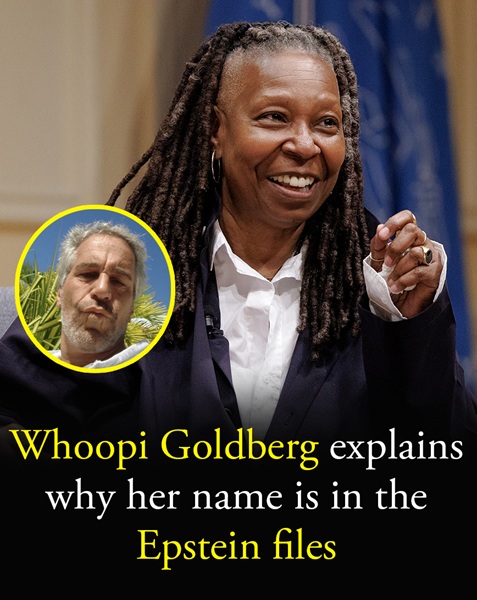
The renewed attention stems from court filings and records that became public as part of litigation related to Epstein’s associates.
These documents contain emails, flight references, contact lists, and other communications. Importantly, legal experts have repeatedly emphasized that the appearance of a person’s name in such records does not automatically imply wrongdoing, criminal involvement, or a personal relationship.
During the episode, Goldberg acknowledged openly that her name appears in the files. “In the name of transparency, my name is in the files. Yes,” she told viewers. She then read the relevant excerpt on air to provide context.
According to Goldberg, the document referenced an email discussing travel arrangements for a charity event in Monaco in 2013. The message stated that “Whoopi needs a plane to get to Monaco” and referenced that the travel costs would be covered by a charitable organization.

The email then asked whether Epstein or someone he knew might be able to provide access to a private jet.
Goldberg emphasized that this was the full extent of her mention in the material. “I wasn’t his girlfriend, I wasn’t his friend,” she stated clearly on air.
The 2013 Email Context
The email in question reportedly related to a fundraising event connected to musician Julian Lennon. Lennon, son of Beatles legend John Lennon, has been involved in various philanthropic efforts over the years.
According to Goldberg’s account, the message was part of an inquiry about securing transportation for her to attend the charity event.
She explained that the request did not originate from her personally, nor did it indicate that she traveled with Epstein. She also stated on the show that she never flew on Epstein’s plane.
The distinction is significant. Epstein maintained contact with numerous public figures over decades, and many names appear in flight logs, address books, and email chains.
However, legal authorities have consistently cautioned that such mentions alone are not evidence of participation in criminal conduct.
Goldberg’s explanation focused on correcting what she described as online misinterpretation.
Addressing Online Speculation
In the digital era, court documents are often circulated widely across social media platforms, sometimes without context. When names of celebrities appear, even in peripheral references, rumors can spread rapidly.
Goldberg said she was frustrated by what she characterized as exaggerated conclusions. “People actually believe that I was with him. It’s like, ‘honey, come on,’” she remarked during the broadcast.

Her co-host Joy Behar added that the situation illustrates how easily someone’s name can appear in a document without implying guilt. “So in other words, anyone can be on this list,” Behar commented.
Goldberg reiterated that her personal relationships have been public knowledge throughout her career. As a prominent actress and television personality for decades, she noted that there would have been no hidden romantic relationship.
Epstein’s Case and Public Records
Jeffrey Epstein was arrested in 2019 on federal sex trafficking charges. He died later that year in jail while awaiting trial.
His death was ruled a suicide by the New York City medical examiner. Prior to his 2019 arrest, he had pleaded guilty in 2008 to state charges related to soliciting prostitution from a minor, resulting in a controversial plea agreement.
Following his death, numerous civil lawsuits and court proceedings continued, including litigation involving former associate Ghislaine Maxwell, who was later convicted on federal charges related to sex trafficking and sentenced to prison.
As part of these legal proceedings, courts unsealed various documents, including depositions, email exchanges, and contact lists.
The release of these records generated intense public scrutiny, especially when well-known names appeared.
However, legal analysts and prosecutors have consistently warned that the inclusion of a person’s name in such materials does not equate to an accusation or proof of misconduct.
In many cases, individuals are mentioned in passing or in logistical discussions unrelated to criminal activity.

Goldberg’s Fear of Flying
During the discussion, Goldberg also addressed another aspect of the rumor. She has long spoken publicly about her fear of flying.
In past interviews and appearances, she has mentioned that she often avoids air travel or prefers alternative transportation whenever possible.
On The View, she referenced this well-known fear in a lighthearted manner, suggesting it would be inconsistent with claims that she traveled frequently on private jets associated with Epstein.
“I don’t like flying,” she reminded viewers, using humor to underscore the improbability of the rumors.
Denial of Visiting Epstein’s Island
In addition to denying any personal relationship, Goldberg has previously rejected online claims that she visited Epstein’s private island in the U.S. Virgin Islands.
Social media posts have circulated over the years alleging that various celebrities traveled there, but official records do not show Goldberg among those who visited.
Experts on defamation and misinformation note that viral posts often mix verified information with speculation, creating confusion. Being named in a document can become the basis for false narratives when context is omitted.
Goldberg stated that such unfounded allegations can be harmful, particularly when repeated without evidence.

The Broader Issue of Public Figures in Court Files
The Epstein documents have reignited broader discussions about how court records are interpreted by the public. Court filings may include names for a variety of reasons, including travel logistics, social introductions, or unrelated business communications.
Legal experts emphasize several important points:
- Court documents often contain unverified statements made during depositions.
- Being mentioned does not mean a person was accused or charged.
- Prosecutors have not indicated that most named individuals were involved in criminal acts.
- Context matters when evaluating any document excerpt.
This distinction is crucial in maintaining fairness and avoiding reputational harm.
Media Responsibility and Transparency
Goldberg’s decision to read the relevant excerpt on air reflects an approach centered on transparency. By quoting the document directly, she aimed to reduce speculation and clarify the limited scope of her mention.
Public figures frequently face the challenge of addressing rumors amplified by social media. When legal documents become public, they are sometimes parsed in fragments, which can create misleading impressions.
Goldberg’s response on The View sought to separate documented fact from rumor.
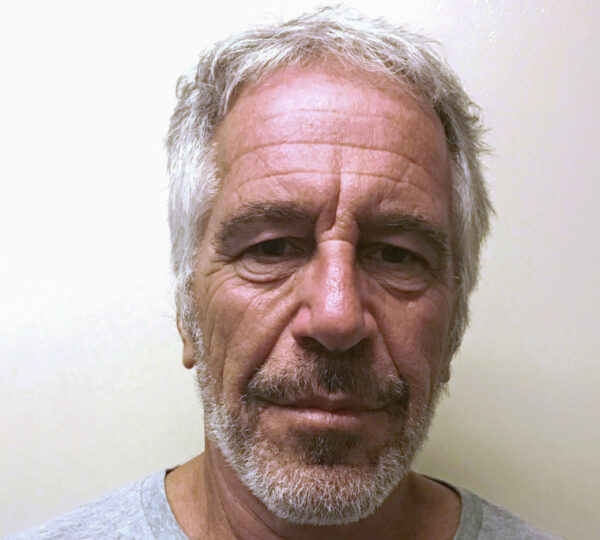
Whoopi Goldberg has had a decades-long career spanning film, television, and theater. She is one of the few entertainers to achieve EGOT status, having won an Emmy, Grammy, Oscar, and Tony Award.
Her long-standing presence in the entertainment industry has made her a recognizable and often outspoken figure.
Given her visibility, it is not uncommon for her name to appear in various professional contexts, including charity events and entertainment-related travel inquiries.
Her comments on The View underscored that professional logistics should not be interpreted as evidence of personal relationships.
Legal and Ethical Considerations
In the aftermath of the Epstein case, there has been increased sensitivity around how names are reported in connection with unsealed documents.
Media organizations typically include disclaimers clarifying that mention in records does not imply criminal involvement.
This approach aligns with established journalistic standards aimed at preventing misinformation and protecting due process.
Goldberg’s situation highlights the importance of careful reading and contextual analysis. Court records are complex legal materials.
Extracting isolated lines without explanation can create narratives that are not supported by evidence.
Conclusion
Whoopi Goldberg has publicly and clearly denied any romantic or personal relationship with Jeffrey Epstein.
Her name appeared in a 2013 email discussing possible transportation to a charity event in Monaco, but she states she did not travel on Epstein’s plane and had no social relationship with him.
Legal experts continue to stress that appearing in court documents does not indicate wrongdoing. Many individuals’ names appear in Epstein-related materials due to logistical or incidental references.
By addressing the matter directly on The View, Goldberg aimed to clarify the context and push back against online speculation.
Her response reflects a broader lesson about the importance of evaluating documents carefully and avoiding conclusions that are not supported by verified facts.
As discussions surrounding the Epstein case continue, the distinction between documented reference and proven misconduct remains essential.