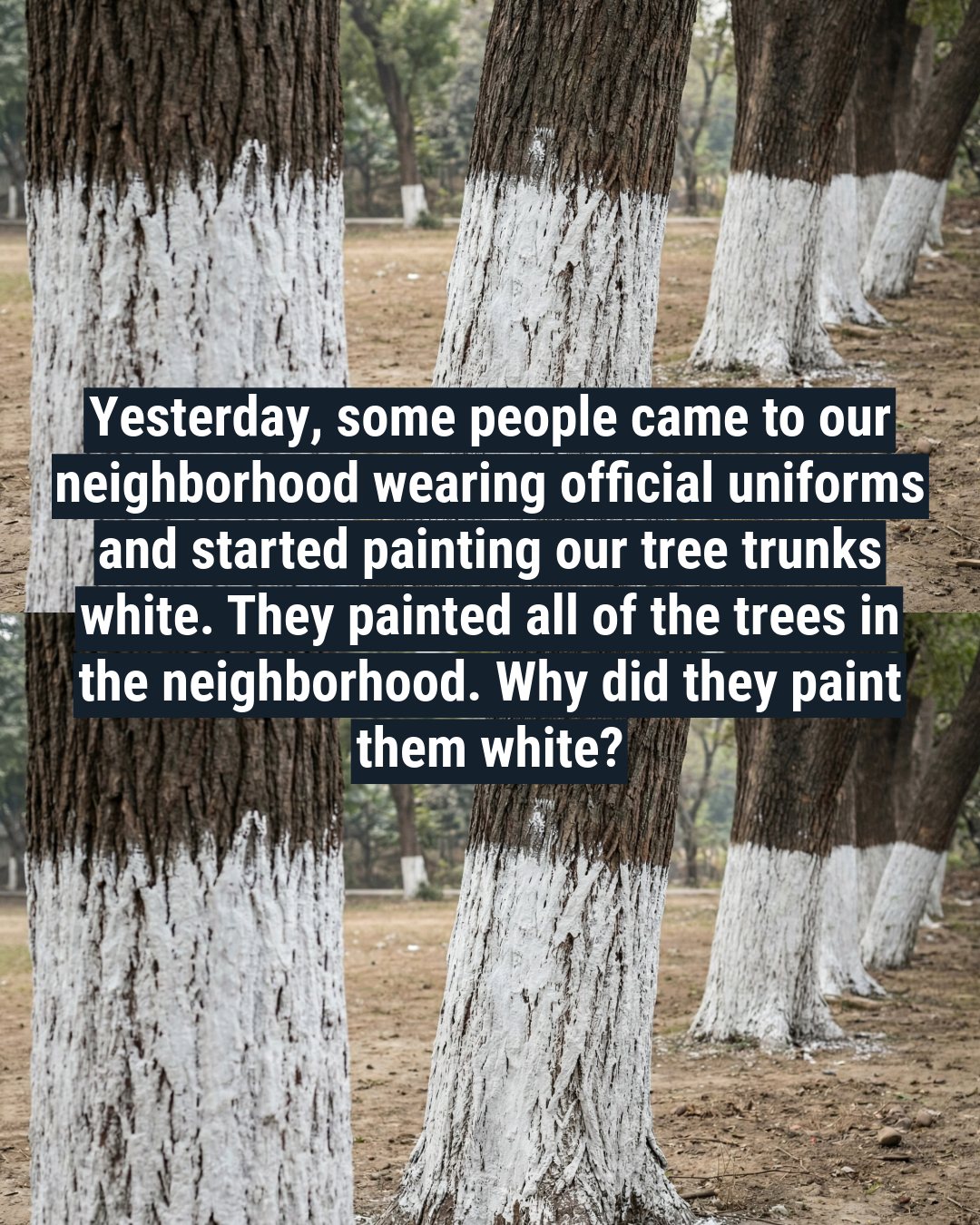
If you have ever traveled past an expansive commercial orchard or a meticulously maintained suburban garden and noticed a stand of trees with their lower trunks painted a stark white, you might have assumed it was a peculiar decorative preference or perhaps a marker for a landscaping team. However, in the realm of arboriculture, this “white coat” is far more than an aesthetic whim. It is a vital, life-saving measure known as trunk whitewashing, and it functions as a primary defense against a silent killer that strikes during the coldest months of the year.
The main adversary this paint combats is a physiological condition known as sunscald. During the winter, trees enter a state of dormancy to survive the freezing temperatures. However, on bright, sunny winter days, the dark bark of a tree—particularly young trees or those with thin skin like maples and fruit trees—absorbs the sun’s thermal energy. This localized heating can mislead the tree’s living tissues into “awakening” and becoming active. The disaster occurs as soon as the sun sets or a cold front arrives; the sudden, plummeting temperatures freeze those active cells instantly, causing the bark to rupture, crack, and eventually perish. These deep lesions, or frost cracks, leave the tree’s vascular system exposed to the elements, creating an open invitation for pathogens.
By applying a layer of white, light-reflecting paint to the south and southwest sides of the trunk, gardeners utilize basic physics to safeguard their investment. The white pigment reflects the majority of the sun’s infrared radiation, maintaining the bark at a consistent, ambient temperature and preventing the hazardous “yo-yo” effect of daytime thawing and nighttime freezing.
The procedure itself is a masterclass in practical chemistry. Experts strictly avoid oil-based paints, which can clog the lenticels (the pores through which a tree breathes) and lead to decay. Instead, a water-based interior latex is the gold standard. To ensure the coating is effective without being suffocating, it is typically diluted in a 50/50 ratio with water. Some veteran orchardists take the recipe a step further, mixing in joint compound or specialized antifungal additives. This creates a thick, pasty barrier that not only reflects heat but also physically blocks wood-boring insects from depositing eggs in the crevices of the bark. Unlike many modern landscaping tasks that rely on high-pressure sprayers, whitewashing is traditionally performed with a heavy brush. This manual application ensures the paint is pushed deep into the nooks and crannies of the bark, providing a seamless shield.
While the forest is full of color-coded signals—orange dots marking a tree for the timber harvest or purple stripes indicating private property boundaries—the white trunk stands alone as a symbol of preservation. It is an annual ritual for the dedicated steward, akin to wrapping a vulnerable seedling in a winter shroud. In a landscape where young trees face increasing pressure from erratic climate shifts and rising pest populations, this simple bucket of white paint is often the difference between a tree that succumbs to the first hard freeze and one that thrives for a century.
Ultimately, a white-painted trunk is a badge of expertise. It signals that the caretaker understands the delicate biology of the “leafy giants” under their watch. By shielding the trunk from the deceptive warmth of a winter sun, gardeners ensure that their trees remain resilient and productive, standing as a testament to the fact that sometimes the most effective technology in nature is a simple coat of white paint.
WHITE COATS IN THE ORCHARD, The Hidden Reason Experts Are Painting Tree Trunks This Season
Previous Article Next Article
LOOSE THREADS, The Heartbreaking Reason My Wife Wore a Knitted Dress to Our Vow Renewal
BURIED SECRETS, The Shovel Hit Something Solid Under Grandpas Tree, and My Life Changed Forever