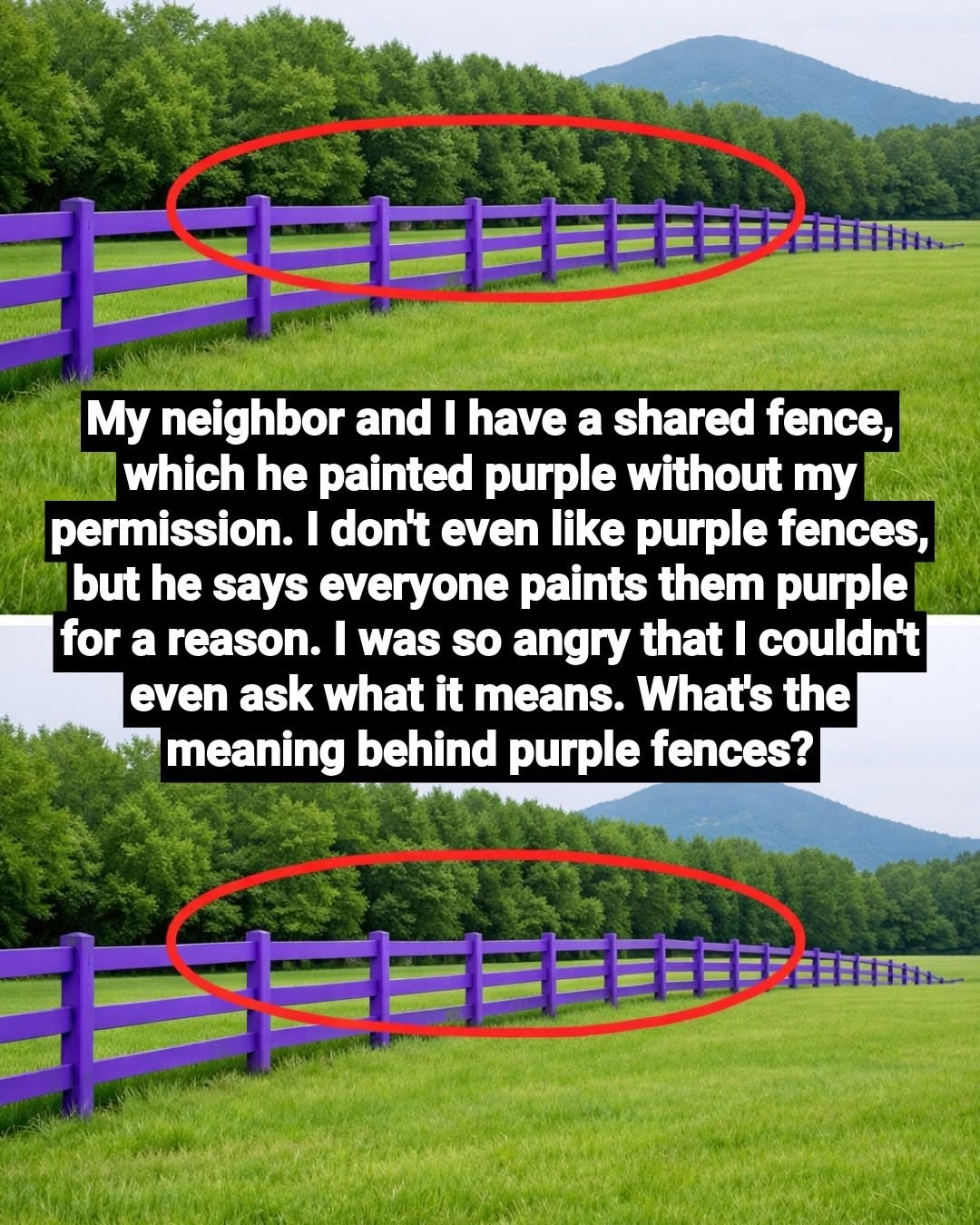
The landscape of property ownership is usually marked by obvious barriers—stone walls, wire fences, or wooden gates. Yet across parts of rural America, a far simpler signal sometimes marks the boundary between public space and private land: a streak of bright purple paint on a fence post or tree. What might look like random color is actually a legally recognized warning. In several states across the United States, that purple mark carries the same legal meaning as a posted sign: No Trespassing.
This system emerged out of practicality. Traditional “Private Property” signs were effective but difficult to maintain. They faded in the sun, rusted in rain, and were frequently torn down or vandalized. Landowners with large tracts of land sometimes had to replace dozens of signs every year. In response, lawmakers introduced what became known as the Purple Paint Law, first adopted in Arkansas during the 1980s. The idea was simple: allow landowners to mark trees or posts with a specific purple paint stripe that legally signals the same warning as a posted sign.
Since then, several states—including Texas, Florida, and Missouri—have adopted similar laws. For landowners managing hundreds of acres, a bucket of paint is far cheaper and far more durable than dozens of metal signs scattered along a property line.
The color choice itself was carefully considered. The shade, commonly known as “No-Hunting Purple,” stands out clearly against natural backgrounds like tree bark, grass, or dirt. Importantly, it also remains visible to people with red-green color blindness, making it more universally recognizable in outdoor environments.
But the law requires more than random splashes of paint. The markings must follow specific guidelines. In most states, the stripe must be vertical, typically at least one inch wide and about eight inches long. It must be placed between three and five feet above the ground so it stays visible above snow or vegetation. These marks must also be repeated at regular intervals—often every 100 feet—to ensure anyone approaching the boundary clearly understands the warning.
For landowners, the system is efficient and environmentally practical. Painting a tree causes less damage than repeatedly hammering nails into its bark to attach metal signs. It also reduces waste from discarded signs and keeps boundaries clearly marked year-round.
However, it is important to remember that these laws vary depending on location. Not every state recognizes purple paint as a legally binding “No Trespassing” notice. In some places it serves only as a supplementary warning rather than a replacement for official signage.
Still, the symbol has become widely recognized across rural areas. For hikers, hunters, and outdoor explorers, spotting that purple stripe on a tree or fence post is a clear message: the land beyond belongs to someone else. That small mark of paint functions as a silent boundary, protecting property rights without the need for words.