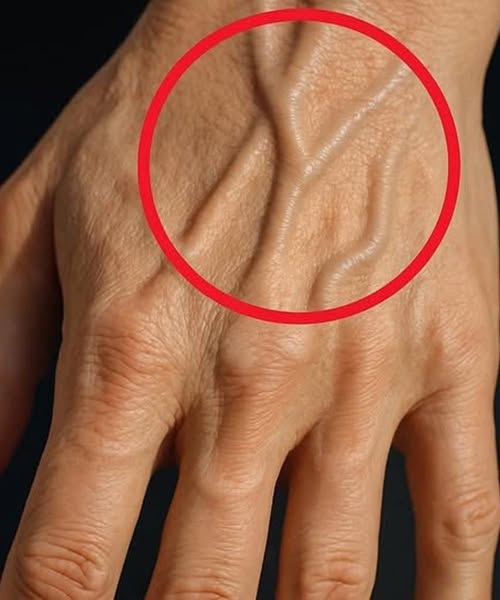
The human hands are often described as a map of one’s life, bearing the marks of our labors, our age, and our unique genetic history. However, in the modern era of rapid digital information, they have also become a source of significant health anxiety. It is common for individuals to look down and notice that the veins on the back of their hands appear more prominent, blue, or bulging than they remember. This observation frequently leads to a frantic search for answers, uncovering online myths that link visible hand veins to a decline in the body’s internal filtration system—specifically the kidneys. While it is natural to be curious about changes in your physical appearance, it is essential to distinguish between normal anatomical variations and genuine medical indicators. According to the latest clinical research in 2026, visible hand veins are almost never a sign of organ failure, but rather a reflection of the fascinating ways our bodies adapt to time, environment, and lifestyle.
To understand why veins become visible, one must first look at the layers of the hand. The skin on the back of the hand is naturally some of the thinnest on the entire body. Beneath this skin lies a layer of subcutaneous fat that acts as a cushion, obscuring the vascular network below. As we navigate the natural process of aging, two things happen: the skin loses collagen and elastin, becoming even thinner and more translucent, and the subcutaneous fat layer begins to diminish. Without this “padding,” the veins—which have always been there—simply move closer to the surface. This process, known as senile purpura or skin atrophy, is a benign part of the human experience and carries no diagnostic weight regarding the health of internal organs.
Body composition and genetics play equally significant roles. Individuals with lower body fat percentages, particularly athletes or those with a lean “ectomorph” body type, will almost always have highly visible veins. In the fitness community, this is often referred to as vascularity and is viewed as a sign of low subcutaneous fat rather than a medical concern. Furthermore, genetics dictate the size and depth of your vessels just as they dictate the color of your eyes. If your parents had prominent hand veins, you likely will too. This is a matter of hereditary architecture, not a warning sign from your filtration system.
Environmental and physiological triggers also cause temporary changes in vein appearance. When the body is exposed to heat—whether through a warm summer afternoon or a hot shower—the blood vessels undergo vasodilation. This is a cooling mechanism where the veins expand to bring more blood closer to the skin’s surface to release heat. Similarly, during or after intense physical activity, blood flow to the extremities increases significantly, causing the veins to swell with volume. Hydration levels provide another common variable; when you are mildly dehydrated, the volume of fluid in your tissues decreases, making the skin “shrink-wrap” more tightly around the underlying structures, which pushes the veins into a more prominent relief. None of these scenarios indicate that your internal organs are struggling to filter waste; they simply show that your vascular system is responding dynamically to its environment.
To debunk the myth linking hand veins to filtration health, it is necessary to examine how the kidneys actually communicate distress. The primary role of the body’s filtration system is to manage fluid balance and remove metabolic waste. When this system is compromised, the result is almost universally fluid retention (edema), not fluid loss. This causes the hands, feet, and face to become puffy and swollen. In a state of edema, the excess fluid in the tissues actually hides the veins, making them much harder to see. Therefore, if you are concerned about your filtration health, “disappearing” veins accompanied by swelling are a more logical point of inquiry than veins that are clearly visible.
[Image illustrating the difference between a hydrated hand with visible veins and an edematous hand where veins are obscured by swelling]
The genuine warning signs of a compromised filtration system are systemic and measurable. Clinical practitioners look for persistent fatigue caused by the accumulation of waste products like urea in the bloodstream. They monitor for significant changes in bathroom habits, such as a marked decrease in output or the presence of persistent foam in the toilet, which indicates that the kidneys are leaking protein. Elevated blood pressure is another critical marker, as the kidneys play a primary role in regulating the body’s overall circulatory pressure. Shortness of breath, persistent nausea, and a metallic taste in the mouth are also recognized indicators of advanced filtration issues. Prominent hand veins are conspicuously absent from any professional diagnostic criteria for renal or hepatic health.
There is one specific medical context where prominent veins and filtration are linked, but it is the result of treatment rather than a symptom of the disease. For patients in advanced stages of filtration failure who require regular dialysis, surgeons often create an arteriovenous (AV) fistula. This is a surgical connection between an artery and a vein in the arm, usually near the wrist or elbow. The high-pressure arterial blood flows directly into the vein, causing it to grow significantly larger and thicker to accommodate the needles used during treatment. These veins are exceptionally prominent and visible, but they are a man-made necessity of life-saving intervention, not a natural symptom that a healthy person would “develop” as an early warning sign.
The most reliable way to monitor the health of your internal systems is through objective medical testing rather than visual self-examination. In 2026, a standard blood panel can measure Creatinine levels and calculate a Glomerular Filtration Rate (GFR), providing a precise percentage of how effectively your organs are functioning. Urinalysis can detect microscopic amounts of blood or protein long before physical symptoms appear. These tests offer a clarity that looking at your hands can never provide.
What, then, should you pay attention to when it comes to your hands? While visible veins are benign, other changes in the extremities can indeed signal vascular—though not filtration—concerns. If prominent veins are accompanied by significant pain, a sudden change in skin temperature (feeling very cold or very hot), or a change in color to a deep purple or white, it may indicate a circulation issue such as deep vein thrombosis or Raynaud’s phenomenon. These are conditions of the blood vessels themselves and warrant a consultation with a vascular specialist.
The bottom line is that the appearance of your hands is a reflection of your exterior, not an X-ray of your interior. Visible hand veins are a normal part of the human tapestry, influenced by age, activity, and the environment. By focusing on evidence-based health markers—such as blood pressure, energy levels, and laboratory values—you can navigate your wellness journey with confidence and clarity. Your hands have a story to tell, but it is one of a life lived, not a system failing.
Leave a Reply