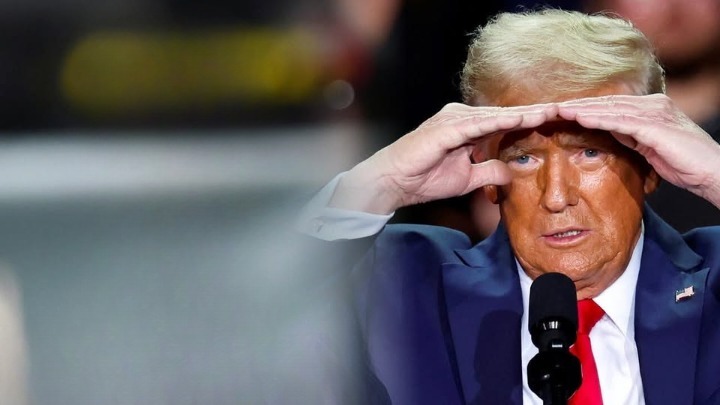
On a Saturday that will likely be dissected by historians, strategists, and diplomats for decades, the global balance surrounding the Middle East shifted abruptly. In a public announcement made via social media, Donald J. Trump, serving his second term as President of the United States, confirmed that American forces had carried out coordinated strikes on three major nuclear facilities inside the Iran. Among them was the deeply fortified Fordo Fuel Enrichment Plant, long regarded as the most sensitive and symbolically charged site in Iran’s nuclear infrastructure.
The announcement was unmistakably framed as historic. President Trump described the operation as a decisive action for the United States, Israel, and global security more broadly. Within minutes, the statement triggered emergency diplomatic consultations worldwide, an urgent convening of the United Nations Security Council, and renewed fears that a long-simmering standoff had crossed into a new and dangerous phase.
For years, Fordo had represented a strategic dilemma. Built deep within a mountain near the city of Qom, the facility was specifically engineered to survive conventional airstrikes. Its exposure in 2009 raised alarms across Western intelligence agencies, which concluded that Fordo’s hardened design and limited scale made it particularly suitable for enriching uranium to weapons-grade levels. Previous U.S. administrations opted for sanctions, diplomacy, sabotage, and cyber operations. This strike marked a clear departure from that approach.
By targeting Fordo directly, the United States signaled that containment had given way to preemption. The message was not subtle: the red line that had existed largely in theory was now enforced physically. The strategic calculus appeared rooted in the belief that Iran’s nuclear infrastructure had reached a point where delay was no longer acceptable.
From Washington’s perspective, the strike was framed as a means of preventing a nuclear-armed Iran and forcing a renegotiation of regional power dynamics. The President’s language suggested that Iran now faced a choice between escalation and capitulation. Supporters of the operation described it as decisive, overdue, and necessary to break what they viewed as years of strategic drift.
The response from Tehran was immediate and uncompromising. Iran’s foreign minister, Abbas Araghchi, condemned the strikes as unlawful and a direct violation of international norms. Invoking the United Nations Charter, Iranian officials emphasized their right to self-defense and declared that Iran “reserves all options.”
That phrase carries weight. Analysts interpret it as a signal that Iran may avoid direct military confrontation while instead pursuing asymmetric retaliation. Possible responses include cyberattacks, actions through regional proxies, or disruptions in critical maritime corridors such as the Strait of Hormuz, through which a significant portion of the world’s oil supply flows. Any sustained disruption there would have immediate global consequences.
International reactions revealed a world deeply divided. European leaders urged restraint, warning that escalation could spiral beyond anyone’s control. China and Russia criticized the strikes as violations of sovereignty that undermine the international order, while stopping short of immediate countermeasures. Both countries called for emergency diplomacy, though neither offered concrete proposals likely to bridge the widening gap.
An unexpected but telling response came from Mexico. Citing its longstanding non-interventionist Estrada Doctrine, Mexico’s government emphasized concern for global economic stability and the safety of its citizens abroad rather than taking sides. This position reflects the anxiety felt by many middle-power nations that lack influence over military decisions but bear the economic fallout.
Markets reacted swiftly. Oil prices surged within hours of the announcement, reflecting fears of supply disruptions and broader regional instability. Energy analysts warned that even limited Iranian retaliation could impose what they describe as an “energy tax” on the global economy. Short-term oil price spikes of $20 to $40 per barrel are considered plausible if shipping routes are threatened. Maritime insurance premiums in the Persian Gulf region could soar, forcing tankers to reroute thousands of miles around Africa. The ripple effects would extend far beyond energy, driving inflation in transportation, manufacturing, and consumer goods worldwide.
The strikes have also placed the International Atomic Energy Agency in an unenviable position. The IAEA, tasked with monitoring Iran’s nuclear program under previous agreements, now faces uncertainty over the status of its equipment and access. Damage to monitoring systems could blind the international community to Iran’s remaining capabilities, effectively ending the era of inspection-based oversight and replacing it with what some analysts grimly describe as “kinetic verification.”
As diplomats rushed to New York, the UN Security Council became the focal point of global attention. The divide is stark. The United States and its allies argue that the strike was a necessary act to prevent a catastrophic future and restore deterrence. Russia and China counter that unilateral military action erodes the very rules meant to prevent chaos and sets a precedent that weaker nations fear.
Beyond the immediate legal and strategic debates lies a deeper transformation. For more than a decade, ambiguity defined the standoff over Iran’s nuclear ambitions. Red lines were discussed but rarely enforced. Sanctions came and went. Negotiations stalled and resumed. With the destruction of Fordo, ambiguity has been replaced with action, and the consequences of that shift are still unfolding.
Whether this moment leads to a recalibration of regional behavior or a prolonged cycle of retaliation remains uncertain. What is clear is that the threshold has been crossed. The Middle East has entered a new phase in which assumptions about restraint, deniability, and gradual escalation no longer hold.
As the initial shock gives way to strategic maneuvering, the world watches closely. Iran’s next move may come quietly through digital networks and proxy forces, or loudly through open confrontation. Either path carries risks that extend far beyond the region itself.
The strikes of 2026 did more than destroy physical infrastructure. They redefined the boundaries of acceptable action in international conflict. Whether history records this moment as the beginning of stability enforced by strength or the spark of a broader conflagration will depend on decisions yet to be made—by leaders who now operate in a world with far fewer illusions and far higher stakes.